



Alle Auktionen / Kunst und Drucke / Alexandre Siches Piera (1927-2009) - La Douce Mélancolie

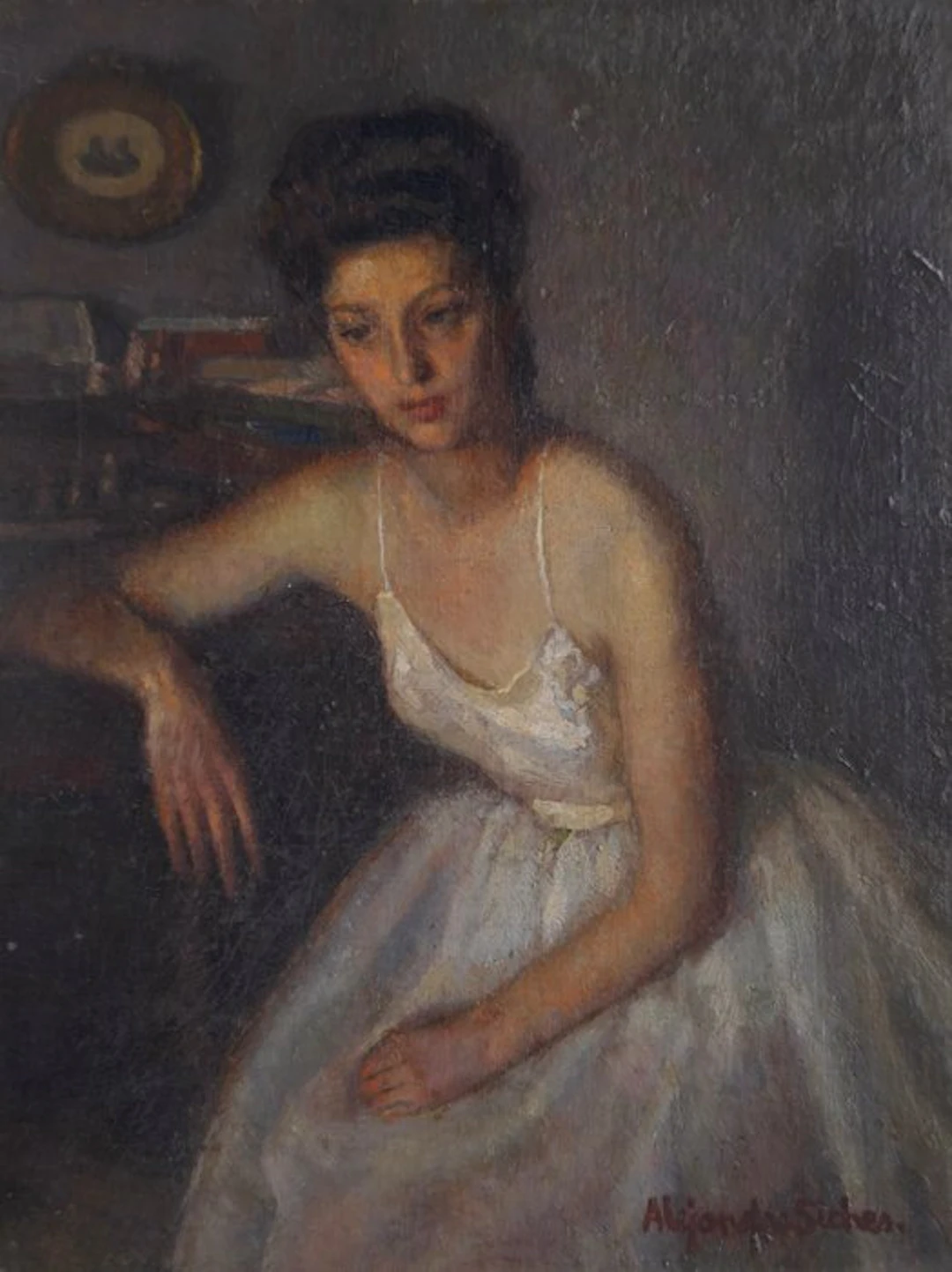
Alexandre Siches Piera (1927-2009) Portrait of a young woman dressed in white – Oil on panel Interesting original oil painting on panel by the renowned Catalan painter Alexandre Siches Piera (Barcelona, 1927-2009), an artist particularly linked to figurative painting, the female portrait, and the intimate representation of the human figure. The work depicts a young woman seated indoors, wearing a delicate white slip dress with thin straps, in a relaxed and contemplative pose. The composition stands out for the elegance of its pictorial treatment, the sensitivity of the flesh tones, and the use of a restrained color palette dominated by grays, whites, ochres, and warm tones. The artist builds a scene of notable psychological intimacy, in which the model’s expression, the position of the hands, and the ambient lighting take on special prominence. The painting features characteristics related to the tradition of the modern European portrait, combining figurative naturalism with a loose brushwork and an expressive interpretation of light. The artist: Alexandre Siches Piera (1927-2009) Alexandre Siches Piera was born in Barcelona in 1927 and died in 2009. He was a Catalan painter whose artistic career developed mainly during the second half of the 20th century, standing out especially for his dedication to the human figure, the female portrait, and interior painting. From his early years he showed a special aptitude for drawing and figurative representation. During his artistic training he received instruction from painters such as Joan Baixas, Lluís Muntané, and Ricard Tàrrega, artists linked to the Catalan painting milieu. His exhibition activity began in the 1940s, later developing a career linked to various galleries and artistic spaces in Barcelona. Among the galleries in which his activity is documented are Augusta, Syra, Busquets, Argos, and Comas. He also participated in exhibitions held in other Catalan and Spanish towns, as well as in international shows. Throughout his career he received various recognitions, including the Sant Jordi Prize from the Diputación de Barcelona in 1951, and an award from the Balearic Islands Provincial Council. His artistic production is characterized by the prominence of the human figure and a particular attention to female portraits. He also cultivated other genres, such as the still life and certain interior scenes and urban settings. In his painting the use of a balanced color palette stands out, with frequent predominance of grays, bluish tones, and earth tones. His figurative language shows affinities with certain currents of 20th-century European painting, especially in the simplification of forms and the importance given to the compositional structure. The work of Alexandre Siches Piera is represented in the Spanish art market and has been offered at different auction houses specializing in Catalan painting. Description of the work The composition features a young woman seated indoors with soft lighting. The figure nearly fills the entire pictorial surface and is depicted with a slightly diagonal disposition. The model wears a delicate white dress with fine straps, a fitted bodice, and a full skirt that extends toward the lower part of the composition. The fabric is worked with a rich variety of whites, grays, and bluish tones, which allow the suggestion of folds and the natural fall of the cloth. The artist uses a relatively free brushstroke, especially visible in the skirt, where chromatic spots build volume without resorting to overly meticulous description. The young woman’s hair is dark, gathered in a voluminous hairstyle that delicately frames her face. Her expression is serene and slightly melancholy. Her gaze is directed downward, conveying a sense of introspection. The face is represented with warm tones, with soft lighting that highlights the forehead, cheeks, and nose. The shoulders and arms are exposed, allowing appreciation of the treatment of the flesh. The figure rests one arm on a dark surface located to the left, while the other hand rests gently on the skirt. This arrangement helps create a natural and relaxed posture. The background consists of an interior in dark tones, with some furniture elements barely suggested. In the upper left area a small circular decorative element on the wall can be distinguished. The simplification of the environment concentrates attention on the female figure. In the bottom right corner the artist’s signature, “Alexandre Siches,” appears in a reddish tone. The female portrait in Alexandre Siches’ painting The representation of the female figure is one of the most characteristic subjects of Alexandre Siches Piera’s production. The artist developed numerous compositions centered on young women, models, and characters depicted indoors. These works show his interest in individual expression and in the relationship between the human figure and the space around it. In the present painting, the model is depicted in a resting and contemplative attitude. The absence of theatrical gestures and of prominent narrative elements reinforces the intimate character. The artist seems interested in capturing a moment of stillness. The body’s position, the inclination of the head, and the downward gaze contribute to creating an atmosphere of introspection. The work relates to a pictorial tradition in which the female portrait is not limited to reproducing the model’s physical features, but seeks to convey a certain psychological sensibility. This conception of portraiture was especially important in European painting of the late 19th century and for much of the 20th. Style and artistic influences The painting features characteristics linked to Catalan modern figuration of the 20th century, with affinities to Post-Impressionism and certain European intimist tendencies. The artist uses a traditional compositional structure but develops the forms with a relatively free brushstroke. The treatment of the dress shows a clear simplification of details, giving special importance to the relationships between light and shadow. The flesh tones are rendered with greater delicacy, with soft color transitions. The background is resolved with dark tones that allow the figure to stand out. The composition shows general affinities with the tradition of intimate portraiture developed by various European artists during the early decades of the 20th century. There are also certain formal relationships with Post-Impressionist painting, especially in the importance given to constructing volume through color. The work avoids an overly academic representation, favoring a personal interpretation of the human figure. The result is an elegant and expressive painting, characterized by chromatic restraint and the sensitivity of the pictorial treatment. Light and flesh tone treatment One of the most interesting aspects of the work is the use of soft, ambient lighting. The light mainly affects the face, shoulders, and arms of the model. The flesh tones are worked with a combination of light ochres, pinks, grays, and small warm accents. The artist uses relatively soft transitions to suggest the body’s volume. The lighting highlights the delicacy of the shoulders and the structure of the arms. The face shows a restrained chromatic modulation, with soft shadows that reinforce the contemplative expression. The light does not come from a clearly identifiable source, but rather seems to diffuse across the interior. This characteristic helps create a calm and intimate atmosphere. The contrast between the illuminated areas of the figure and the dark background concentrates attention on the model. The white dress and the richness of the color nuances The dress is one of the most notable pictorial elements of the composition. Although visually perceived as a white garment, the artist uses a wide variety of tones to build its volume. The whites are enriched with grays, soft blues, violets, and small pinkish hues. The skirt is executed with a loose brushstroke, with chromatic spots suggesting the fabric’s fall. The bodice of the dress is depicted with greater precision, especially around the neckline and straps. The use of different tonal values conveys the lightness of the fabric. The contrast between the dress’s luminosity and the dark background is one of the main compositional devices. The garment provides a significant area of clarity that visually balances the painting. The treatment of white demonstrates the artist’s interest in color relationships and in the expressive possibilities of a seemingly reduced palette. Composition and visual balance The painting presents a vertical composition organized around the female figure. The model appears slightly shifted to the right, while one of her arms extends toward the left. This arrangement introduces a diagonal structure that adds naturalness and movement. The head constitutes the main focal point. The viewer’s gaze then descends toward the face, the shoulders, and the hands. The white dress occupies much of the lower half and helps balance the dark areas of the background. The use of a scarcely defined interior space reinforces the figure’s presence. The artist avoids decorative elements that could visually compete with the model. The composition is balanced, with a sense of recency and serenity. Painting technique: oil on panel The work is executed in oil on panel, a technique that allows for a stable pictorial surface and precise handling of different degrees of detail. In this composition, the artist combines areas of relatively soft brushwork with others of more free execution. The face and hands receive greater attention to form. By contrast, the skirt and the background are worked with more visible brushstrokes and broader chromatic patches. This combination helps differentiate the various elements of the composition. The pictorial surface shows execution characteristic of modern figurative painting, where naturalistic representation coexists with a certain expressive freedom. Signature The painting bears a signature in the bottom-right corner, where a reddish inscription matches the artist’s name. The signature integrates discreetly into the composition, on a grayish area of the skirt. Frame and presentation The work is presented framed by a wide ornate gilded frame, with relief vegetal elements and a traditional design. The frame includes an inner light-toned area that surrounds the painting and helps highlight the dress’s luminosity. The combination of the external gold and the interior light finish provides an elegant presentation with notable decorative presence. There are small signs of wear and alterations in the frame’s finish. The frame is offered as a gift to the buyer, with no commercial value, and is not an integral part of the work, so any possible defects will not be grounds for complaint. It is recommended to carefully review all photographs, which form part of the description, to adequately assess the painting’s state of conservation and its framing. Artistic interest The painting constitutes an interesting example of Alexandre Siches Piera’s figurative production, especially for his dedication to the female portrait. The work stands out for its intimate atmosphere, the delicacy of the flesh tones, and the richness of the nuances used in the representation of the white dress. The combination of a simple composition and refined color treatment creates a scene of notable sensitivity. The model’s thoughtful character adds a psychological dimension that enriches the portrait. The painting is particularly appealing to collectors of Catalan painting of the 20th century, female portrait, modern figuration, and postwar Spanish painting. Characteristics Artist: Alexandre Siches Piera (Barcelona, 1927-2009). Technique: oil on panel. Genre: female portrait. Theme: young woman seated in a white dress indoors. Style: Catalan modern figuration, with affinities to Post-Impressionism and intimist tendencies. Era: 20th century. Signature: signed in the bottom right corner. Presentation: framed. Shipping The work will be carefully and professionally packed, using protective materials appropriate to ensure its safety during transport. Shipments to destinations outside the European Union may be subject to taxes, duties, import fees, clearance charges, and customs procedures. These potential costs will be the sole responsibility of the buyer and are not included in the hammer price or the shipping costs. Additionally, shipments to islands, insular territories, or remote or hard-to-access areas as rated by transport companies may incur extra charges. Any surcharge applied by the transport company due to this reason must be borne by the buyer. It is advisable to consult in advance the customs conditions and possible transportation surcharges applicable to the destination.
Schätzpreis:€500
Zur AuktionAlle Objekte ansehen vonCatawikioderKunst und Drucke
Schätzpreis:
€500
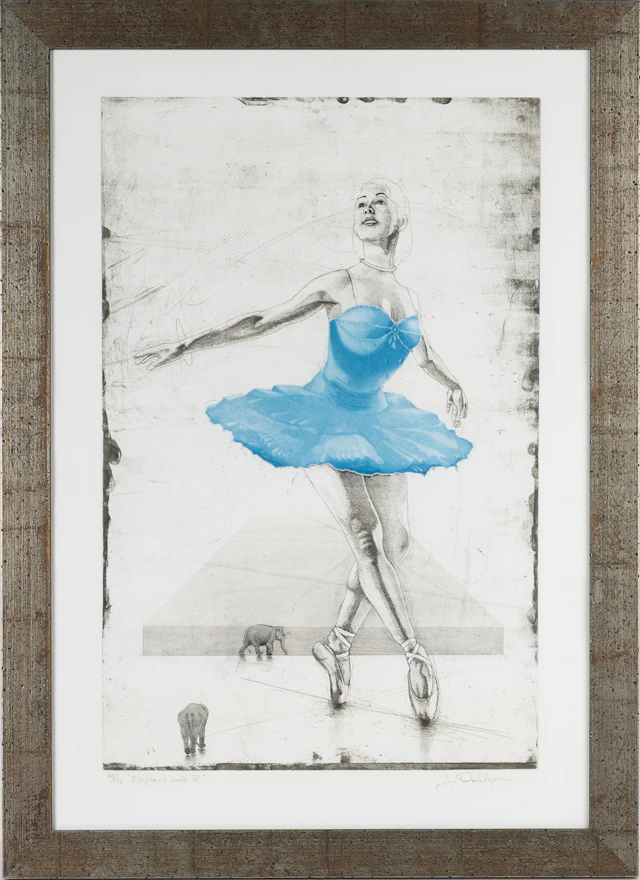
JAN DAHLGREN (FÖDD 1954). "Elephant walk III", etsning.
10/23/2026
€26.96
Schätzw.: €89.94
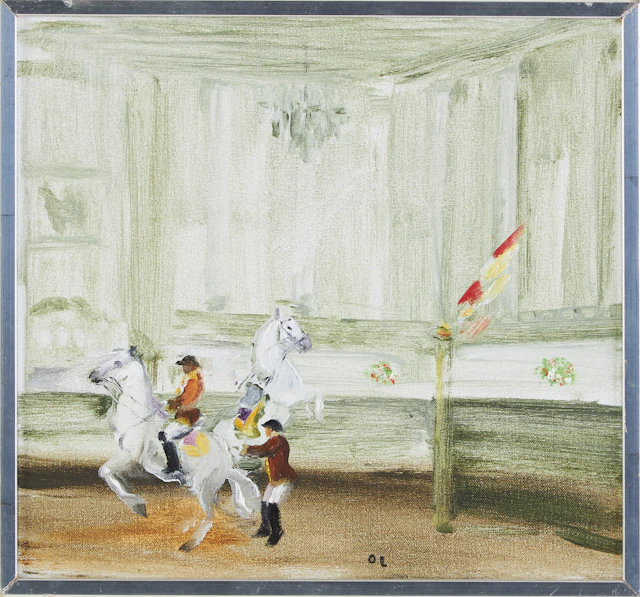
OLLE LINDGREN (FÖDD 1930). "Detroit" och interiör med hästar, (2 )
10/23/2026
€89.88
Schätzw.: €179.89
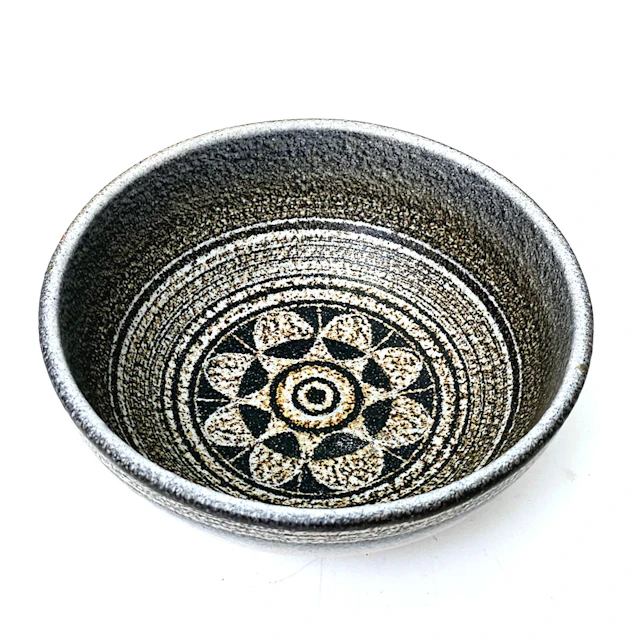
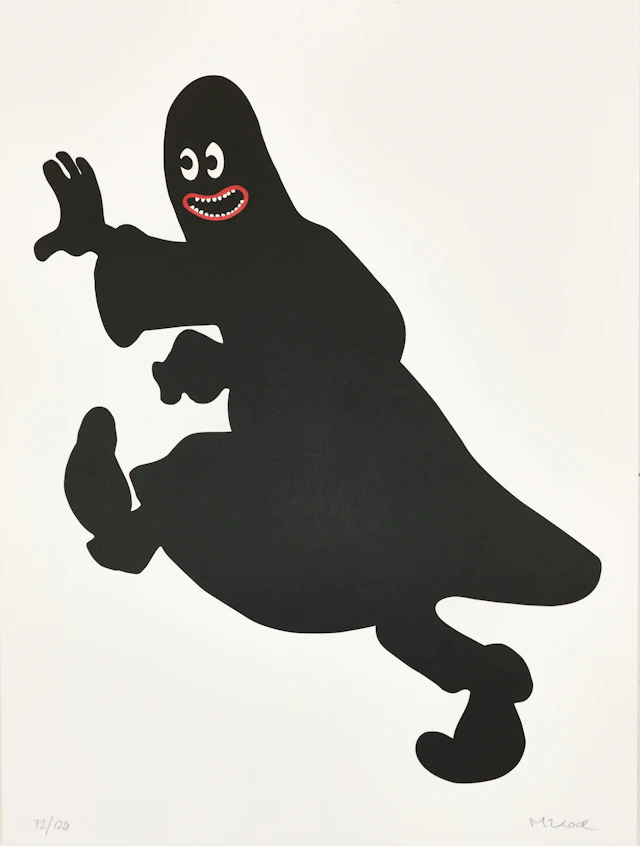
MAKODE LINDE (Sverige, född 1981). "Phantom Blot", signerad och numrerad
10/23/2026
€131.31
Schätzw.: €224.87




Bringen Sie Ihre Auktion zu Sammlern weltweit!
Jetzt eintragen lassenMit der Anmeldung stimmen Sie der Datenschutzrichtlinie zu. Jederzeit abmelden.
Barnebys HQ
Brahegatan 10
BOX 5038
114 37 Stockholm
