


Bringen Sie Ihre Auktion zu Sammlern weltweit!
Jetzt eintragen lassenMit der Anmeldung stimmen Sie der Datenschutzrichtlinie zu. Jederzeit abmelden.
Barnebys HQ
Brahegatan 10
BOX 5038
114 37 Stockholm
Alle Auktionen / Antike Kunst / Ancient Roman lead Legionary Eagle Statuette - 31 mm

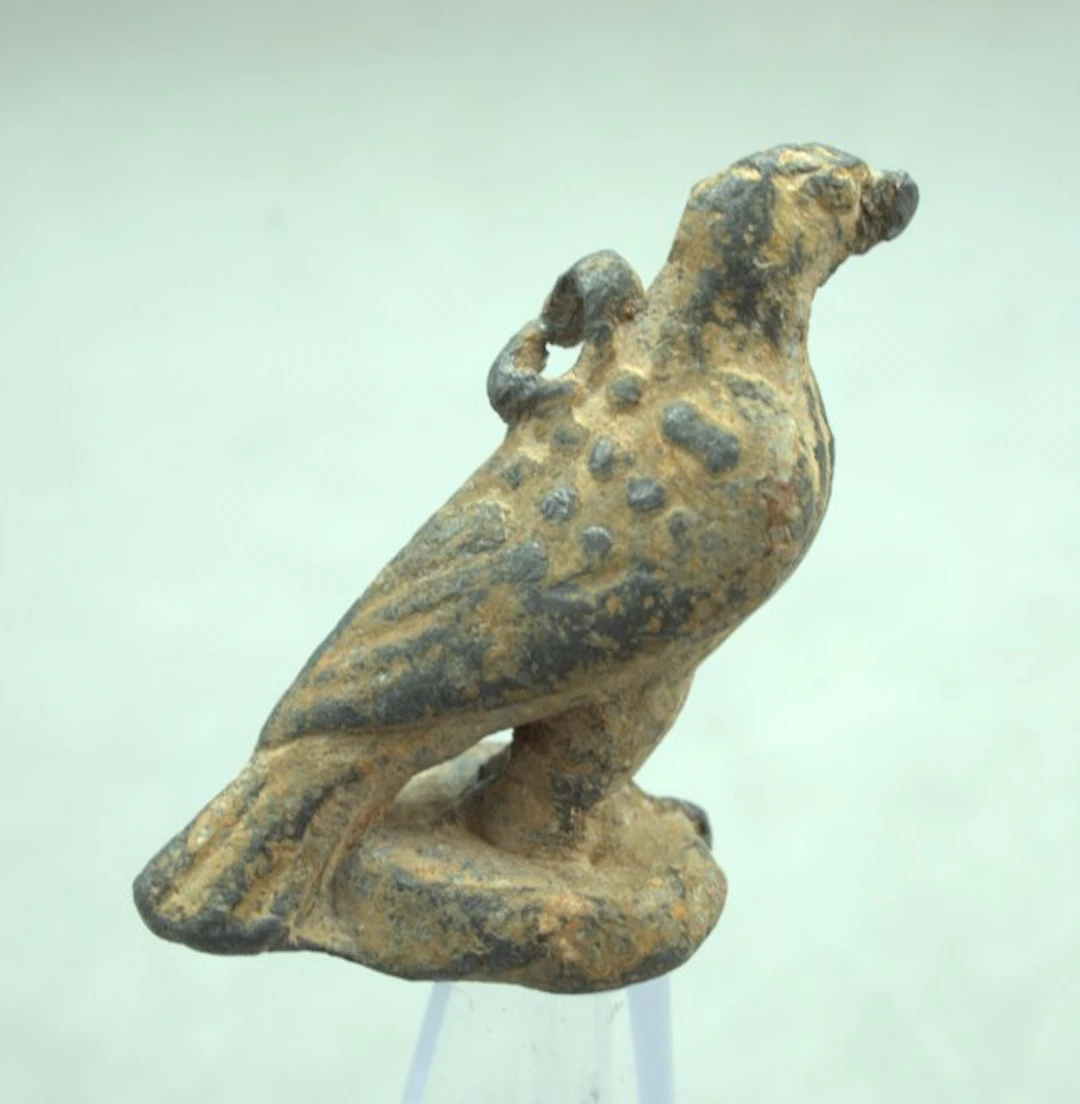
"Roman Lead Legionary Eagle Statuette Culture / Period: Roman Imperial Date / Period: Circa 1st–3rd century A.D. Material: Lead Dimensions: Not provided Condition: Good condition, with age-related surface wear, deposits and patination. Details of the wings, body and suspension loop remain visible. No shipping outside the European Union. Due to complex export regulations concerning cultural goods, this item cannot be shipped outside the EU. Please ensure you have a delivery address within the European Union before placing a bid. Provenance information: Object Registration ID: 1007 The current owner (S.N.J. S.) purchased the Legionary Eagle statuette from B.N. in Schiedam, the Netherlands. The previous owner, B.N. from Schiedam, stated that the object had been in his collection, but the date of acquisition was not provided. According to the previous owner, the object had previously formed part of a private collection in the Netherlands; the date of this earlier ownership is unknown. No further information concerning the earlier ownership history of the object was available from the previous owner. Background Information: The eagle, or aquila, was among the most powerful symbols of the Roman world. Closely associated with Jupiter, supreme god of the Roman pantheon, the eagle also became the principal emblem of the Roman legion. From the reforms traditionally associated with Gaius Marius in the late 2nd century B.C. onward, the aquila occupied a central position among the standards of a legion. It was carried by the aquilifer and represented the honour, identity and cohesion of the military unit. This small lead statuette depicts an eagle standing upright on an integral base, with the wings folded closely against the body. A loop positioned on the back indicates that the figure could be suspended or attached, suggesting that it functioned as a portable object rather than as a freestanding representation alone. Its precise original use cannot be established without an archaeological find context, and an association with a specific Roman legion cannot be demonstrated. Eagle imagery extended far beyond the monumental legionary standards themselves. During the Roman Imperial period, the motif appeared on military equipment, monuments, coins and a wide range of small personal and votive objects. Such imagery could evoke Jupiter, imperial authority and the Roman army, making the eagle one of the most recognisable elements of Roman visual culture throughout the provinces. Lead was well suited to the production of relatively small objects because of its low melting point and ease of casting. The surviving modelling of this example, including the folded wings and individual surface details, reflects the use of mould-casting to create a compact but immediately recognisable representation. Dating broadly to the 1st–3rd century A.D., the statuette belongs to the height of the Roman Imperial period, when Roman military institutions and their associated symbols were encountered across much of Europe and the Mediterranean world. As a portable representation of the eagle, this piece forms a tangible connection to the visual and symbolic language through which Roman military identity and authority were expressed."
Schätzpreis:€210
Zur AuktionAlle Objekte ansehen vonCatawikioderAntike Kunst
Schätzpreis:
€210
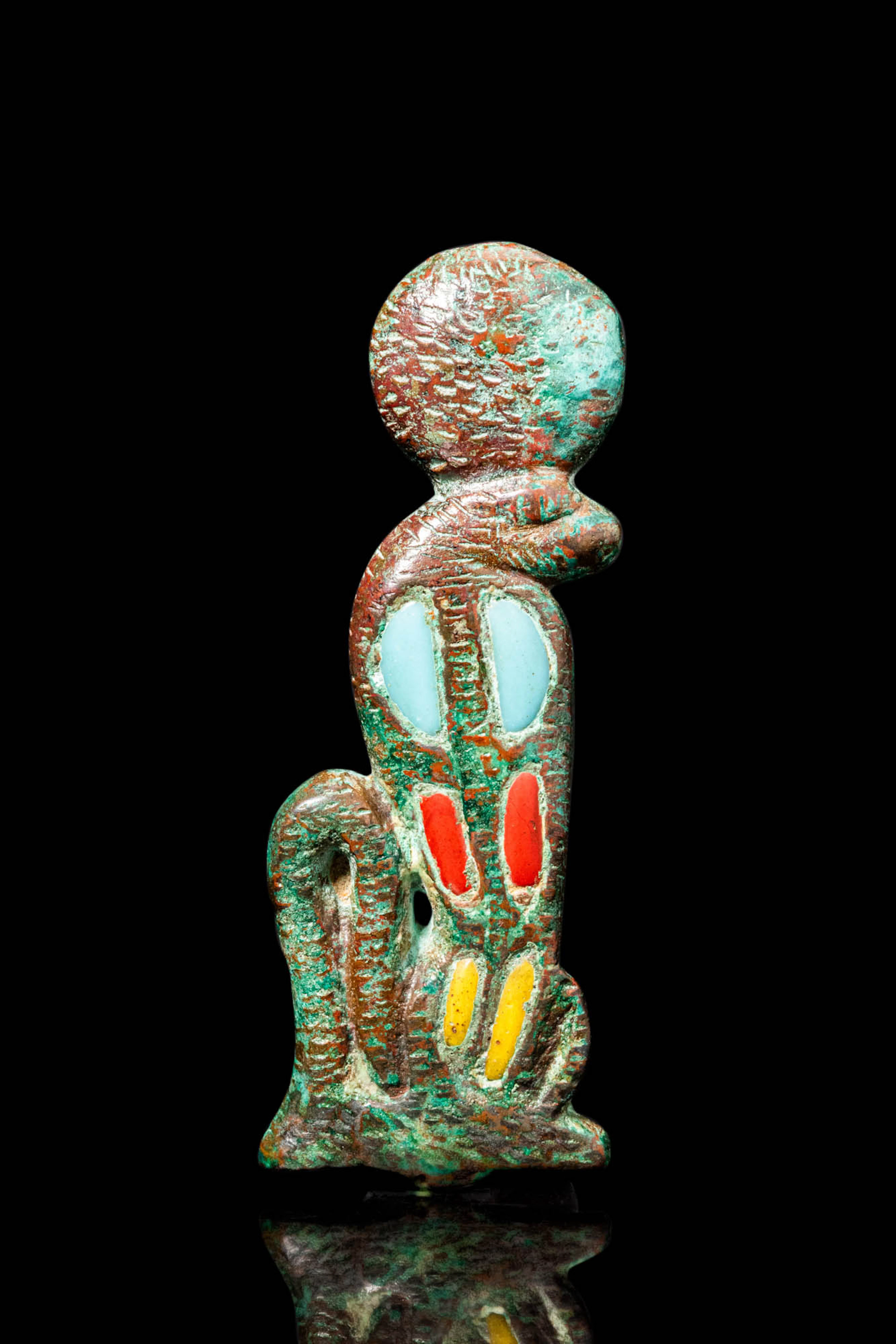
EGYPTIAN BRONZE INLAID APPLIQUE OF URAEUS - MUSEUM EXHIBITED
06/21/2026

€1,623.13
Schätzw.: €1,154.78



Bringen Sie Ihre Auktion zu Sammlern weltweit!
Jetzt eintragen lassen€275