
Bringen Sie Ihre Auktion zu Sammlern weltweit!
Jetzt eintragen lassenMit der Anmeldung stimmen Sie der Datenschutzrichtlinie zu. Jederzeit abmelden.
Barnebys HQ
Brahegatan 10
BOX 5038
114 37 Stockholm
Alle Auktionen / Antike Kunst / Ancient Roman

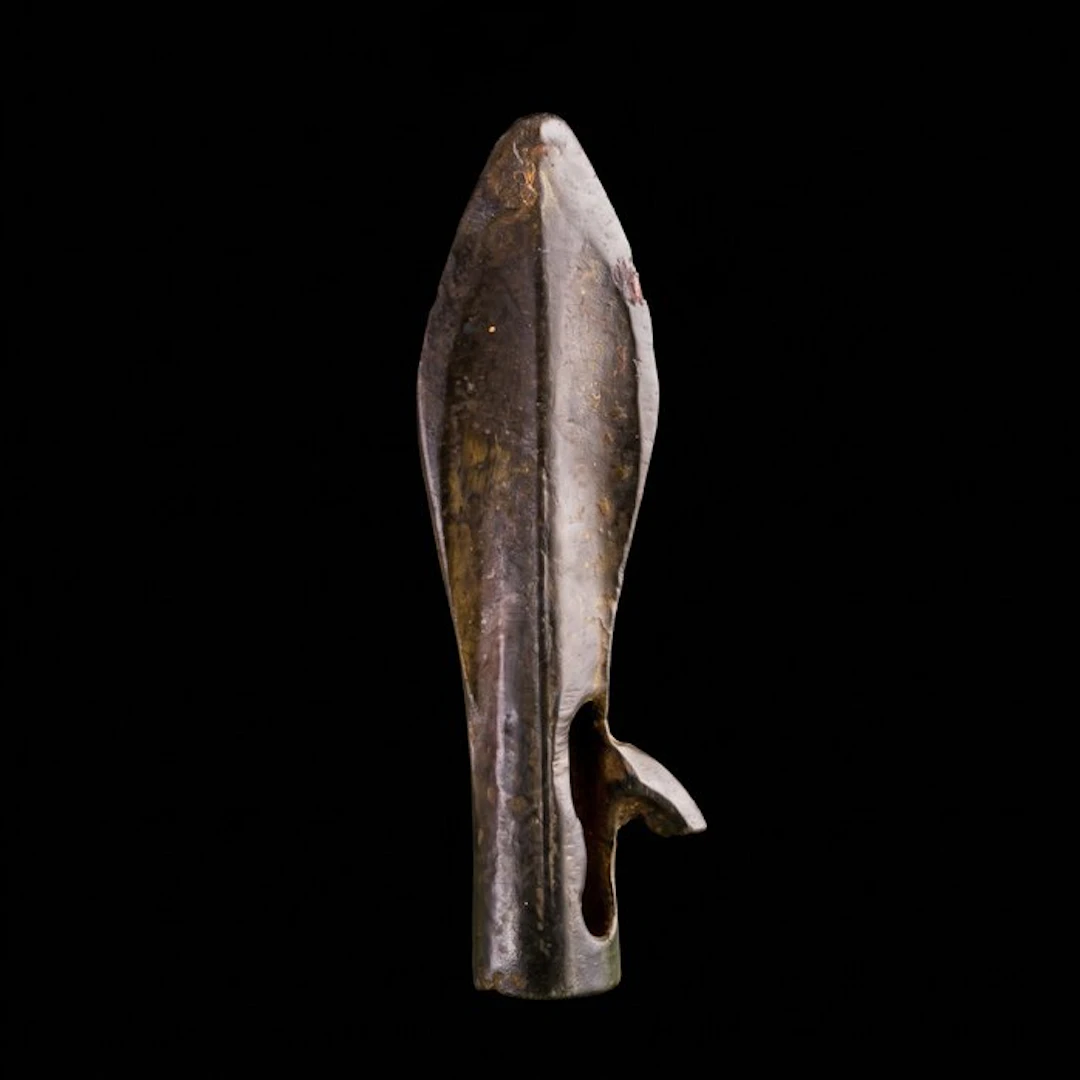
Wear a piece of history, not just jewelry Rare Roman Imperial Arrowhead – Museum-Quality Presentation – Distinctive Military Projectile Point – Collector’s Piece – ca. 1st–4th Century AD Object Type: Arrowhead / Military Projectile Point (Cuspis Sagittae) Culture: Roman Imperial Tradition Period: Roman Imperial Period, proposed ca. 1st–4th Century AD Material: Metal Alloy Technique: Cast and Hand-Finished Form: Elongated Leaf-Shaped Point with Pronounced Axial Midrib and Hafting Section Structural Features: Reinforced Median Ridge; Longitudinal Blade Faces; Lower Hafting Aperture / Socket-Related Structure Function: Projectile Weapon / Archery Equipment (Sagitta) Military Context: Roman-Period Archery and Auxiliary Military Equipment Stylistic Context: Mediterranean and Roman-Period Projectile-Weapon Tradition Condition: Very Well-Preserved; Strongly Defined Profile, Preserved Midrib and Hafting Structure, Dark Brown Surface with Localized Deposits Dimensions Length: 40.78 mm ± Width: 11.18 mm ± Weight: 6.09 g If requested prior to dispatch, a Cultural and Archaeological Assessment Certificate will be prepared as a physical hard copy and included with the shipment. Every shipment is fully insured. The photographs were taken under warm, museum-inspired lighting to present the object's surface and historical character naturally. Description This distinctive metal-alloy projectile point displays an elongated leaf-shaped profile articulated by a pronounced axial midrib, providing rigidity while preserving relatively thin blade faces. The lower section incorporates a carefully formed hafting structure, while the surviving lateral projection and aperture represent technologically significant features of its attachment system. Roman military archery employed several projectile morphologies, including flat-bladed, socketed and multi-bladed forms; archaeological studies identify blade configuration, body morphology and tanged/socketed attachment as principal typological criteria. Roman military contexts also demonstrate increasing use of trilobate projectile points from the third century AD onward. With its substantial 6.09 g mass, strongly reinforced profile and remarkably legible construction, the present example has an imposing archaeological character and represents an especially attractive collector’s piece within the wider Roman-period military projectile tradition. Museum & Archaeological Comparisons The British Museum preserves numerous copper-alloy socketed projectile points illustrating the long technological history of this construction. One slender leaf-shaped example has a trefoil section and long socket, demonstrating how the blade, median reinforcement and hafting structure could be integrated into a compact cast projectile. That particular example is earlier—630–450 BC—and therefore serves as a technological rather than chronological parallel. The Metropolitan Museum of Art likewise preserves socketed trilobate bronze arrowheads from the ancient Near East. Its Parthian example of approximately the 1st century BC–1st century AD incorporates a socket and barb, illustrating the persistence of sophisticated cast projectile technology into the period immediately overlapping the Roman world. Significantly, modern research stresses that socketed and trilobate forms circulated across very broad geographical and chronological ranges. Morphology alone therefore cannot establish Roman manufacture; archaeological context and metallurgical analysis would be required for a definitive attribution. Information The presentation and sale of this object are conducted in accordance with principles of transparency, scholarly consistency, and good faith, and no object is knowingly presented as a copy or imitation. The object has been documented using high-resolution imaging equipment, with its physical structure and form left entirely unaltered; only limited color-balance adjustments have been applied to ensure visual accuracy. As high-resolution imagery may influence the perception of scale, the photographs should always be considered together with the stated measurements. All statements concerning dating, intended function, cultural attribution and material identification represent high-probability academic assessments based on typological analysis, comparative archaeological material, museum collections and expert opinion. Definitive verification of chronology and metallic composition would require physical examination and appropriate laboratory analysis. Upon request prior to shipment, a signed ownership document issued in the buyer’s name may also be provided. If requested prior to dispatch, the Cultural and Archaeological Assessment Certificate will be prepared as a physical hard copy and included with the shipment.
Schätzpreis:€150
Zur AuktionAlle Objekte ansehen vonCatawikioderAntike Kunst
Schätzpreis:
€150



Bringen Sie Ihre Auktion zu Sammlern weltweit!
Jetzt eintragen lassen
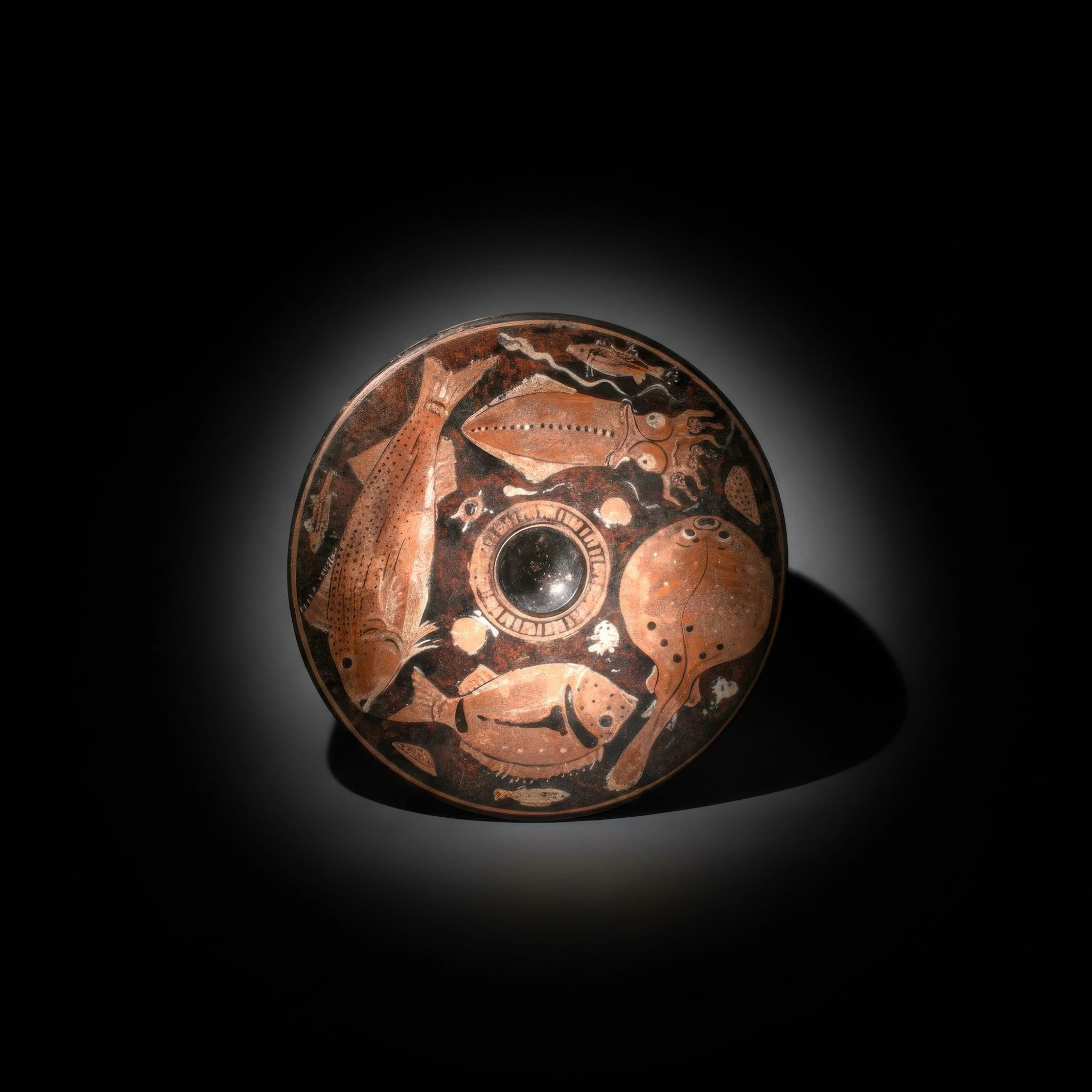
VERY RARE APULIAN RED-FIGURE FISH PLATE WITH 15 SEA CREATURES
06/21/2026

€23,187.64
Schätzw.: €11,540.27