



Alle Auktionen / Kunst und Drucke / École européenne (XX) - Les Buveurs

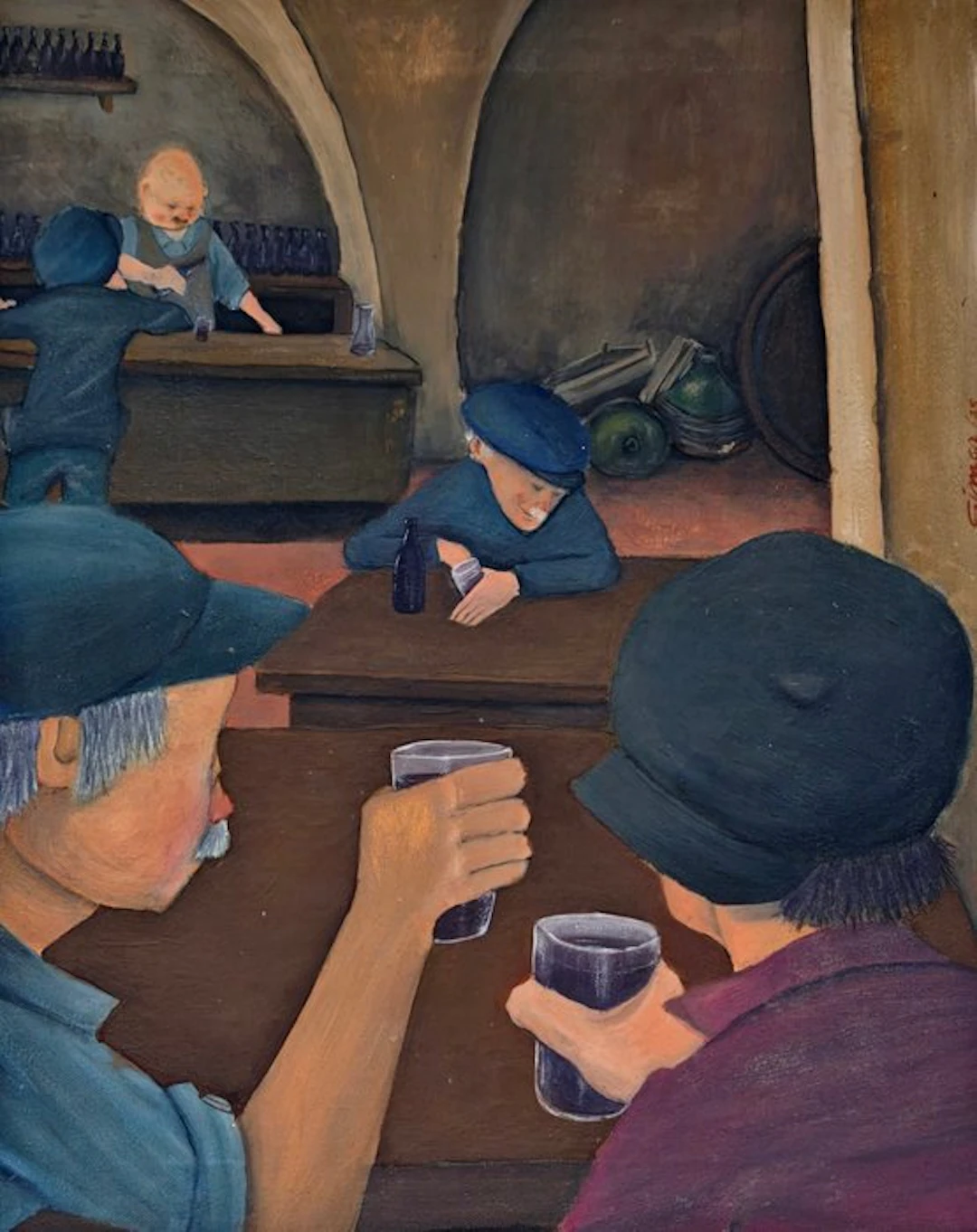
Interesting painting from the European school of the 20th century, depicting a lively genre-scene set inside a traditional tavern, with several characters gathered around wooden tables, sharing drinks and taking part in a scene of everyday life. The work stands out for its singular figurative language, the expressive simplification of forms, and its strong sensitivity to popular environments, features that allow relating it to certain trends of European genre realism and, especially, to the Vasque regionalist painting tradition of the 20th century. The composition combines a traditional-rooted theme with a modern plastic interpretation, close to naive realism and certain post-impressionist currents. The artist develops a scene of notable personality, in which the representation of the characters, the organization of space, and the treatment of color contribute to creating an intimate, popular, and deeply human atmosphere. Description of the work The painting represents the interior of a tavern or popular establishment, organized by a succession of wooden tables and different groups of characters. In the foreground two male figures sit, viewed from a rear and slightly elevated perspective. Both characters hold glasses with a dark drink, in a gesture that suggests a conversation or a shared toast. The figure on the left wears a bluish shirt and a dark beret, while the one on the right wears a garment in violet tones and an equally dark hat. The arrangement of these figures, shown from behind and occupying a good part of the foreground, directly draws the viewer into the tavern’s ambience. Their arms and hands gain special prominence, establishing a visual link between the characters and the glasses they hold. In the middle ground there is a figure seated at another table, with the head slightly tilted and an expression that seems to suggest fatigue, reflection, or concentration. This character wears dark blue attire and holds a small glass, adding a note of introspection to the scene. In the background, on the left, a wooden bar is visible behind which an older man, possibly the innkeeper, is serving another character opposite him. The interior architecture is defined by large arches and walls in ochre and brown tones. On the walls there are shelves with bottles and various objects linked to the daily functioning of the establishment. On the right side of the background, containers and utensils reinforce the traditional character of the depicted setting. The composition conveys a sense of closeness and authenticity, evoking the daily life of a rural or popular community. Style and artistic influences From a stylistic point of view, the work is part of the European 20th-century genre figuration, showing an interesting mix of traditional and modern elements. The subject matter answers to a long artistic tradition devoted to representing popular scenes, social gatherings, and everyday environments. However, the execution moves away from academic realism through a deliberate simplification of forms and a personal interpretation of perspective. The characters are built with compact volumes, defined contours, and relatively uniform chromatic surfaces. The anatomies are somewhat stylized, while faces and hands are depicted with an economy of details that contributes to the expressive character of the whole. These characteristics allow affinity with certain manifestations of naive realism or naif influence, where formal spontaneity and figure simplification take on special prominence. Nevertheless, the composition presents a carefully studied spatial organization, so it should not be understood as a naive art piece in the strict sense. There are also connections with certain post-impressionist tendencies, especially in constructing volumes through large color masses and in the geometric simplification of architectural elements. Thus the painting combines a recognizably everyday scene with a modern plastic language, characterized by formal synthesis and expressive composition. Affinities with Basque painting of the 20th century One of the most interesting aspects of the work is its thematic and stylistic proximity to certain manifestations of Basque genre painting. During the late 19th century and much of the 20th century, many artists linked to the Basque Country developed painting focused on representing popular traditions, rural environments, social gatherings, and everyday life figures. Tavern scenes, popular interiors, and gatherings of men dressed in traditional attire were recurring motifs within this artistic sensibility. In the present work, the use of dark berets, the presence of masculine characters gathered around wooden tables, and the setting in a traditional establishment clearly evoke that iconographic universe. The composition recalls, from a thematic perspective, the tradition developed by artists such as Aurelio Arteta, the brothers Valentín and Ramón de Zubiaurre, and other representatives of Basque regionalist painting. In particular, the simplification of volumes, the construction of characters through compact forms, and the interest in popular environments allow for affinities with the figurative language of Basque painting in the first half of the 20th century. The presence of characters with synthesized features, dressed in traditional garments and depicted in everyday postures, reinforces this aesthetic connection. Furthermore, the choice of a relatively sober palette, dominated by dark blues, browns, ochres, and earthy tones, helps evoke the atmosphere of certain costumbrist compositions from northern Spain. These references should be understood as stylistic and iconographic affinities, without implying a direct attribution to the mentioned artists or a definitive identification of the painting’s geographic origin. The work offers, in any case, an interesting interpretation of European genre tradition, with a sensibility particularly close to the Basque regionalist painting imaginary. Naive figuration and form simplification The painting presents a series of formal characteristics that link it to naive tendencies developed within European figuration of the 20th century. The characters are depicted with relatively simple forms, round heads, compact bodies, and easily recognizable gestures. Anatomical proportions do not always adhere to rigorous academic study, but to expressive interpretation aimed at reinforcing the figures’ presence. The perspective of the tables and the interior space also shows a certain constructive freedom. This treatment allows the different elements to be organized according to the expressive needs of the composition, rather than by strict naturalistic reproduction. The result is a scene of great visual spontaneity, where formal simplification helps convey closeness and authenticity. Unlike certain manifestations of more spontaneous Naïf art, this work shows a clear compositional intention, especially visible in the layout of the characters and the organization of the different planes. The combination of these features places the painting in an interesting middle ground between genre realism, modern figuration, and naive art. Color and illumination The work features a sober and balanced color palette, dominated by deep blues, browns, ochres, warm grays, and violet tones. The foreground figures stand out for their dark outfits, contrasting with the warmer tones of the tables and walls. The artist uses color to differentiate the planes and visually organize the composition. The blues of the berets and garments create a chromatic continuity among the characters, while the browns and ochres provide unity to the architectural space. The lighting is soft and relatively uniform, with no violent chiaroscuro contrasts. The faces and hands receive greater luminosity, becoming points of interest within the scene. The use of large color surfaces helps reinforce the figures’ solidity and the space’s intimacy. The chosen color range conveys a warm, intimate atmosphere typical of interiors depicted by many European genre painters. Technique and painting execution The painting presents a figurative execution of a synthetic character, based on building the elements through color planes and defined contours. The human figures are resolved with restrained brushwork, prioritizing the clarity of forms over minute detail. The faces show a simplified yet sufficiently expressive interpretation to suggest different attitudes and moods. The hands and arms gain special relevance, as they reveal characters’ actions and establish relationships among them. The tables are depicted as broad brown surfaces, with slight chromatic variations intended to suggest the wood’s volume. The interior architecture is constructed from large geometric shapes, especially visible in the arches and the back walls. The treatment of these elements helps create a recognizable yet deliberately simplified space. The execution reveals an interest in narrative expressivity and clear composition, aspects that prevail over a pursuit of a strictly academic finish. Composition and perspective The composition is organized through a succession of planes that progressively guide the gaze from the foreground characters to the tavern interior. The two figures in the lower zone act as framing elements, drawing the viewer into the scene. The arrangement of their arms and glasses creates an interesting diagonal line play that adds dynamism to the whole. In the center appears a table occupied by a solitary character, whose position marks a transition between the foreground and the background. The bar and the figures behind it constitute the final narrative plane. The large architectural arches help organize the space and provide depth to the composition. Perspective presents a free interpretation, especially evident in the arrangement of tables and the scale relationships among the characters. This constructive freedom reinforces the painting’s modern and naive aspect. Thus the scene combines a balanced compositional structure with a spontaneous and personal interpretation of space. Genre and meaning Tavern scenes occupied a prominent place within European painting tradition. These spaces were frequently depicted as sites of meeting, conversation, and coexistence, linked to the daily life of popular communities. In Spanish painting, and especially in certain regional schools, taverns and traditional establishments provided suitable settings to represent customs and social identity of different territories. The present work participates in this tradition through a scene in which the characters appear immersed in everyday activities. The absence of theatrical gestures or extraordinary events reinforces the natural and intimate character of the composition. The artist seems interested in capturing a moment of daily life, giving prominence to anonymous characters and their relationships with the surroundings. The scene conveys a sense of popular convivencia, though it also introduces small touches of introspection through the different attitudes of the characters. This balance between social observation and expressive sensitivity is one of the most attractive aspects of the painting. Chronology and artistic context Due to its formal characteristics, the work can be stylistically placed within European figurative painting of the 20th century, with special affinity toward certain currents developed during its second half. Anatomical simplification, synthetic treatment of volumes, and liberty in spatial construction correspond to a modern pictorial language. Thematically, however, it maintains a clear continuity with costumbrista and regionalist traditions developed since the late 19th century. This combination of traditional and modern elements is characteristic of many European figurative artists who, throughout the 20th century, kept their interest in representing daily life without renouncing a personal interpretation of the pictorial language. The painting can thus be understood as a work that dialogizes between costumbrista tradition and figurative modernity. Signature On the right side of the composition there is an inscription or signature in reddish tones, placed vertically next to the architectural element. The handwriting is visible in the photograph, though it does not allow securely identifying the artist. The presence of this inscription is a point of interest for the study and cataloging of the work. Frame and presentation The work is framed with an exterior white or ivory molding, simple lines, surrounding a broad fabric-textured ochre passe-partout. A second white inner molding directly delineates the pictorial surface. The combination of these light tones with the warm texture of the passe-partout adds depth to the presentation and enhances the blues, browns, and ochres of the painting. The overall aesthetic is characteristic of certain decorative framing from the 20th century. The frame is offered as a gift to the buyer, not of commercial value, and is not part of the artwork; therefore, any possible damage to it will not be grounds for complaint. It is recommended to carefully inspect all photographs, which form part of the description, to adequately assess the painting’s condition and its framing. Features Author: European school of the 20th century. Chronology: 20th century. Genre: figurative genre painting. Theme: tavern scene with popular characters. Style: genre realism, with influences of Basque regionalist painting, naive realism, and modern figuration. Artistic influences: European genre painting, 20th century Basque painting, and post-impressionist tendencies. Signature: inscription or signature in red on the right side, not legible. Presentation: framed. Shipping The work will be carefully and professionally packaged, using appropriate protective materials to ensure its safety during transit. Shipments outside the European Union may be subject to taxes, duties, import charges, clearance costs, and/or customs procedures. Any such charges will be the sole responsibility of the buyer and are not included in the hammer price or shipping costs. Likewise, shipments to islands, insular territories, or remote or hard-to-reach areas by transportation companies may incur additional charges. Any surcharge applied by the transport company for this reason must be borne by the buyer. Buyers are advised to check in advance the customs conditions and any transport surcharges applicable to their destination.
Schätzpreis:€350
Zur AuktionAlle Objekte ansehen vonCatawikioderKunst und Drucke
Schätzpreis:
€350
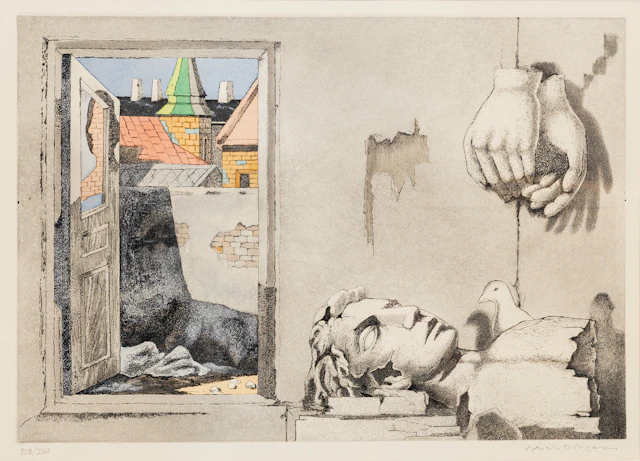
AXEL OLSON. "Dörr mot ljuset", färglitografi, signerad och numrerad, 218/260.
10/24/2026
€40.5
Schätzw.: €89.88
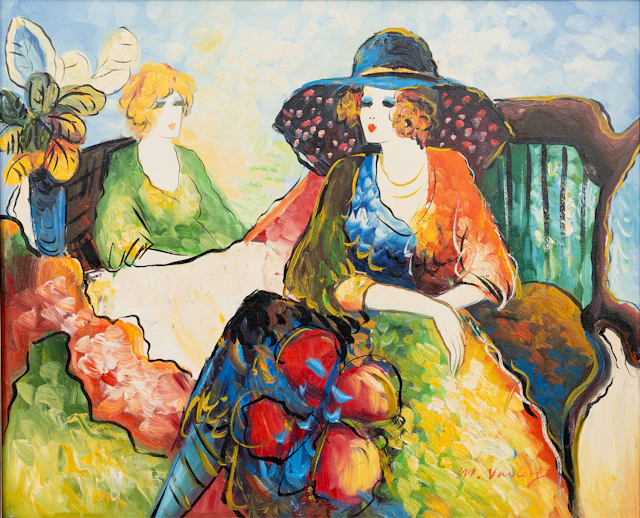
MARY VARLEY (1969-). Samtalande damer, olja på duk, signerad, M. Varley.
10/24/2026
€161.64
Schätzw.: €224.7
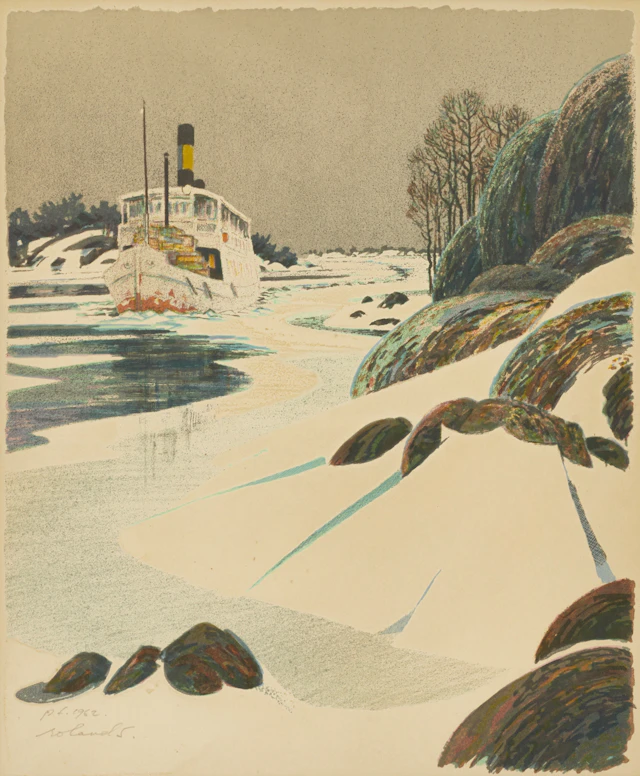
ROLAND SVENSSON (1910-2003). "Menföresbåten", signerad och daterad
10/24/2026
€89.8
Schätzw.: €179.76
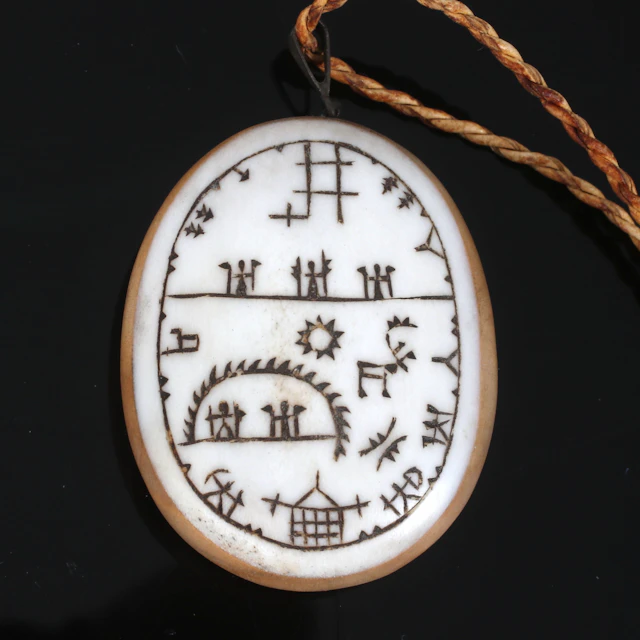
HÄNGSMYCKE, ceremonitrumma, signerad.
10/24/2026
€58.37
Schätzw.: €107.85




Bringen Sie Ihre Auktion zu Sammlern weltweit!
Jetzt eintragen lassenMit der Anmeldung stimmen Sie der Datenschutzrichtlinie zu. Jederzeit abmelden.
Barnebys HQ
Brahegatan 10
BOX 5038
114 37 Stockholm
