



Alle Auktionen / Zeitgenössische Kunst / Inma Nicolau (1948) - El carro de heno

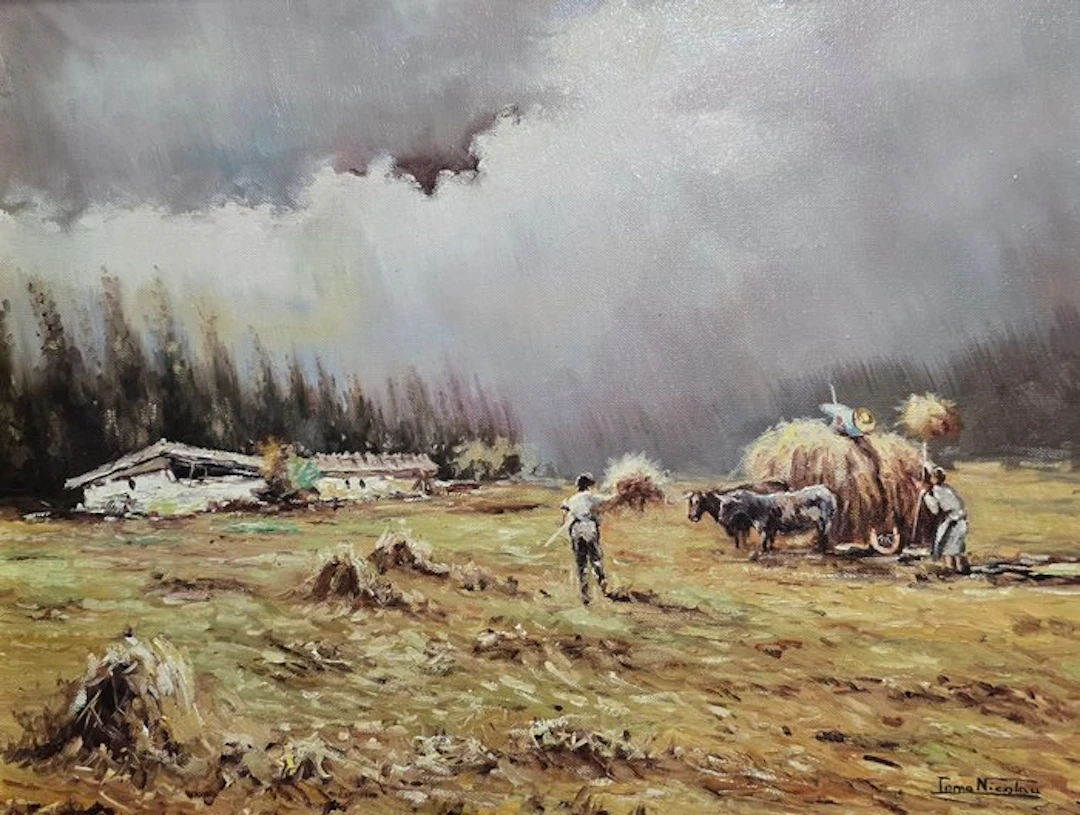
Pictura Galeria presents this magnificent work of art belonging to Inma Nicolau, depicting several peasants gathering the harvest with the help of draft animals under a stormy sky, as a symbol of effort, cooperation and the deep bond between human beings and the land. The painting stands out for its excellent technique and the great pictorial quality it conveys. · Frame dimensions: 68x77x7 cm. · Artwork dimensions: 40x50 cm. · Oil on canvas hand-signed by the artist in the bottom right corner, Inma Nicolau. · The piece is in good condition. · The work is sold with a precious frame (included in the auction as a gift). The work comes from an exclusive private collection in Girona. Important note: the photographs included are an integral part of the lot description. Digital representation in a mockup is indicative; there may be differences with the actual item in color, scale and details. The work will be professionally packed by an IVEX expert (https://www.instagram.com/ivex.online/), using high-quality materials to guarantee its protection. The shipping price covers both the cost of professional packing and the transportation itself. Shipping will be carried out by Correos or GLS with tracking. International shipping is available. This painting presents a broad rural scene devoted to the harvest work, developed in an open field beneath a vast sky loaded with clouds. The composition captures one of those essential moments of rural life in which people, animals, and landscape participate together in a task marked by effort, cooperation and the rhythm of the seasons. On the right, several workers cluster around a cart piled with hay, accompanied by two sturdy draft animals, while another figure advances from the center of the field toward them. In the background, some rural buildings and an extensive line of trees complete a scene full of quiet, industriousness and a deep bond with the land. The terrain occupies the entire lower half of the image and is covered with a wide range of ochre, golden, brown, muted greens and cream tones. These variations suggest a field that has already been harvested, with straw remnants, piles of dry grass, furrows and small irregularities. The surface is not smooth or uniform, but traversed by color changes and small vegetative fragments that convey the sense of freshly worked earth. Each area seems to retain the trace of the activity carried out during the day. In the foreground several piles of cereal or hay are distributed irregularly. Some rise like small compact sheaves, while others lie spread on the ground. These elements create depth and guide the eye from the bottom toward the main group on the right. They also reinforce the idea that the work is in full swing and that there is still more to do before the harvest is finished. The warm tones of the field sharply contrast with the gray and purplish sky. This opposition between the golden earth and the cool atmosphere creates a strong visual tension that dominates the whole scene. The landscape seems to be at a moment of transition, perhaps just before a rain or after a storm has passed. The light that still illuminates the ground suggests the sun manages to filter through the clouds, granting the workers a final interval to continue their tasks. The main group centers around a large cart loaded with hay. The load rises forming a rounded and abundant mass, made up of countless fibers and dry branches. Its size conveys the productivity of the day and symbolizes the fruit of prolonged effort. The hay takes on yellow, cream, brown and reddish tones, standing out against the dark background of the trees and turning the cart into one of the bright centers of the composition. At the top of the load there appears to be a figure responsible for organizing or securing the hay. Its small silhouette is partially integrated among the vegetative forms, but it introduces a note of movement and risk. The height of the cart allows us to imagine the effort required to lift, distribute and compress all the material. This person seems to cooperate with those at ground level, showing an organized task in which each worker performs a specific function. Next to the cart there are other figures dressed in light garments. One is located at the far right, leaning or resting near the load, while another seems to be behind the animals. Their postures convey fatigue, concentration and experience. Although the faces are not precisely discernible, the body positions allow us to understand that they are fully devoted to the work and accustomed to coordinating their movements with the animals and the rest of the group. The two draft animals occupy a central position within the right-hand cluster. Their dark bodies, marked by white and gray reflections, contrast with the clarity of the field and the hay. They remain attached to the cart, motionless for a moment, as if waiting for the order to move forward. Their presence adds strength and stability to the scene, as well as reminding of the importance of animals in traditional agricultural work. The animals seem calm and patient, used to the weight of the cart and the repetitive movement across the fields. Their bulk conveys endurance, while their heads slightly inclined suggest rest or concentration. They are not secondary elements, but essential participants in the activity. The relationship between them and the peasants reflects a form of work based on direct collaboration between humans and nature. In the center of the composition, a figure advances with their back to the cart. Their tilted posture and the position of the arms suggest they could be carrying a tool, dragging a sheaf, or picking up the last remnants of cereal. This person serves as a link between the foreground and the group of workers, guiding the gaze across the field. Their momentary isolation also allows us to perceive the vast extent of the terrain and the physical hardship of the day. The central figure introduces a sense of measured movement. They seem to walk with determination, yet also with the fatigue characteristic of many hours of work. Their light clothing stands out against the golden ground and becomes a visual reference point. Through them, the viewer can imagine the succession of repeated tasks: cut, gather, load, transport and start again until the entire field is gathered. On the left side there are two rural buildings of humble appearance. The closest one has a sloped roof and a long, light-toned body, while the second stretches horizontally behind it. Their simple, low shapes blend seamlessly with the terrain. They could be stables, barns, storerooms or dwellings connected to the agricultural operation. These buildings provide a sense of home and continuity. Although they are distant from the main group, they suggest the place where the workers will return after the day ends and where part of the harvest might be stored. Their light walls stand out against the dark line of the forest and offer a small visual resting point. At the same time, they remind that country life is not only about work, but also about community, family and shared memory. Behind the buildings a dense line of dark trees rises, spanning almost the entire horizon. Their vertical silhouettes form a natural barrier between the field and the sky. The trees appear wrapped in a damp and somber atmosphere, increasing the sense of depth. Their presence protects the buildings and delimites the cultivated space, as if the field opened into a clearing surrounded by a vast forest. The background vegetation takes on tones of black, brown, deep greens and violets. In some areas the trees are more defined, while in others they seem to fade under the mist. This atmospheric transition creates the impression of considerable distance and makes the landscape extend beyond what is visible. The dark mass also contributes to highlighting the brightness of the buildings and the hay load. The sky is one of the most dramatic elements of the scene. Large clouds of gray, white and purplish hues stretch across the top, occupying more space than the terrain. Some areas appear very dark and dense, while other areas open toward a diffuse clarity. The atmosphere seems to be in constant transformation, as if the weather could change from one moment to another. The clouds introduce a sense of urgency to the peasants' activity. The possibility of rain makes the hay harvest a task that must be completed before bad weather arrives. In this way, the sky does not merely function as a background, but actively participates in the narration. Its silent threat explains the group’s concentration and adds tension to a scene that appears tranquil. Despite the density of the clouds, a soft light spreads across the field and allows the golds of the land to remain visible. This clarity seems to arise from the horizon and creates a luminous band behind the figures. The contrast between the low light and the dark sky provides an atmosphere of great emotional intensity. It could be the last hours of the afternoon, when the day begins to fade and work must come to an end. The scene powerfully conveys the harshness of rural work, but also its dignity. The peasants appear small before the vastness of the field and the sky, reminding us of the fragility of humans in the face of nature. Yet their coordinated effort, the presence of the animals, and the abundance of the cart demonstrate their ability to adapt, collaborate and obtain food from the land. The painting does not wholly idealize rural life but shows its beauty alongside its demands. Also significant is the absence of modern elements. The draft animals, the hay cart and the simple buildings place the scene in a traditional reality, tied to a form of work passed down through generations. The landscape seems to preserve the memory of a world in which harvest depended directly on physical strength, knowledge of the land and constant observation of the weather. This dimension makes the work a evocation of rural memory. The composition carefully balances open spaces and narrative elements. The wide emptiness of the field and sky give the scene room to breathe, while the right-hand group concentrates the action. The left buildings visually compensate the cart and animals, creating a harmonious relationship between both ends. The central figure links the two zones and completes the viewer’s gaze path. The painting invites us to imagine the sounds of the moment: the crunch of hay, the steps of the animals, the brush of tools, the workers’ voices and the wind announcing a change in weather. It also allows one to feel symbolically the weight of the humid air and the smell of dry earth. This capacity to awaken sensations makes the scene feel intimate and profoundly human, even when it represents a form of life far from the present. Harvest takes on a meaning that goes beyond agricultural work. It represents the culmination of a cycle, the reward after months of waiting and the need to seize the right moment. The full cart symbolizes abundance and sustenance, while the clouds remind us that every outcome depends on a fragile balance. The work thus speaks of effort, time and the inseparable relationship between people and their environment. Overall, this painting offers a deeply evocative representation of a harvest day under a threatening sky, showing the collaboration between peasants and animals amid a wide, silent landscape. The loaded hay cart symbolizes the fruit of effort, the background buildings provide a sense of home and the vast field preserves the traces of the work done. The grandeur of the clouds recalls the unpredictable force of nature, while the figures’ determination conveys perseverance, cooperation and dignity. The scene celebrates the memory of rural life and the ancestral connection between humans and the earth and its cycles.
Schätzpreis:€250
Zur AuktionAlle Objekte ansehen vonCatawikioderZeitgenössische Kunst
Schätzpreis:
€250

1996 Australia 1/10 oz Gold Lunar Rat (Series I)
12/06/2017
€399
Schätzw.: €495.6
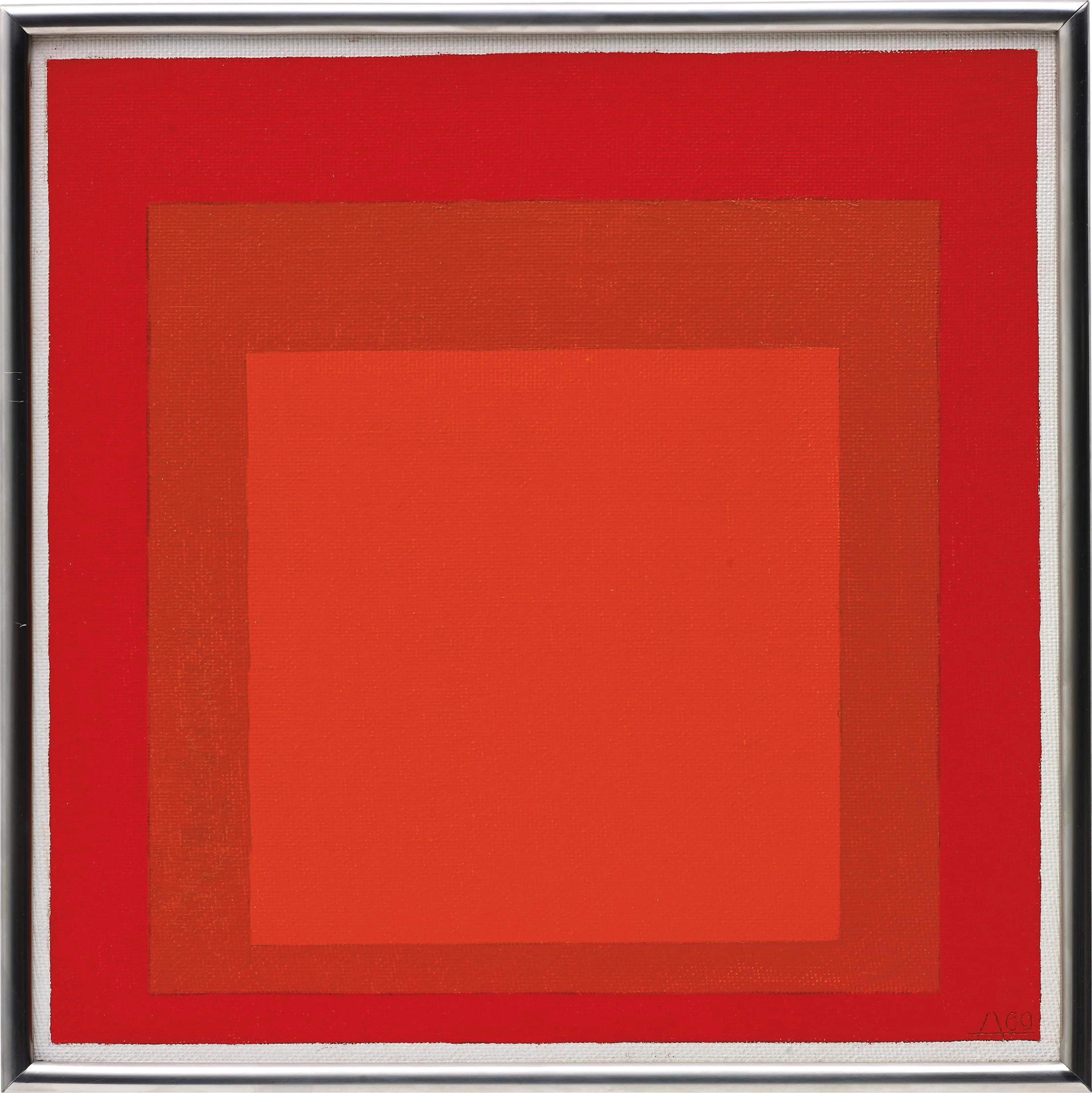
Study for Homage to the Square: Wet and Dry – Josef Albers
03/08/2017

€497,250
Schätzw.: €175,500




Bringen Sie Ihre Auktion zu Sammlern weltweit!
Jetzt eintragen lassenMit der Anmeldung stimmen Sie der Datenschutzrichtlinie zu. Jederzeit abmelden.
Barnebys HQ
Brahegatan 10
BOX 5038
114 37 Stockholm
