



Alle Auktionen / Kunst und Drucke / Italian School (XVIII) - NO RESERVE XL - Landscape of the...

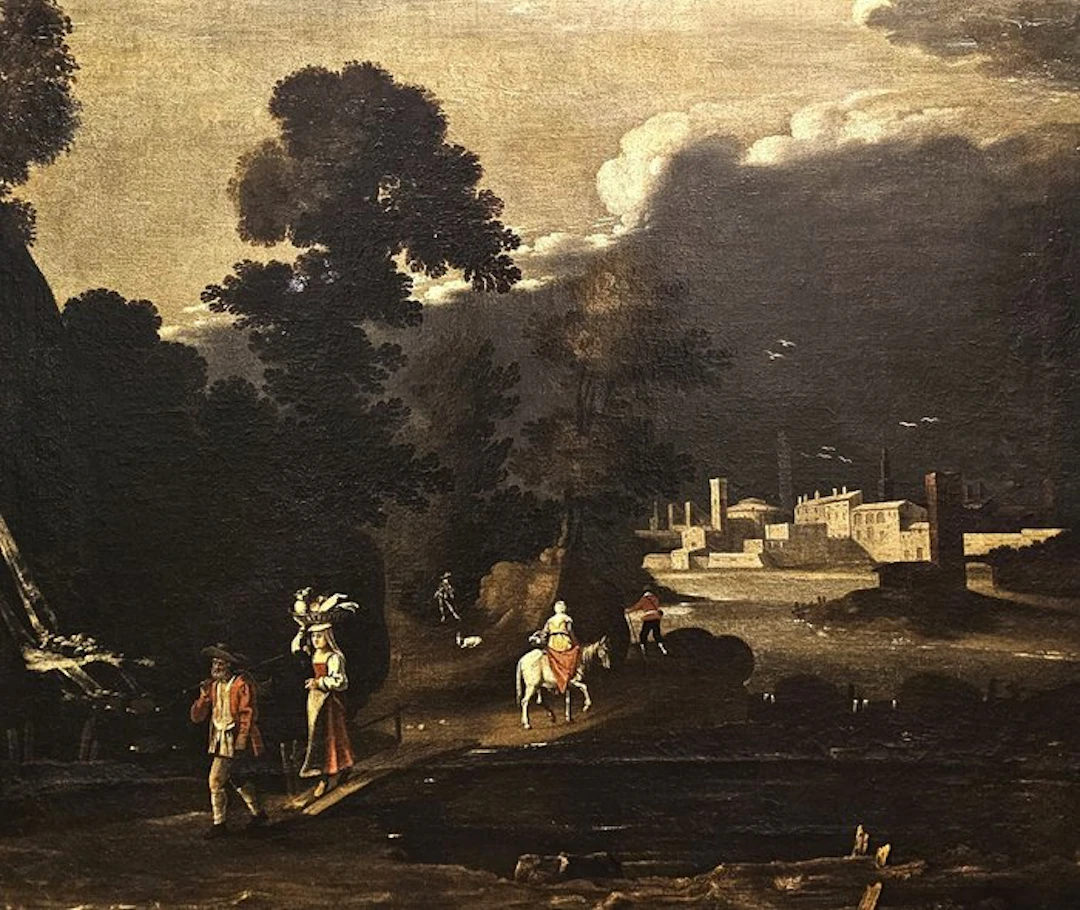
Roman School, first third of the eighteenth century Landscape of the Roman countryside with travelers and an idealized city in the distance School: Roman Chronology: first third of the eighteenth century, c. 1715–1740 Technique: oil on canvas Canvas size: 101 × 121 cm Overall dimensions with frame: 117 × 138 cm Signature: not visible Frame: important antique molded frame, considered contemporary according to available information Provenance: European private collection Description Impressive large-format oil on canvas belonging to the Roman landscape painting of the first third of the eighteenth century, which we prudently propose placing within the circle of Andrea Locatelli (Rome, 1695–1741). The composition develops a wide Italianate landscape traversed by small episodes of everyday life. In the foreground dominated by large masses of vegetation and sombre grounds, the gaze gradually advances toward an ideal city illuminated in the distance, whose architecture constitutes the true vanishing point of the work. Various figures traverse the landscape: travelers on foot, a woman carrying goods on her head, riders or mounted figures, and other small human and animal motifs distributed along the path. Their presence is not merely anecdotal. They function as a scale against the immensity of the territory and contribute to the composition that balance between an ideal landscape and everyday life that characterized a significant part of Roman painting of the eighteenth century. A monumental nature One of the most attractive aspects of the work lies in the extraordinary contrast between light and shadow. The left-hand area is occupied by a succession of trees with dense and dark crowns, built with a compact and deeply tonal brushstroke. These large vegetal volumes act as a true curtain that guides the eye toward the background. Above them unfolds a sky of extraordinary presence. A large formation of clouds crosses the composition diagonally, alternating deeply shadowed zones with edges intensely illuminated. This dramatic meteorology introduces tension in a genre typically associated with Arcadian serenity. The landscape does not merely represent territory: nature acquires its own emotional presence. Precisely that alternation between luminous landscapes and rougher, more dramatic scenarios forms part of the universe developed by Locatelli and his circle, within a tradition whose roots go back to Salvator Rosa and Gaspard Dughet. The city in the distance At the far right rises a cluster of buildings rendered in a color palette clearly lighter than the rest of the painting. Towers, palaces, and defensive structures are cut out almost like a luminous apparition against the dark sky. We cannot currently affirm that it represents an identifiable locality. The architecture seems to respond more to the concept of the paesaggio ideale, in which real elements of the Roman countryside and of the Italian landscape are rearranged freely to produce a harmonious image. That contrast between a rough foreground and an architectural horizon is one of the most effective devices of the composition: the travelers’ path symbolically leads from the darkness of nature to the inhabited space. The figures and the everyday world Particularly notable are the small figures. The woman advancing with goods on her head, the traveler who precedes her, the rider on a light mount, and the other characters introduce a genuinely popular dimension into the landscape. They are not heroes of Antiquity, but travelers, peasants, and inhabitants of rural roads. This use of everyday staffage brings the painting especially close to the milieu of Andrea Locatelli, whose output combines an idealized landscape with a gendered sensibility related to the Bamboccianti tradition, very present in eighteenth-century Rome. The characters are executed with economical and precise brushwork. Despite their small size, reds, whites, and ochres allow them to be perfectly individualized within a composition dominated by brown tones and dark greens. Attribution Given its stylistic characteristics, we propose cataloging as: Circle of Andrea Locatelli (Rome, 1695–1741), Roman School, first third of the eighteenth century. This attribution should be understood in historical-stylistic terms and not as a certification of direct authorship by the master. The spatial structure, the prominence of the tree masses, the idealized representation of the Italian countryside, the dramatic meteorology, the use of small popular figures, and the distant architecture are elements compatible with the tradition developed by Locatelli and the Roman landscape painters of his circle. There are museum precedents for works previously attributed generically to Italian school or even to Dughet that have later been related to Locatelli, illustrating the attributional complexity of this field of Roman landscape painting. Frame The painting retains an important antique molded frame, consistent in appearance with the eighteenth century and considered contemporary according to available information. Its wear, losses, and alterations are part of the material history of the work. For commercial and conservation reasons, the frame is included as a gift, and will not be the subject of any reclamation. Condition Overall condition in line with a work of approximately three centuries old. The surface shows craquelure, varnish aging, small irregularities, wear, and possible past conservation interventions. The photographs show a richly painted layer that remains perfectly legible, although certain dark areas could be partially veiled by aged varnishes. No UV examination, infrared reflectography, or scientific pigment analysis has been conducted. Any attribution should be considered provisional until a potential direct examination by a specialist. Canvas: 101 × 121 cm With frame: 117 × 138 cm Barcelona Art Gallery ships via a professional specialized company, using custom crates and foam protection. Worldwide shipments are offered. Any potential surcharge stemming from the large format or certain continental or non-EU destinations will be borne by the buyer.
Schätzpreis:€2,000
Zur AuktionAlle Objekte ansehen vonCatawikioderKunst und Drucke
Schätzpreis:
€2,000
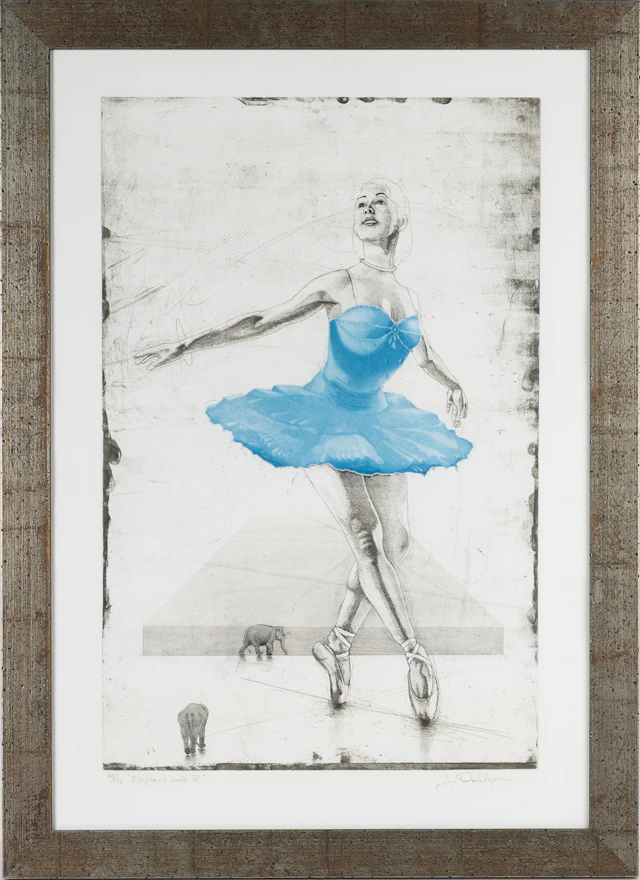
JAN DAHLGREN (FÖDD 1954). "Elephant walk III", etsning.
10/23/2026
€26.96
Schätzw.: €89.94
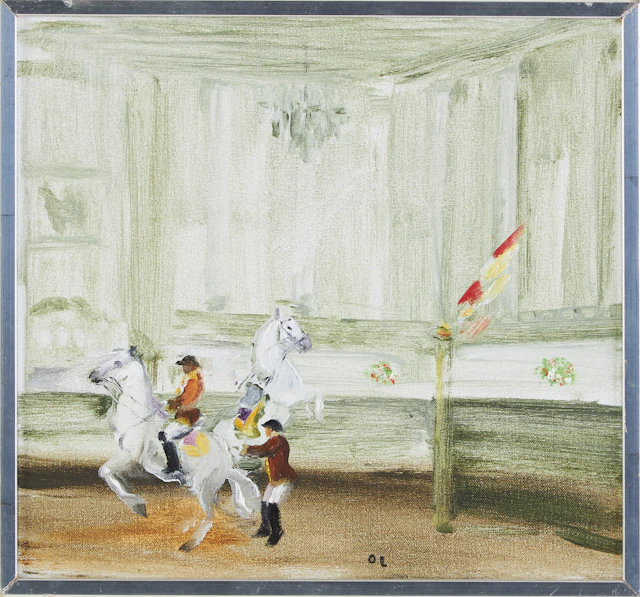
OLLE LINDGREN (FÖDD 1930). "Detroit" och interiör med hästar, (2 )
10/23/2026
€89.88
Schätzw.: €179.89

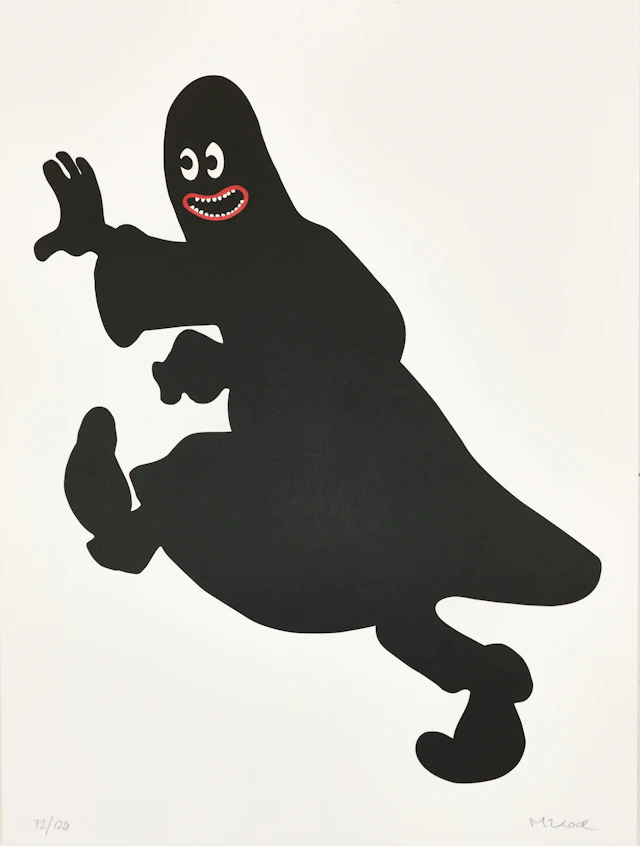
MAKODE LINDE (Sverige, född 1981). "Phantom Blot", signerad och numrerad
10/23/2026
€131.31
Schätzw.: €224.87




Bringen Sie Ihre Auktion zu Sammlern weltweit!
Jetzt eintragen lassenMit der Anmeldung stimmen Sie der Datenschutzrichtlinie zu. Jederzeit abmelden.
Barnebys HQ
Brahegatan 10
BOX 5038
114 37 Stockholm
