


Alle Auktionen / Antike Kunst / Late Roman/Early Byzantine Bronze Medical instrument, Tweezer (No

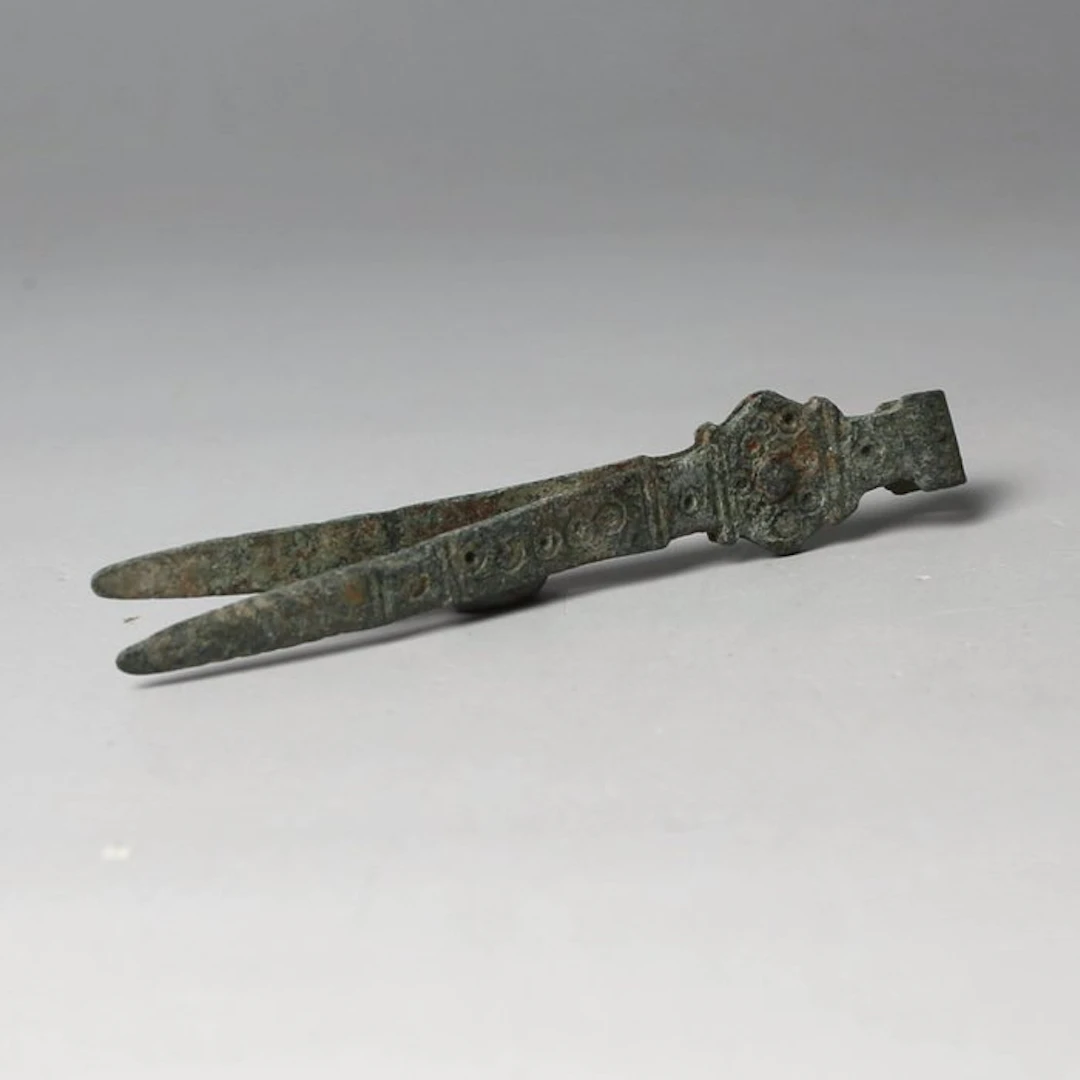
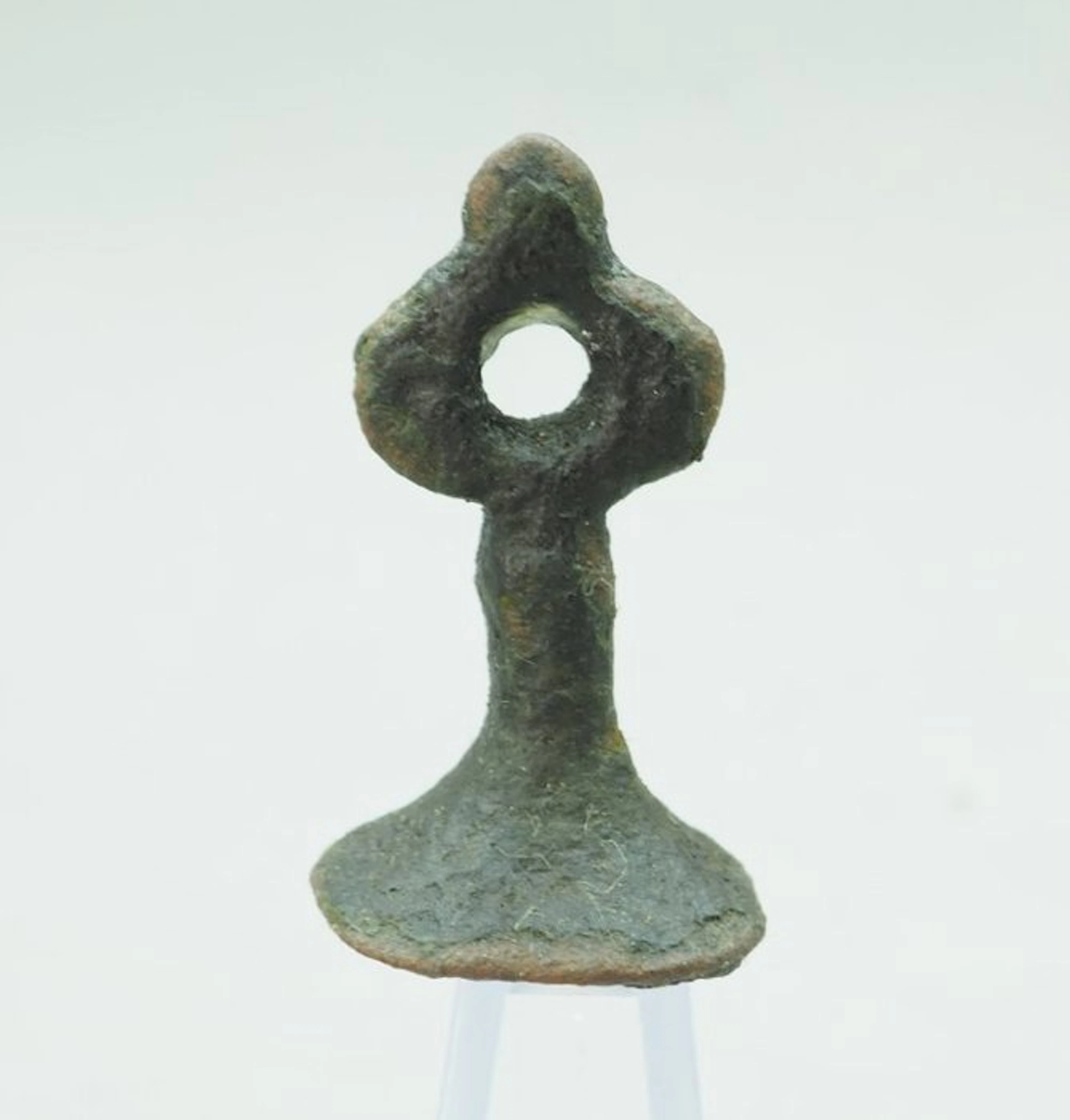
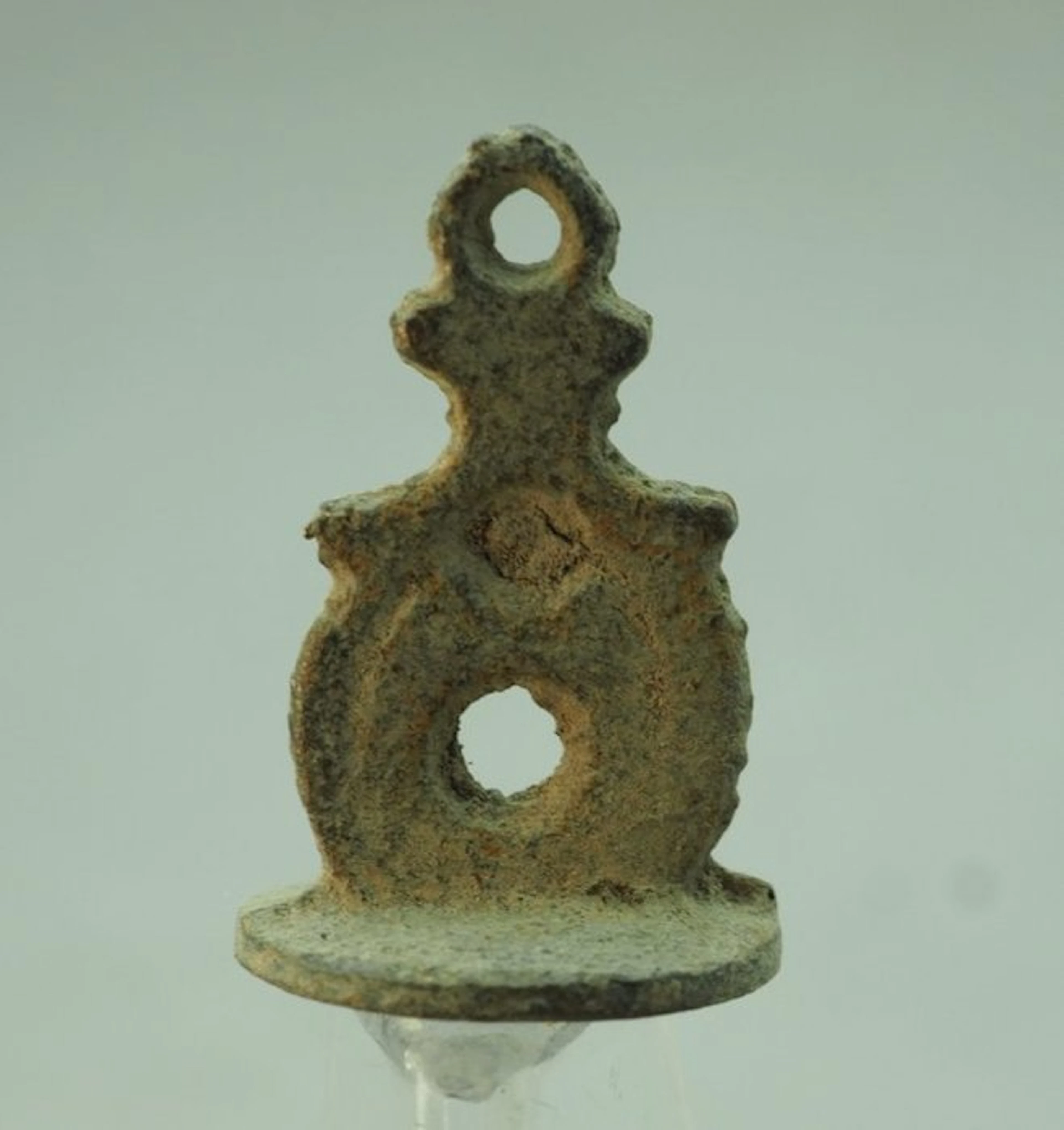
ITEM: Medical instrument, Tweezer MATERIAL: Bronze CULTURE: Late Roman / Byzantine PERIOD: 4th - 7th Century A.D DIMENSIONS: 68 mm x 11 mm CONDITION: Good condition PROVENANCE: Ex Austrian private collection, acquired before 1990s Roman bronze medical instruments, meticulously fashioned with skill and care, epitomize the sophistication of ancient healthcare. These robust implements, encompassing scalpels, forceps, and probes, manifest the Romans’ dedication to surgical precision and patient well-being. These tools played pivotal roles in an array of medical procedures, from intricate surgeries to wound management, underscoring the Romans’ unwavering commitment to the practice and science of healing. In contemporary times, these relics remain enduring symbols of the enduring influence of Roman medicine and surgical prowess. The Spatula probe consists of a long thin handle and tends to range in size from roughly 6 to 15 centimetres with a spatula on one end of its handle and an olivary probe on its other end, indicating its multifunctionality. The spatula is usually leaf-shaped and tends to be flat on one side and slightly rounded on the other. Some spatula ends are quite thin, perhaps five or six millimetres in width, whilst others are short and blunt. Some have more of a rectangular shape to them and others have a spatulat blade on both ends. It could be used for spreading medicaments on infected areas of the body as well as mixing medicines on an ointment pallet. Sometimes the spatula could be used as a cautery, as Soranus mentions using it on the umbilical cord (Gyn 3. 27, Milne 1907: 60). It could also be used as a tongue depressor and as a blunt dissector (Milne 1907: 59-60). The olivary end could be used in the same way as many already suggested for the double-ended olivary probe. Comes with Certificate of Authenticity and Export license
Schätzpreis:€150
Zur AuktionAlle Objekte ansehen vonCatawikioderAntike Kunst
Schätzpreis:
€150
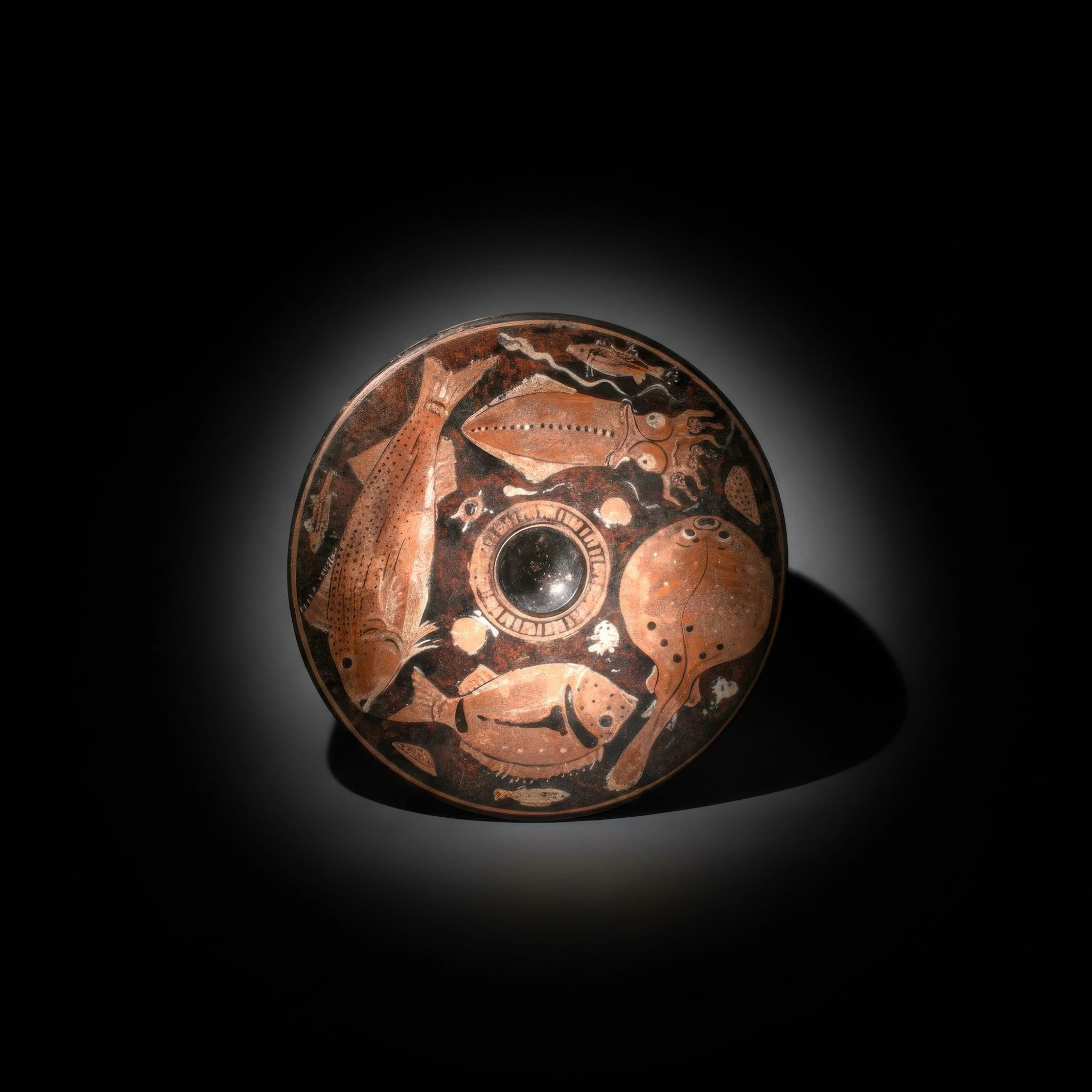
VERY RARE APULIAN RED-FIGURE FISH PLATE WITH 15 SEA CREATURES
06/21/2026

€23,187.64
Schätzw.: €11,540.27




Bringen Sie Ihre Auktion zu Sammlern weltweit!
Jetzt eintragen lassenMit der Anmeldung stimmen Sie der Datenschutzrichtlinie zu. Jederzeit abmelden.
Barnebys HQ
Brahegatan 10
BOX 5038
114 37 Stockholm
