


Alle Auktionen / Antike Kunst / Late Roman/Early Byzantine Terracotta Oil Lamp with a horse

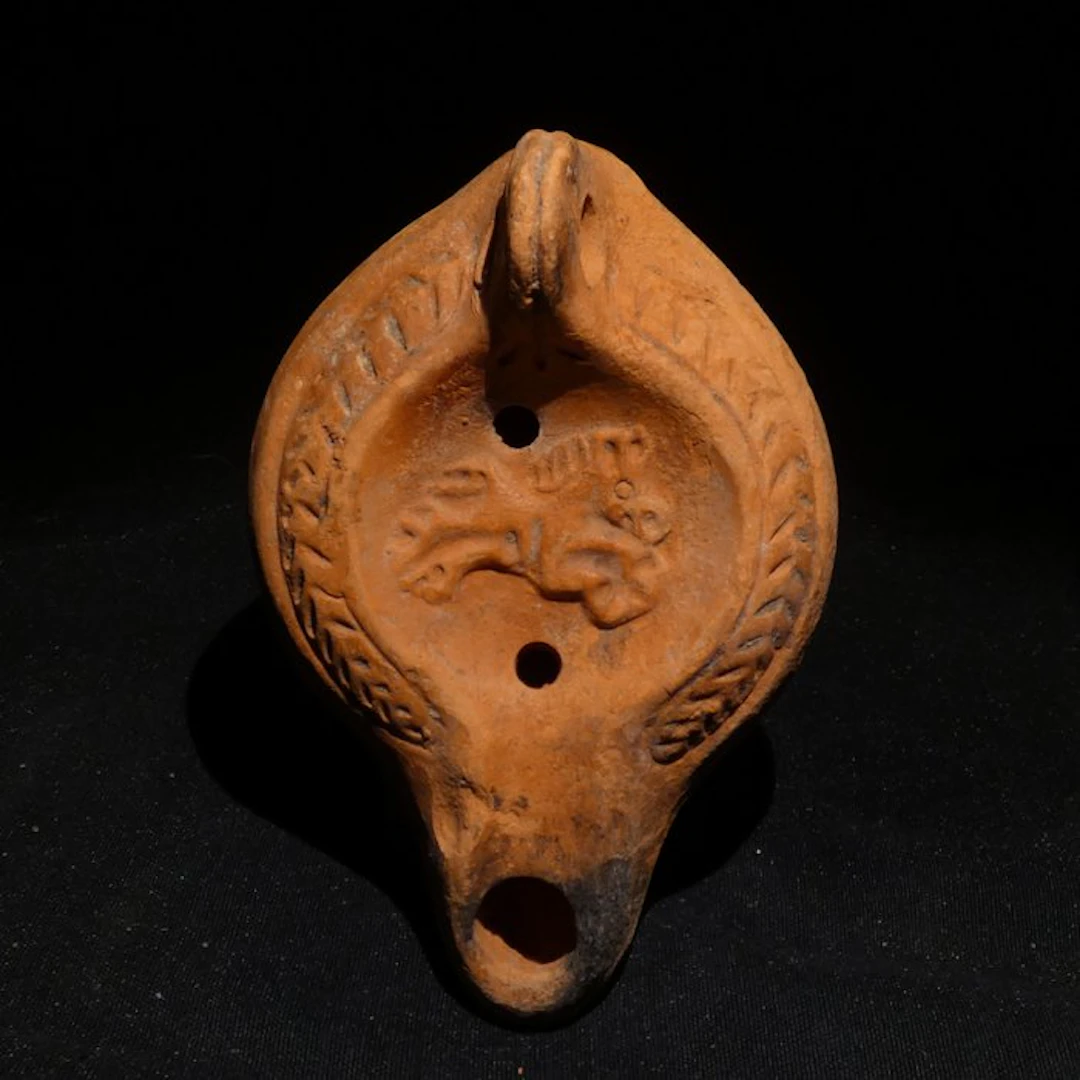
Oil Lamp with a horse decoration Late Roman Empire, 4th-6th century AD Pottery 13 cm larg and 9 cm width PROVENANCE: Private collection, France , 1970 – 1980. Acquired from the french art market. CONDITION: Good, intact, see photos. Terracotta lamps, commonly known as “lucernas,” were an essential element of daily life in the Roman Empire. These small oil lamps provided light in homes, workshops, temples, and public spaces. Made primarily from terracotta, a type of fired clay, they were relatively inexpensive to produce and widely accessible across different social classes. Their practicality, combined with artistic decoration, made them both functional and decorative objects in Roman material culture. Roman terracotta lamps were typically made using molds, a technique that allowed artisans to reproduce the same design many times. The process involved pressing clay into a two-part mold, which formed the upper and lower sections of the lamp. After drying, the two halves were joined together, leaving a central hole at the top for pouring oil and a small nozzle where the wick would be placed. Once assembled, the lamp was fired in a kiln to harden the clay. One of the most distinctive features of these lamps is their relief decoration. The upper surface, known as the discus, often displayed detailed scenes created directly in the mold. These relief images could represent mythological figures, gods and goddesses, animals, gladiatorial combats, theatrical masks, or everyday activities. Some lamps also depicted symbols associated with religion or protection, reflecting the beliefs and cultural values of Roman society. The relief decoration served several purposes. It enhanced the aesthetic appeal of the lamp, but it could also communicate messages about identity, status, or personal devotion. For example, a lamp showing a deity might indicate the owner’s religious preferences, while scenes of gladiators could reflect the popularity of public spectacles. Archaeological discoveries across the Roman world—from Italy to Hispania, North Africa, and the Near East—demonstrate the widespread use of these lamps. Their standardized forms and decorative motifs also help archaeologists date archaeological contexts and understand patterns of trade and cultural exchange within the empire. Thus, terracotta lamps with relief decoration illustrate how everyday Roman objects combined utility, artistic expression, and cultural meaning.
Schätzpreis:€450
Zur AuktionAlle Objekte ansehen vonCatawikioderAntike Kunst
Schätzpreis:
€450
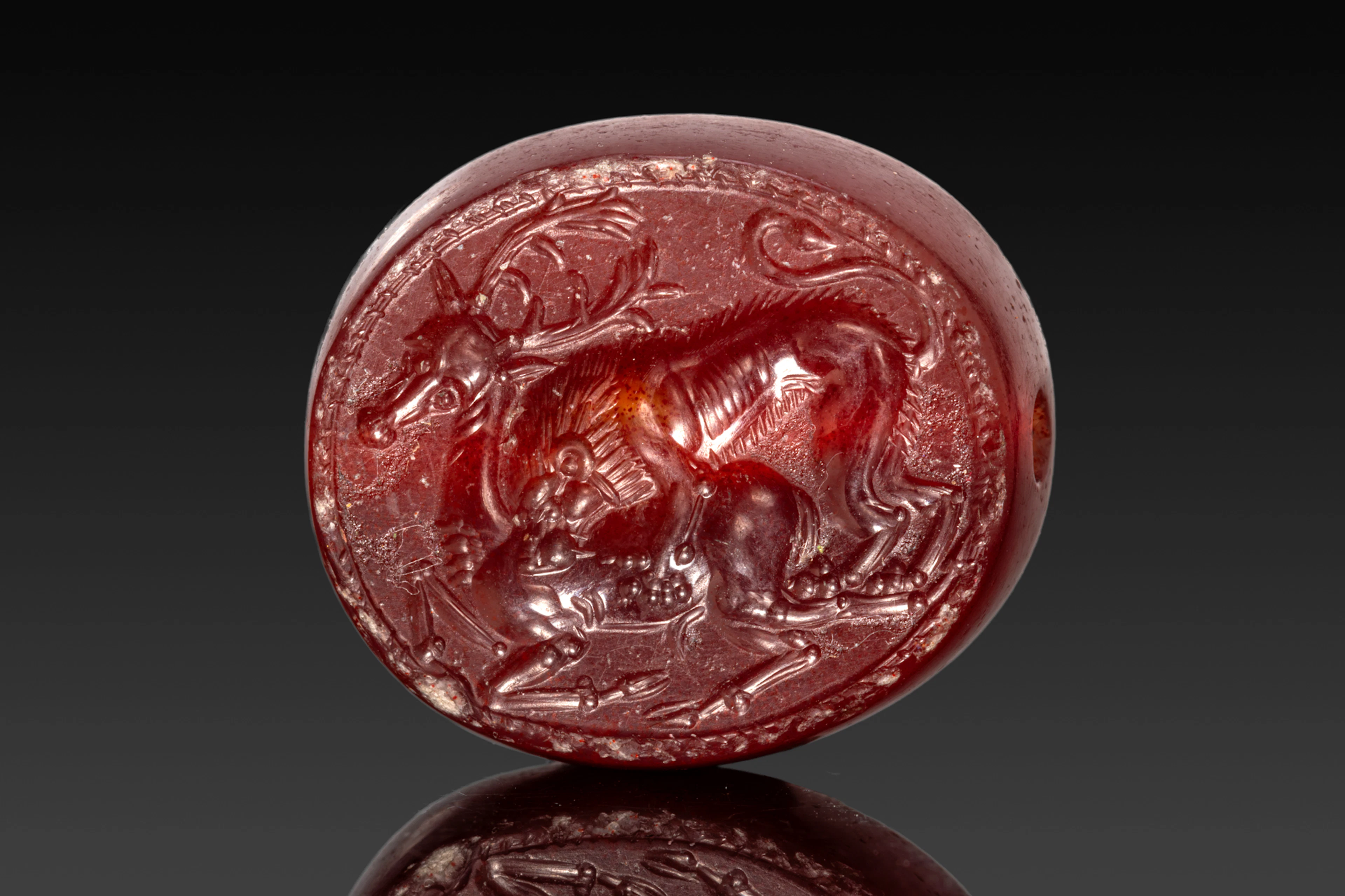
ETRUSCAN CARNELIAN STAMP SEAL WITH A LION ATTACKING A STAG
06/21/2026

€5,796.91
Schätzw.: €5,773.91
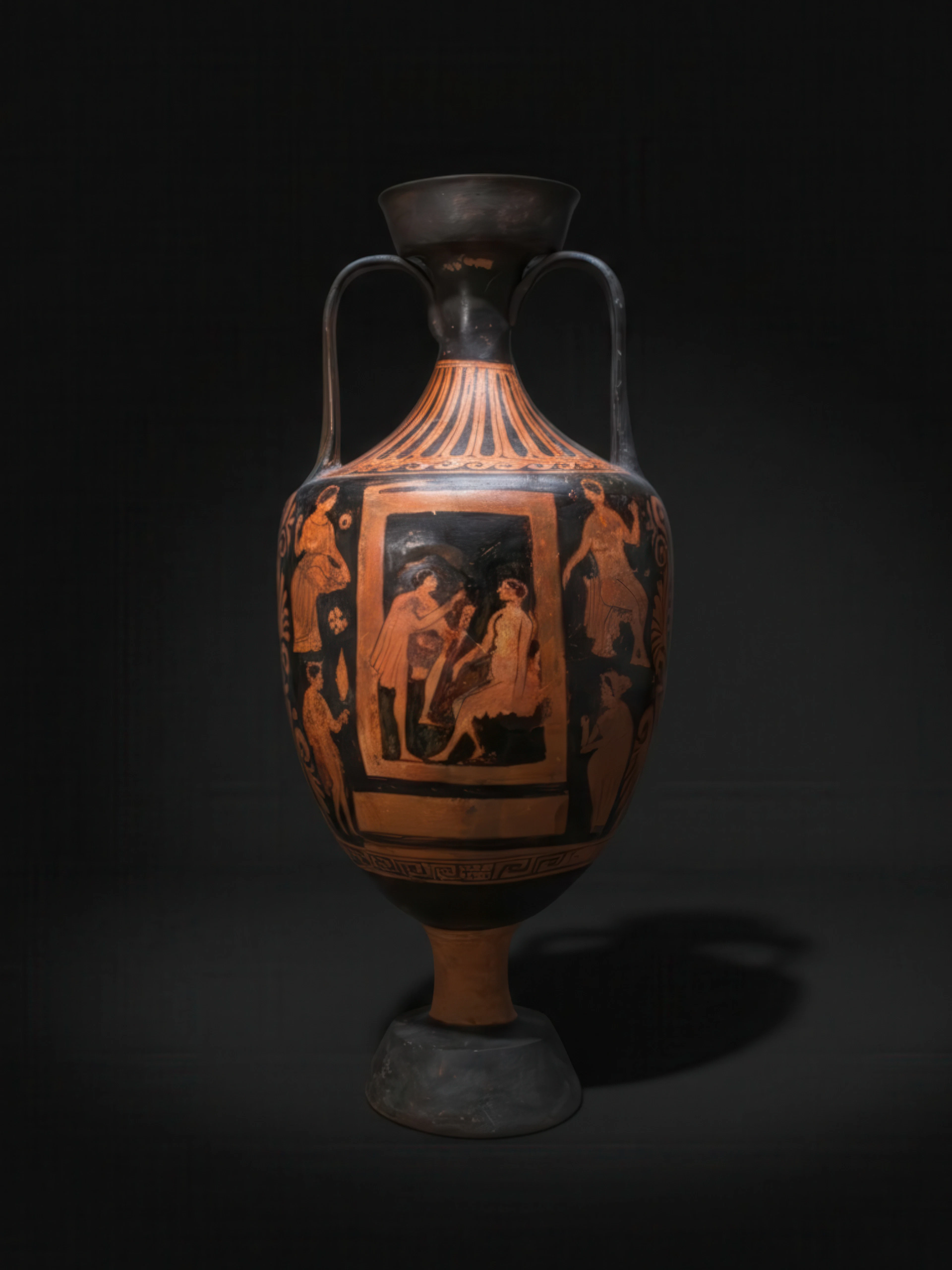
LARGE APULIAN RED-FIGURE AMPHORA WITH NAISKOS SCENE AND ALTAR
06/21/2026
€6,376.6
Schätzw.: €5,773.91




Bringen Sie Ihre Auktion zu Sammlern weltweit!
Jetzt eintragen lassenMit der Anmeldung stimmen Sie der Datenschutzrichtlinie zu. Jederzeit abmelden.
Barnebys HQ
Brahegatan 10
BOX 5038
114 37 Stockholm
