

OCT 8 | 3:00 PM

Bringen Sie Ihre Auktion zu Sammlern weltweit!
Jetzt eintragen lassenMit der Anmeldung stimmen Sie der Datenschutzrichtlinie zu. Jederzeit abmelden.
Barnebys HQ
Brahegatan 10
BOX 5038
114 37 Stockholm
Alle Auktionen / Antike Kunst / Levant Terracotta Levantine Terracotta Statuette of an...

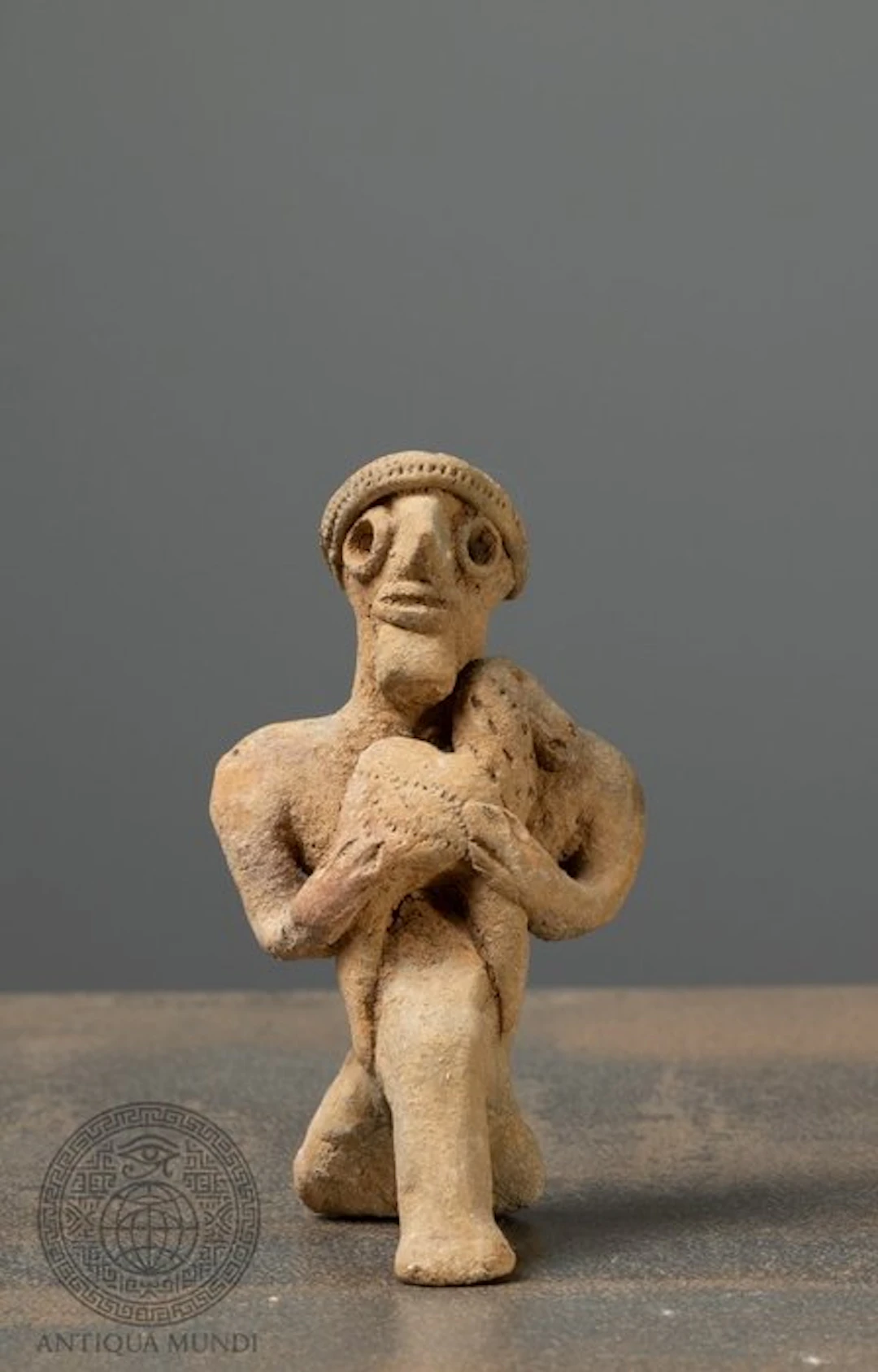
Unusual terracotta statuette depicting a kneeling or seated male offering bearer holding a small sacrificial animal, probably a young goat or kid, closely in his arms. Typologically, the figure belongs to the Levantine or so-called Syro-Hittite tradition of the first half of the 2nd millennium BC. A particularly close comparison is known in the collection of CB Gallery, where a related terracotta statuette depicting an offering bearer with an animal is catalogued as Syro-Hittite and dated to the first half of the 2nd millennium BC. The human body is strongly stylised. The figure rests on the bent rear leg or a broad, compact lower body, while the other leg extends prominently forward. Head and Facial Features Particularly characteristic is the oversized head, with a strongly projecting pointed nose and an elongated, pronounced chin or beard. The eyes are represented by large, deeply drilled circular openings. Equally striking are the deeply recessed openings at the sides of the head representing the ears. The man wears a flat, circular headdress with a distinctly modelled rim. The brim is decorated with a regular sequence of small punctures or notches. The combination of the prominent nose, elongated chin, deeply pierced eyes and ears, and characteristic circular headdress closely corresponds to the related example published by CB Gallery. It has been suggested that such deep openings may originally have accommodated inlays or decorative elements. The Offering Bearer and the Animal The man embraces a small animal with both arms, holding it directly against his chest and shoulder. The animal's head is positioned beside the bearer's shoulder or cheek. It has an elongated muzzle and clearly upright ears. The animal's body is decorated with numerous punctures and small depressions. Additional incised and punctuated details emphasise anatomical or decorative features. On the basis of closely related examples, the animal may plausibly be interpreted as a sacrificial animal, probably a young goat or kid. Iconography The figure may be interpreted as an offering bearer or worshipper carrying a sacrificial animal. The animal is not merely positioned beside the human figure but is held tightly against the body with both arms, creating a compact and unified sculptural composition. Terracotta figures of this general type are associated with the Levantine or so-called Syro-Hittite votive tradition of the second millennium BC. The precise deity, sanctuary or cultic context associated with this particular figure cannot, however, be determined from the object alone. Manufacture and Surface The statuette is made of light beige to ochre-brown fired terracotta and was modelled by hand. Details were emphasised through incision, puncturing and deep drilling. Particularly carefully rendered are the decorated rim of the headdress, the large eye and ear openings, and the textured surface of the animal. The reverse is considerably more simply worked than the front and sides. The back of the body and rear of the head are only summarily modelled. Condition Age-related state of preservation with surface wear, earthen and mineral deposits, minor chips and areas of discolouration. The principal iconographic features remain well preserved: the characteristic head of the offering bearer with prominent nose and deeply pierced eyes and ears, the decorated headdress, the unusual seated posture, and the animal held in both arms. Provenance Formerly in the Madeleine & Erich Dammann Collection, Germany. Acquired during the collectors’ extensive travels between 1950 and 1970. The collection is documented in Germany by 1970 through historical photographs of the family residence and subsequently remained in continuous family ownership. The objects were acquired privately during the collectors’ travels. As was customary for private purchases made at local markets during the 1950s and 1960s, purchase receipts or invoices were generally neither issued nor requested. Historical photographs and biographical documentation relating to the Dammann Collection are available and support the long-standing provenance of the collection.
Schätzpreis:€650
Zur AuktionAlle Objekte ansehen vonCatawikioderAntike Kunst
Schätzpreis:
€650
OCT 8 | 3:00 PM


OCT 8 | 3:00 PM

Bringen Sie Ihre Auktion zu Sammlern weltweit!
Jetzt eintragen lassen€275
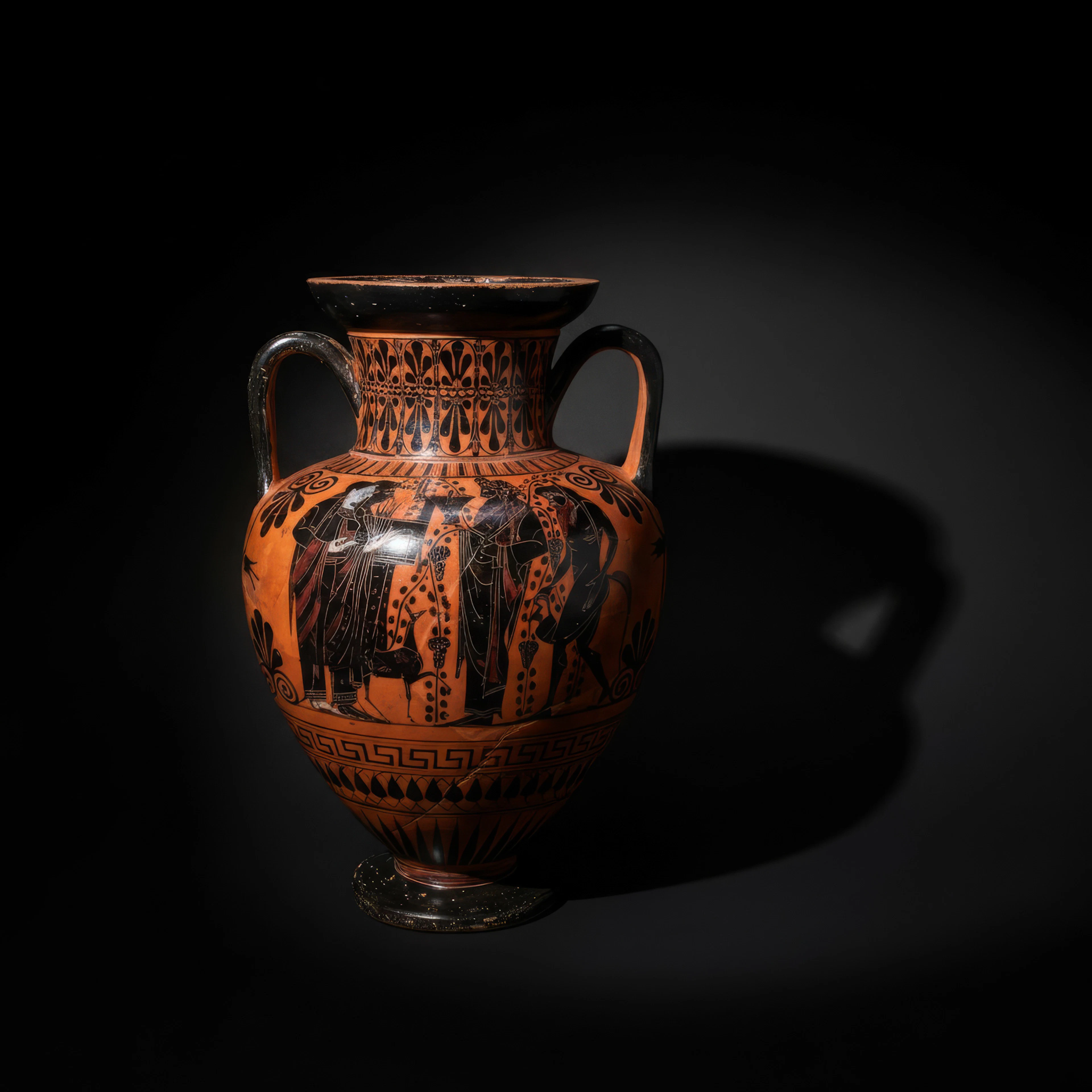
RARE ATTIC BLACK-FIGURE NECK AMPHORA ATTRIBUTED TO THE LYSIPPIDES
06/21/2026

€46,375.28
Schätzw.: €16,156.37
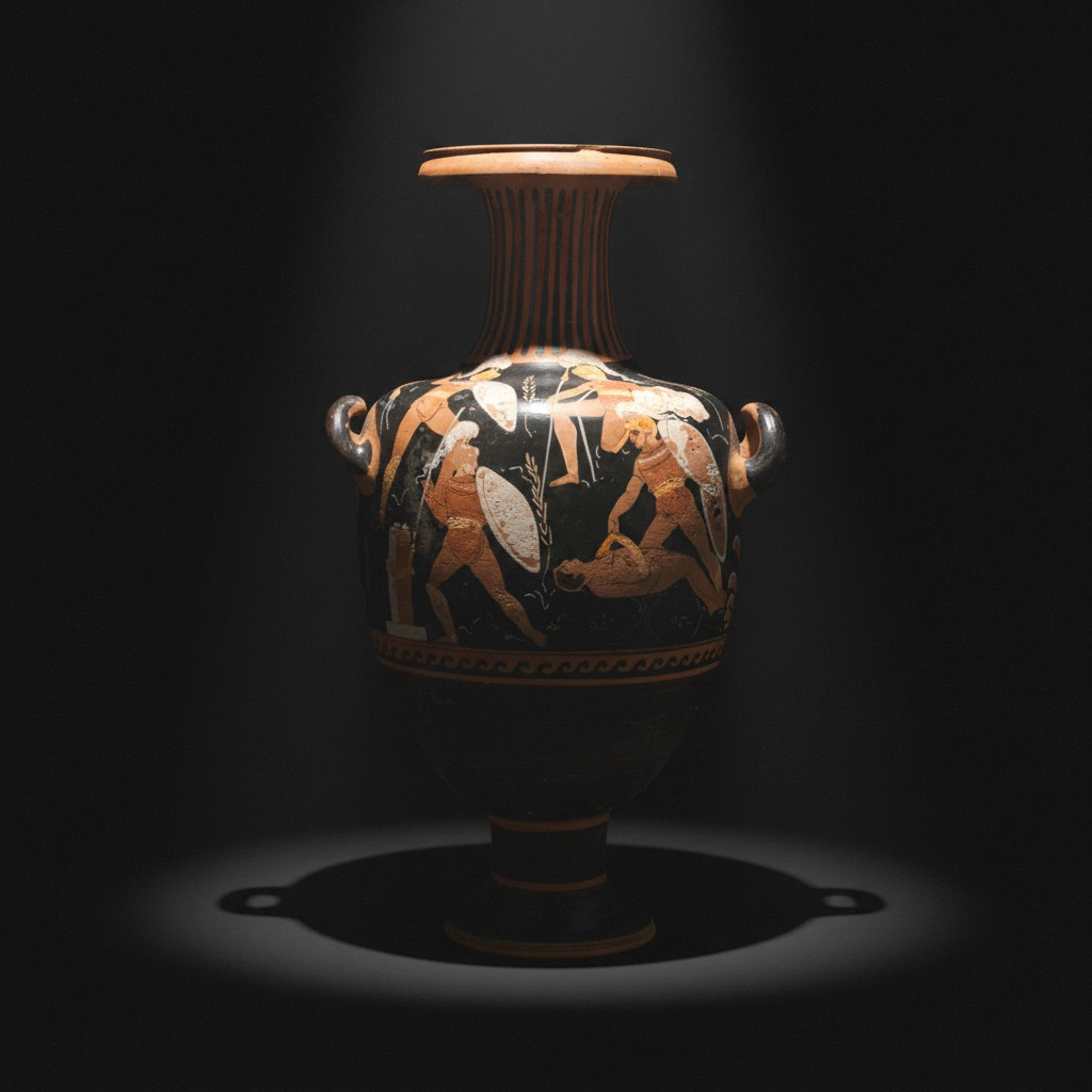
TL TESTED - LARGE GREEK APULIAN RED-FIGURE HYDRIA WITH HOPLITES COMBAT SCENE
06/21/2026
€10,434.43
Schätzw.: €6,924.16