




Alle Auktionen / Etnografica / Phylloceras Ammonite with Fiery Orange Hues and Exposed...

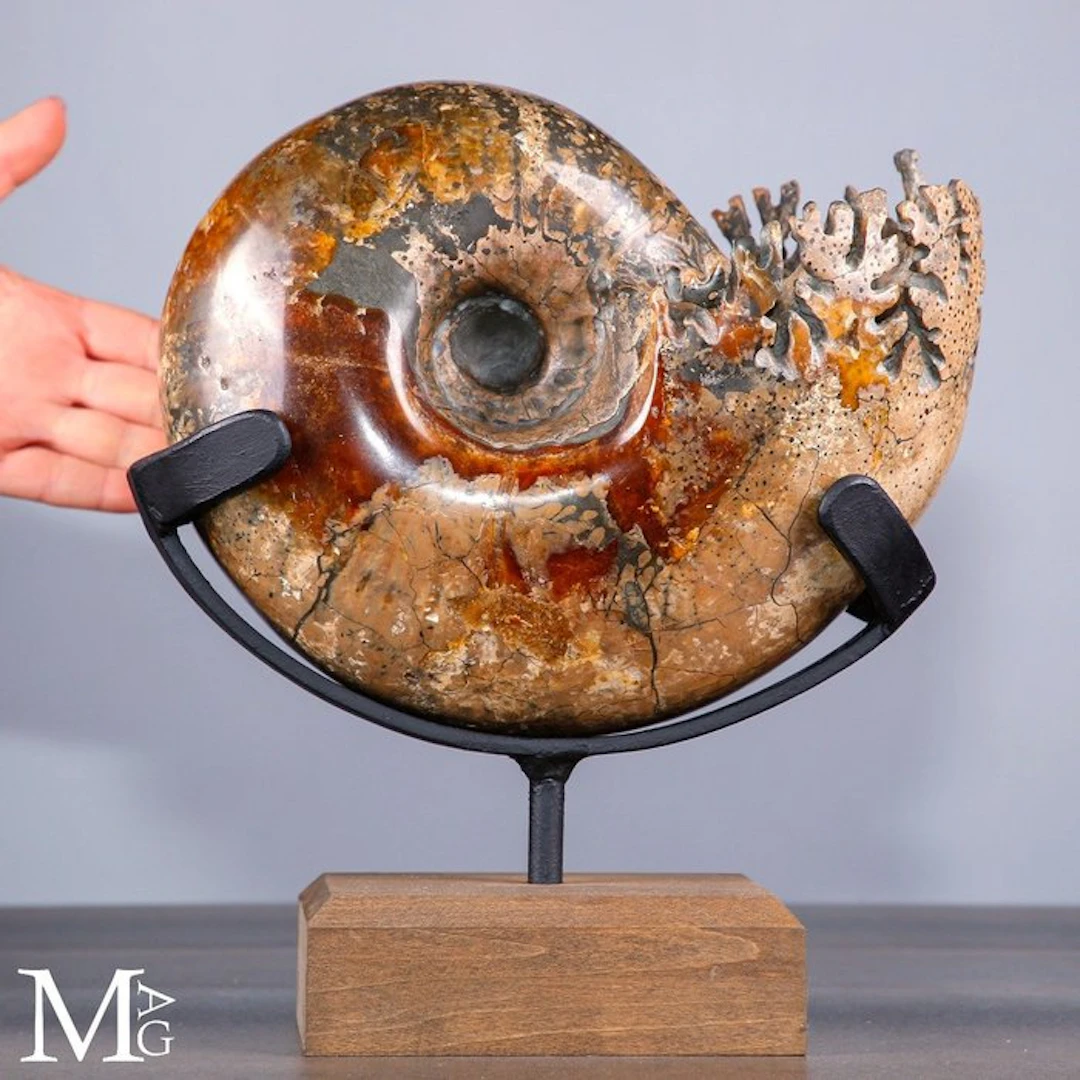
This imposing specimen is a fossil ammonite of the genus Phylloceras, coming from Lower Cretaceous deposits in Madagascar. With a considerable diameter, the fossil has been masterfully prepared and polished to enhance its warm colors and complex morphology. Mounted on an artisanal base in wood and iron, the specimen is presented as a natural sculpture object, where paleontological science blends with aesthetics. The most fascinating feature is the prepared section that reveals in exceptional detail the intricate sutural lines, offering a rare view of its internal anatomy. Direct observation of the specimen allows appreciation of its tightly coiled spiral shape, typical of Phylloceras. The surface, mirror-polished, shows a color palette ranging from amber-brown to rust-red, with mineral inclusions creating abstract patterns reminiscent of geological maps. Fine veins and natural fracture lines, cemented during the fossilization process, traverse the shell, telling the story of the immense pressures and transformations experienced over more than 100 million years. The umbilicus, the center of the spiral, is deep and well defined, adding three-dimensionality to the composition. The true masterpiece of this piece lies in the terminal portion, where the outer shell has been skillfully removed to expose the internal structure. Here emerge the sutural lines, the complex pattern formed by the intersection of the septa (the walls dividing the chambers of the shell) with the shell wall. In Phylloceras, these sutures reach great complexity, taking on a phylloid, leaf-like or delicate reticulate appearance. This preparation not only has scientific value, showing a diagnostic feature of the genus, but also transforms the fossil into a natural work of art with a quasi-fractal pattern. Ammonites, extinct marine cephalopods related to modern nautilus and octopuses, dominated the oceans of the Mesozoic. After their death, the shells settled on the seabed and, under favorable conditions, were buried by sediments. Over millions of years, mineral-rich water percolated through the sediments, replacing the original organic structure of the shell (aragonite) with more stable minerals such as calcite and filling the internal chambers. Madagascar deposits are famous for their preservation quality and for the extraordinary coloration that these fossils assume, due to the peculiar mineral composition of the soil. A specimen of this scale and quality is far more than a simple fossil: it is a tangible fragment of the planet’s deep history. Its imposing presence makes it ideal as a focal point in a refined environment, whether a professional study, a library, or a contemporary living space. It fits perfectly into a natural history collection, in a modern Cabinet of Curiosities, where it serves as a bridge between scientific wonder and design. The custom, sober and elegant base further elevates its status to a display piece, ready to be admired in every detail. Technical details Name: Fossil Ammonite - Phylloceras Origin: Madagascar Geological period: Lower Cretaceous Size: 275 x 240 x 135 mm (specimen) Weight: 7363 g (specimen) Base: Custom wood-and-iron support Conditions: Natural specimen, prepared and polished. The visible fracture lines are natural geological features consolidated during fossilization and should not be regarded as defects.
Schätzpreis:€1,800
Zur AuktionAlle Objekte ansehen vonCatawikioderEtnografica
Schätzpreis:
€1,800
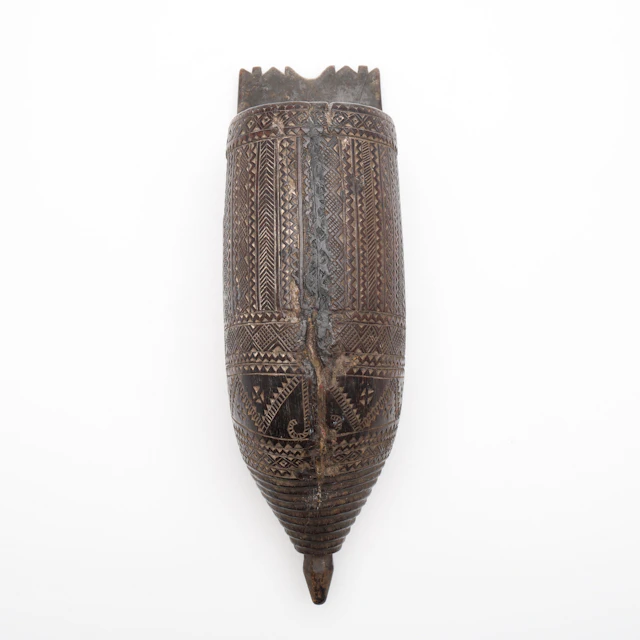
KOGER/BEHÅLLARE, TONGAÖARNA, DATERAD 1938.
10/24/2026
€134.7
Schätzw.: €71.9




Bringen Sie Ihre Auktion zu Sammlern weltweit!
Jetzt eintragen lassenMit der Anmeldung stimmen Sie der Datenschutzrichtlinie zu. Jederzeit abmelden.
Barnebys HQ
Brahegatan 10
BOX 5038
114 37 Stockholm
