


OCT 27 | 4:00 PM

Alle Auktionen / Teppiche & Textilien / Silk Yarkand Saf
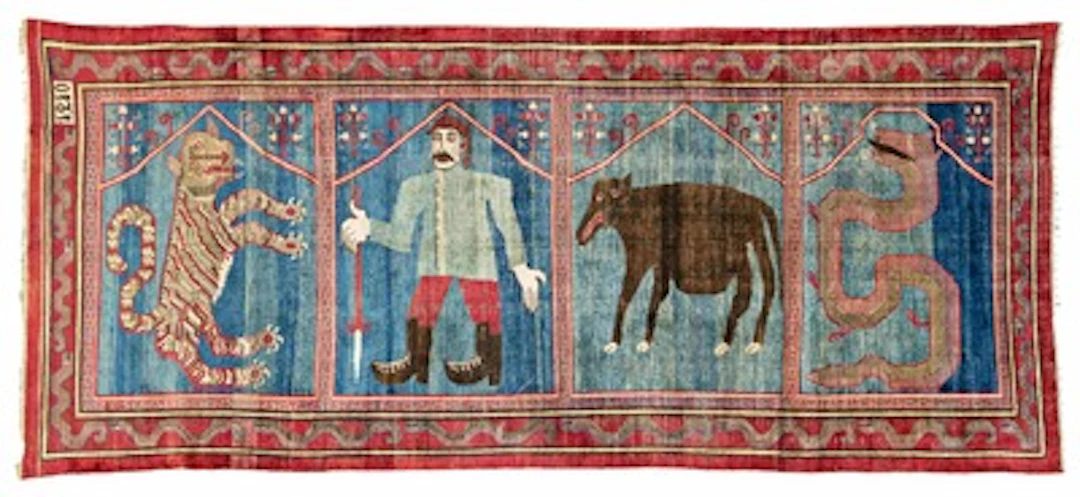
398 x 171 cm (13' 1" x 5' 7") East Turkestan, dated 1210 (1795) Condition: good for its age, low pile in places, kilim ends slightly damaged, minor small repairs Warp: silk, weft: silk, pile: silk We may be stretching it a bit here, but without interpreting the date as originating from the Christian calendar, it is unlikely that anyone would have thought to date the carpet to the early 20th century. The quality of the colors and the knotting does not match what we believe we know about the late, degenerate, and heavily Chinese-influenced East Turkestan carpets. In HALI 40, page 14, Parviz Tanavoli presented such a carpet, describing it as "one of the strangest carpets he had ever seen." He was able to determine that the carpet had arrived in Persia with Armenian emigrants shortly after World War I. He wrote that the man depicted resembled a Russian or Armenian officer from the late 19th century. In addition to dragons and tigers, he describes another animal as possibly a pregnant sheep, which could symbolize the man's wealth. A few years later, on November 15, 1996, another example appeared at Nagel's, where it remained unsold at an estimated price of around DM 100,000. This carpet was later featured in HALI 184, pages 66-67, in the collection of the well-known dealer Oliver Hoare. On October 27, 2022, it was sold at Christie's as Lot 208 for £25,200, confusingly listed under the designation "Samarkand" (HALI 214, p. 165). A third carpet from a Madrid collection had previously been sold at the same auction house for £43,750 (Christie's, October 24, 2019, Lot 262; HALI 204, page 124). Our specimen is thus the fourth known piece. Parviz Tanavoli had already pointed out a possible astrological connection nearly 40 years ago, and indeed, all the animals depicted belong to the Chinese zodiac. Ultimately, however, we know hardly more today than we did back then. There is evidence of an Armenian population in the oasis cities of East Turkestan dating back centuries. The patron may have commissioned one or more carpets in 1795 and, since he lived among Muslims, may have additionally received the Islamic date in a form he could read. However, should a costume historian be able to prove that the clothing of the man depicted is unlikely for the period around 1800, we would have to fundamentally rethink our dating of East Turkestan carpets. An enigmatic, impressive carpet of great quality and charm that will likely continue to puzzle future generations. Estimate: € 30000 - 40000 Starting bid: € 20000
Schätzpreis:€30,000
Zur AuktionAlle Objekte ansehen vonAustria Auction CompanyoderTeppiche & Textilien
Schätzpreis:
€30,000
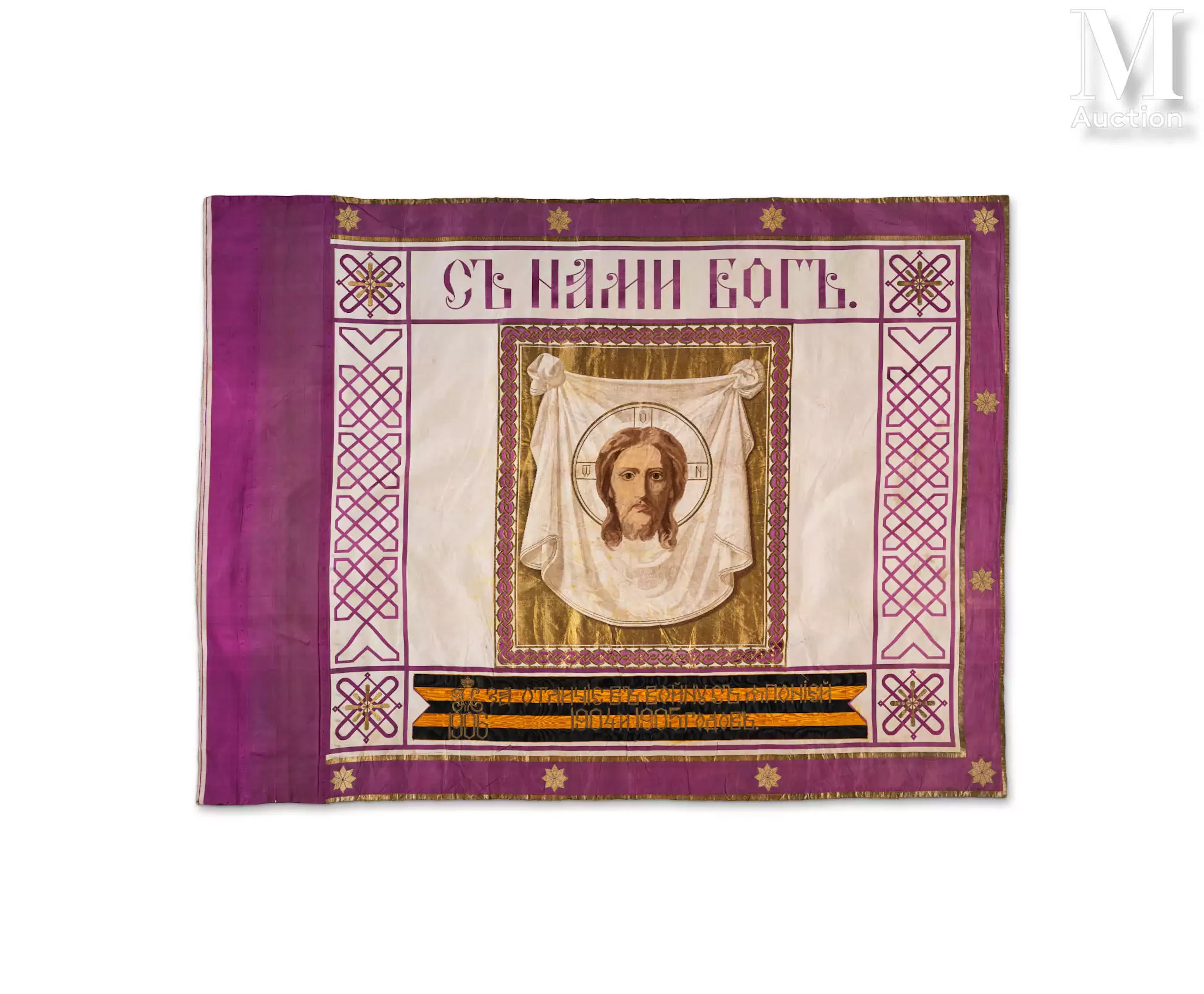
RARE DRAPEAU DU 43e RÉGIMENT DES TIRAILLEURS SIBÉRIENS, RÉALISÉ EN
09/18/2026

€150,000
Schätzw.: €40,000
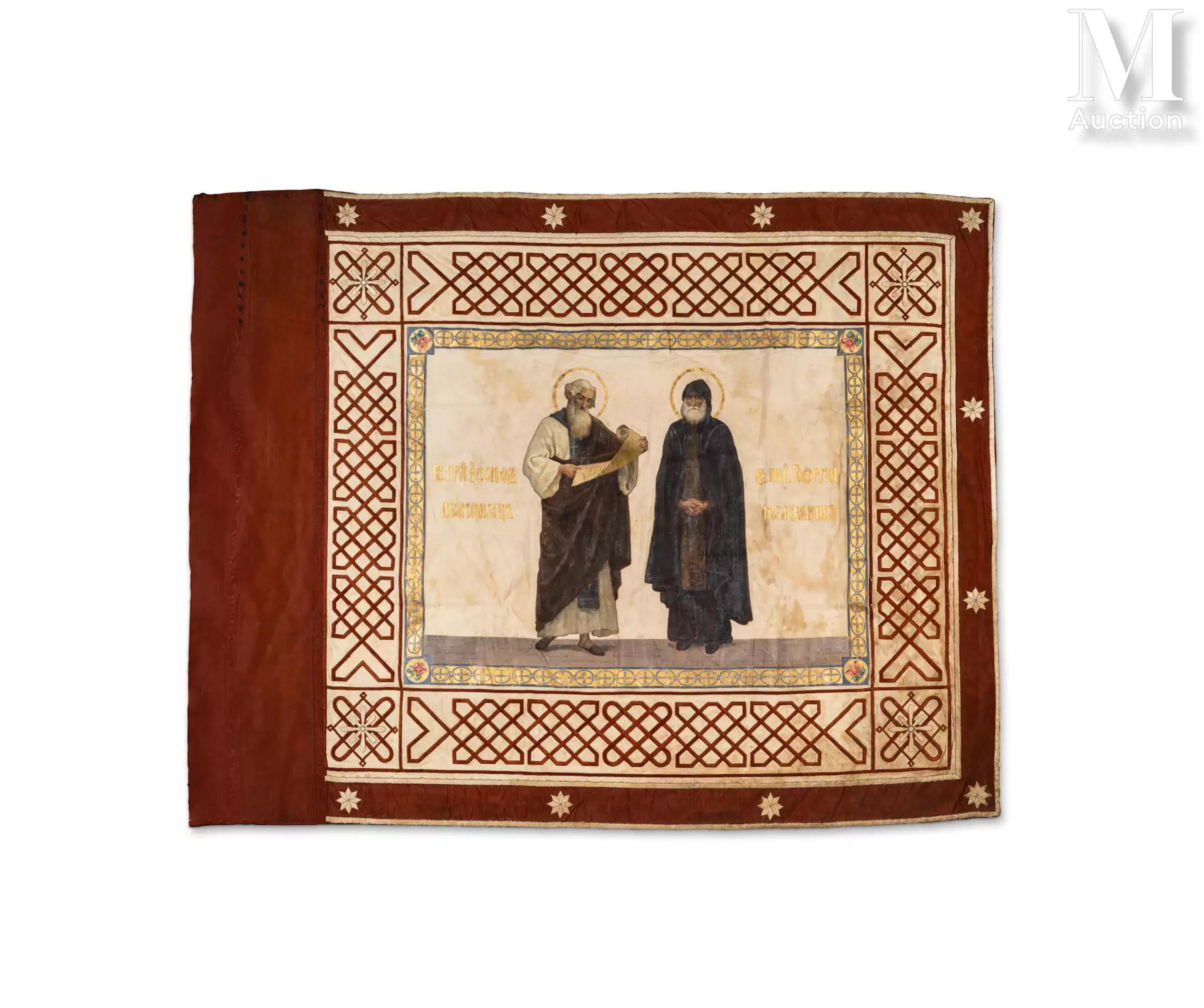
RARE DRAPEAU DU BATAILLON DE SAPEURS DU TURKESTAN REMIS EN 1899
09/18/2026
€110,000
Schätzw.: €30,000
OCT 27 | 4:00 PM




Bringen Sie Ihre Auktion zu Sammlern weltweit!
Jetzt eintragen lassenMit der Anmeldung stimmen Sie der Datenschutzrichtlinie zu. Jederzeit abmelden.
Barnebys HQ
Brahegatan 10
BOX 5038
114 37 Stockholm
