



Alle Auktionen / Kunst und Drucke / Simone Cantarini (1612–1648)

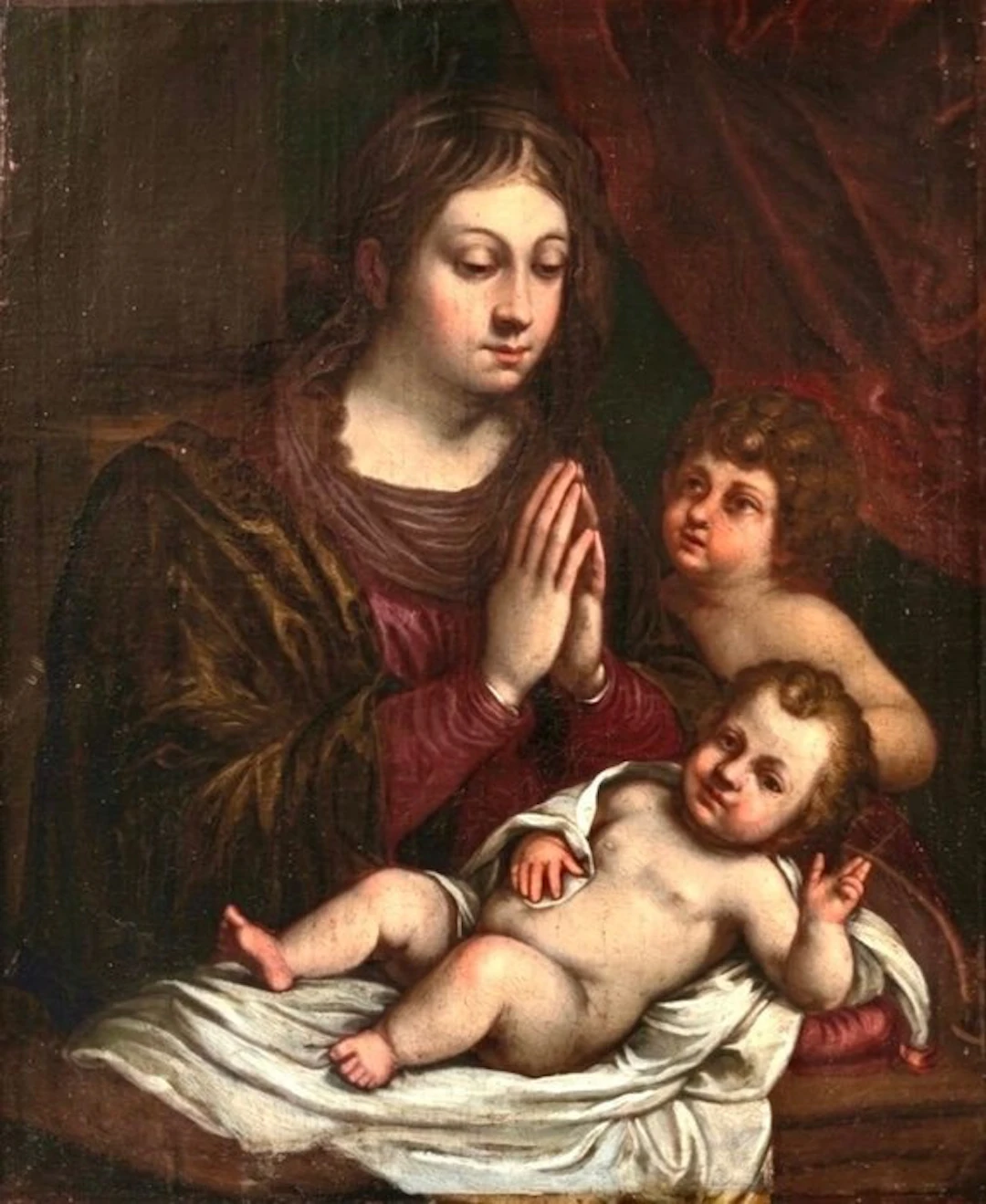
Description of the work: Up for auction is a refined 17th-century oil on canvas, superb expression of the Emiliano Classicist Baroque. The work depicts the Virgin in adoration of the Divine Infant, tenderly watched over by a small Saint John the Baptist. The composition clearly draws inspiration from the celebrated iconographic models of Guido Reni, the master who in the Seicento codified this ideal of celestial beauty and intimate devotion. Stylistic Analysis: The painting stands out for a masterful use of chiaroscuro, clearly Caravaggesque in influence but tempered by the sweetness typical of the Bologna school. The light strikes the body of the Child diagonally, laid on a finely rendered white cloth, creating a sculptural volume of notable quality. The Virgin’s face, with noble features and a absorbed gaze, shows a velvety painting technique and a search for formal perfection that recalls the hand of a talented follower within the circle of Simone Cantarini. Notable are the chromatic transitions: from the intense red of the background curtain, symbol of royalty and sacrifice, to the brown and golden tones of the Madonna’s garments, which confer on the painting a warm ambient luminosity. PROVENANCE Formerly in the collection of the noble Bentivoglio family, Bologna (attribution by oral tradition). Subsequently passed by inheritance to a prestigious historic residence in the Ferrara area. Currently in a private collection, Milan. -Allegorical Significance (Iconology) Beyond the religious scene, the painting is full of symbols that in the Seicento were very clear: -The White Cloth: The Infant is not laid in a cradle, but on a white shroud. Allegorically, this foreshadows the Passion of Christ. Birth and death are united in a single moment: the Virgin does not pray only for the newborn, but adores the Savior who will sacrifice Himself. -The Red Curtain: The crimson drapery behind the Virgin is not merely an element of decor. In heraldry and sacred art, it represents royal blood and Divine Charity. It creates a "throne of shadow" that isolates the sacredness of the scene from the rest of the world. -Light and Darkness: The strong chiaroscuro represents the triumph of the Light of Faith (the Child and the Virgin) over the darkness of sin (the dark background). -Contextual History (The History of the Painting) You can add a note on why these paintings were made: "This work is a typical example of a 'chamber painting', destined for private devotion of the great aristocratic families of the Seicento. In an era marked by the Counter-Reformation, the possession of an image so intimate and technically excellent was a sign not only of deep religiosity but also of high social status. The ideal beauty of the Virgin served as a meditative bridge to elevate the faithful’s soul toward the Divine." -Technical Curiosity: The Secret of the "Sputatura" If you notice areas where the color seems to have reflections almost metallic or very vibrant in the shadows: "The painting technique reveals the use of fine pigments typical of the Bologna workshops, such as earth brown ochre and red lacquers applied as glazes, which confer to the painting a chromatic depth visible only when viewed in person." LA “LUX MUNDI” This work is not a simple sacred genre scene, but a complex and moving staging of the dogma of the "Lux Mundi" (Christ, Light of the World). In the height of the Baroque era, the artist used the language of light to narrate the mystery of the Incarnation: from the deep, impenetrable darkness of the background, symbolic of the world before Redemption, the figure of the Divine Infant emerges with dazzling radiance. The Child’s body is not simply illuminated by an external source; rather, it seems to generate light itself, reverberating on the whiteness of the linens and on the Virgin’s rapt face. This stylistic device, typical of the Bologna masters influenced by Caravaggesque naturalism, transforms the painting into a true mystical vision. DESCRIZIONE INTERNAZIONALE Description of the Work: Up for auction is a refined 17th-century oil on canvas, a superb example of the Emilian Classicist Baroque style. The painting depicts the Virgin adoring the Divine Infant, who is watched over tenderly by a young Saint John the Baptist. The composition draws clear inspiration from the celebrated iconographic models of Guido Reni, the master who, during the 17th century, codified this ideal of celestial beauty and intimate devotion. Stylistic Analysis: The painting is distinguished by a masterful use of chiaroscuro—clearly influenced by Caravaggio yet tempered by the characteristic softness of the Bologna school. Light strikes the body of the Christ Child diagonally as he rests upon a finely rendered white cloth, creating a sense of sculptural volume and remarkable quality. The Virgin’s face, with its noble features and absorbed expression, displays a velvety paint application and a pursuit of formal perfection that suggest the hand of a talented follower within the circle of Simone Cantarini. The color transitions are noteworthy: ranging from the intense red of the background curtain—a symbol of royalty and sacrifice—to the brown and golden hues of the Madonna’s garments, which imbue the painting with a warm, luminous atmosphere. PROVENANCE Formerly in the collection of the noble Bentivoglio family, Bologna (attribution based on oral tradition). Subsequently passed by inheritance to a prestigious historic residence in the Ferrara area. Currently in a private collection, Milan. -Allegorical Significance (Iconology) Beyond the religious scene, the painting is rich in symbols that would have been immediately understood in the 17th century: -The White Cloth: The Infant is not laid in a cradle but upon a white shroud. Allegorically, this foreshadows the Passion of Christ. Birth and death are united in a single moment: the Virgin does not merely pray for the newborn child; she adores the Savior who is destined to sacrifice Himself. -The Red Curtain: The crimson drapery behind the Virgin is not merely a decorative element. In heraldry and sacred art, it represents royal blood and Divine Charity. It creates a "throne of shadow" that isolates the sacred nature of the scene from the rest of the world. -Light and Darkness: The strong chiaroscuro represents the victory of the Light of Faith (the Child and the Virgin) over the darkness of sin (the dark background). Historical Context (The History of the Painting) You might add a note regarding the purpose of such paintings: "This work is a classic example of a 'chamber painting' (*quadro da stanza*), intended for the private devotion of great aristocratic families in the 17th century. In an era defined by the Counter-Reformation, owning an image of such intimacy and technical excellence was a sign not only of deep religiosity but also of high social status. The Virgin's idealized beauty served as a meditative bridge, elevating the faithful's soul toward the Divine." -Technical Detail: The Secret of the "Sputatura" (Spattering/Glazing Technique) If you notice areas where the color seems to have almost metallic highlights or appears highly vibrant within the shadows: "The painting technique reveals the use of fine pigments typical of Bologna workshops—such as umber and red lacquers applied as glazes—which lend the painting a chromatic depth visible only when viewing the original work in person." THE "LUX MUNDI" This work is not merely a scene of a sacred nature, but a complex and moving depiction of the "Lux Mundi" (Christ, Light of the World) dogma. Set in the height of the Baroque era, the artist employs the language of light to narrate the mystery of the Incarnation: from the deep, impenetrable darkness of the background—symbolizing the world prior to Redemption—the figure of the Divine Infant emerges with dazzling intensity. The Child’s body is not simply illuminated by an external source; rather, He seems to generate light Himself, casting a glow upon the pristine white linens and the Virgin’s rapt expression. This stylistic device—characteristic of the Bologna masters influenced by Caravaggesque naturalism—transforms the painting into a true mystical vision. #thinkagain_art
Schätzpreis:€3,000
Zur AuktionAlle Objekte ansehen vonCatawikioderKunst und Drucke
Schätzpreis:
€3,000
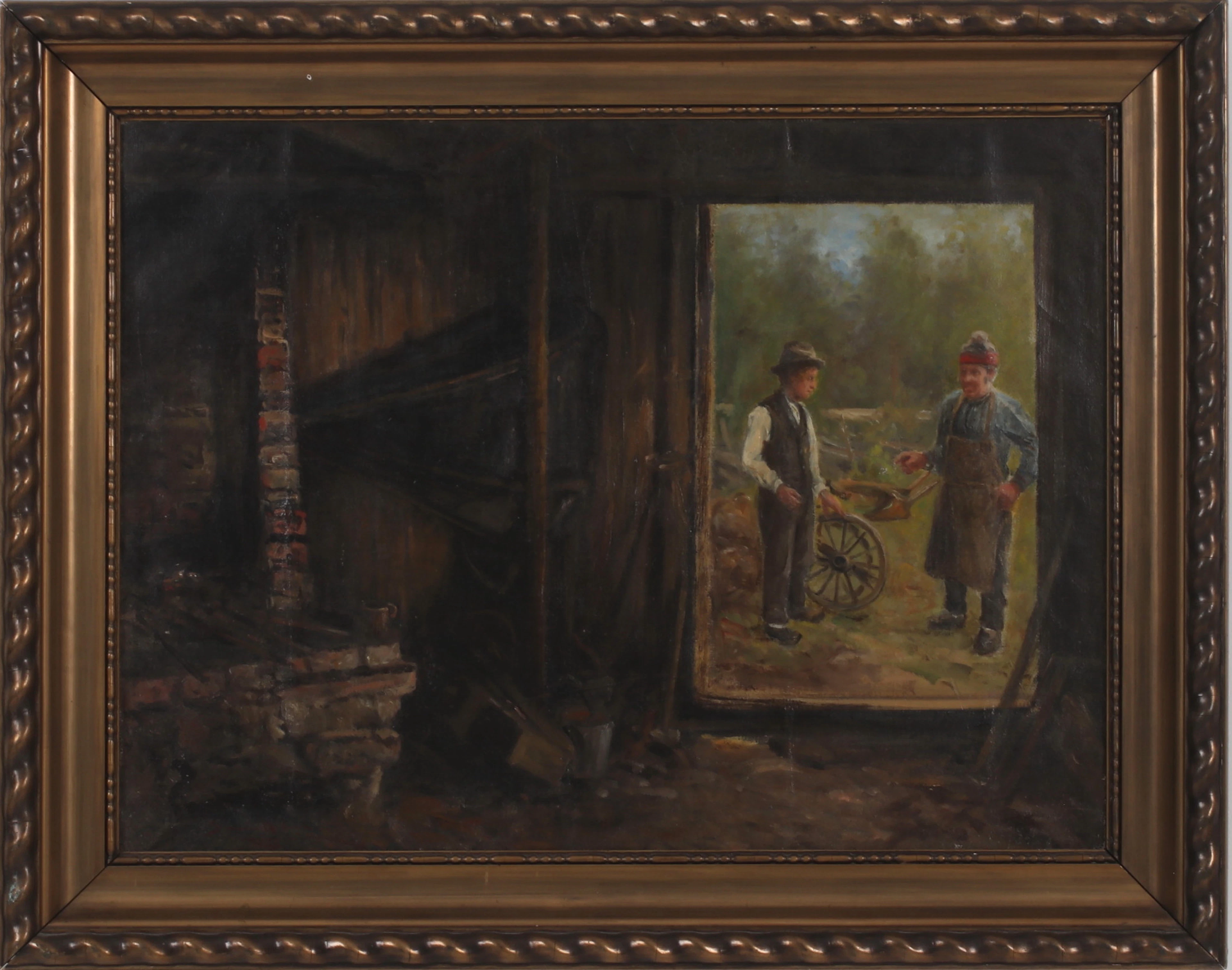
SEVERIN NILSSON. "Samtal vid smedjan", olja på duk, signerad.
10/09/2026
€267.77
Schätzw.: €447.24
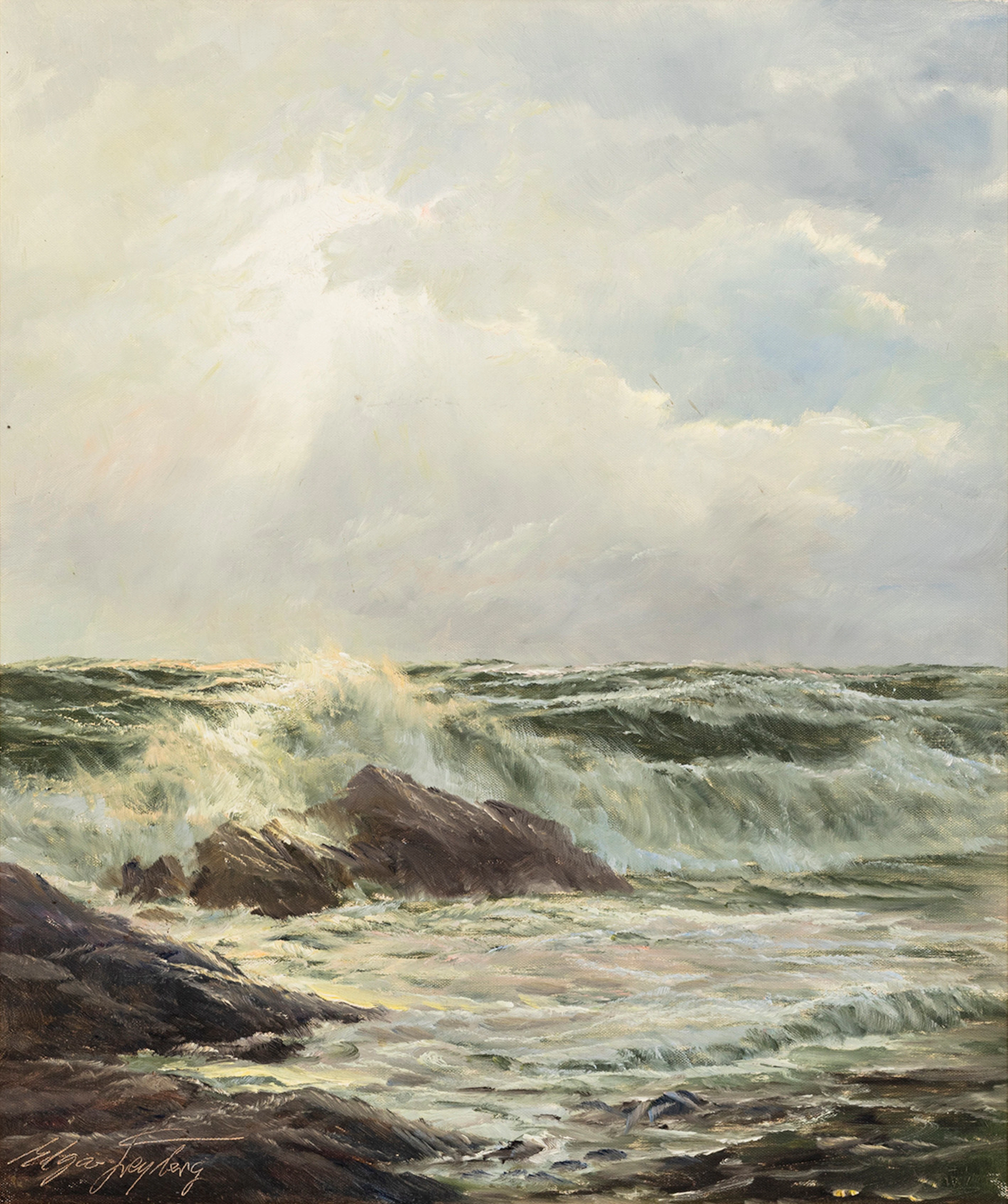
EDGAR FREYBERG. Stormigt hav, olja på duk, signerad.
10/09/2026
€134.86
Schätzw.: €178.89

PÄR GUNNAR THELANDER. Komposition med pelikan, etsning med kolorering
10/09/2026
€316.41
Schätzw.: €178.89

OLLE NYMAN. Geometrisk komposition, färglitografi, signerad -78.
10/09/2026

€98.18
Schätzw.: €53.66




Bringen Sie Ihre Auktion zu Sammlern weltweit!
Jetzt eintragen lassenMit der Anmeldung stimmen Sie der Datenschutzrichtlinie zu. Jederzeit abmelden.
Barnebys HQ
Brahegatan 10
BOX 5038
114 37 Stockholm
