



OCT 27 | 4:00 PM

Alle Auktionen / Kunst und Drucke / The Well-Wisher Carl Spitzweg

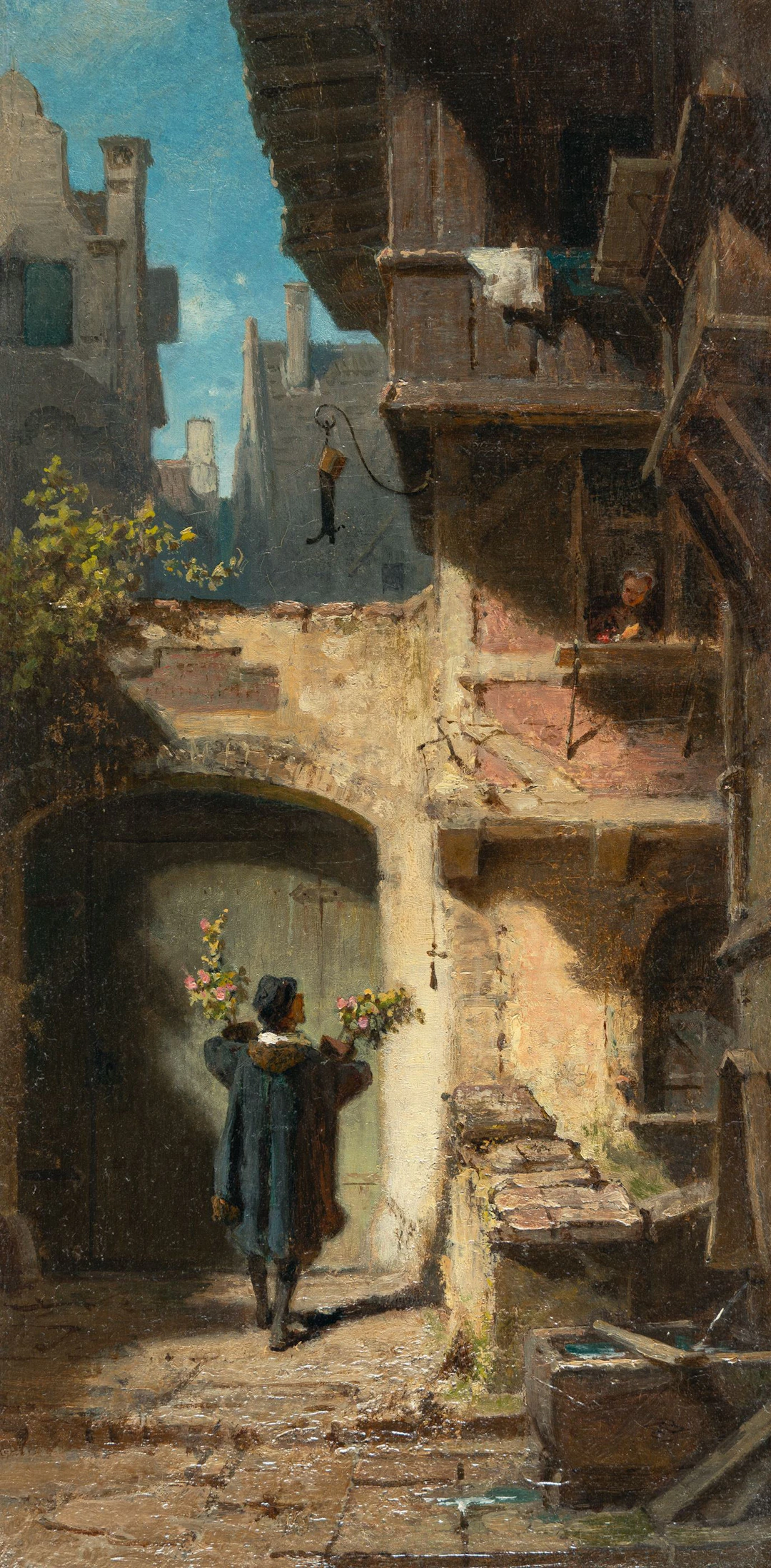
It is a typical painting by Carl Spitzweg – in the narrow portrait format, the viewer’s gaze is drawn to a small courtyard in a medieval-looking town, at the centre of which stands the figure of the well-wisher with his back to the viewer. Dressed in an old-fashioned, medieval surcoat and wearing a beret, he waits for his beloved: holding a lush, flowering plant in each arm, he looks up in the hope that his beloved might appear – but instead of her, he encounters her mother or governess, leaning out of the window on the first floor. As so often, Spitzweg depicts here the failure of hopeful love when the sexes meet. The mother’s stern, suspicious gaze shatters every illusion; what Spitzweg presents as a romanticised idyll proves, on closer inspection, to be a mirage: The solemn, almost shy gesture of the ageing bachelor, left behind by the times, comes to nothing due to the unexpected encounter with the mother – the man lives in a romantic, backward-looking dream world that collides with the harsh reality of bourgeois conventions. The suitor stands before the locked gate that denies him entry into this world. The composition does the rest: the narrow portrait format highlights the hierarchies, with the confident but naïve suitor standing in the glaring light of hope, whilst above him, in the shadow of the window, appears the mother, who rebuffs him. It is this discrepancy between desire and reality, between hope and disappointment, that lends Spitzweg’s paintings that touch of comedy and humour with which he exposes bourgeois conventions. The courtship takes place against the backdrop of a small town with a medieval feel, featuring half-timbered houses and an idyllic fountain in the foreground, yet also small windows and a sense of confinement that continues beyond the closed gate, where the houses stand crammed close together, allowing only a sparse glimpse of the blue sky. Spitzweg’s towns are concentrated within a small space, often characterised by an almost claustrophobic sense of confinement, yet at the same time offering a sense of security. It is this juxtaposition of confinement and security in Spitzweg’s work that is generally associated with the Biedermeier era, during which, following the end of the Congress of Vienna in 1815 and the subsequent Restoration, the middle classes had withdrawn into private life. At the same time, a climate of intellectual constraint emerged, in which censorship and surveillance by the authorities were the order of the day – even in Spitzweg’s paintings, nothing remains secret; every step in public spaces is observed: here, strict morality, embodied by the mother at the window, keeps watch over the advances between the sexes. Apart from their humour and comic elements, Spitzweg’s paintings are always studies of social milieu in which the theme of social control features prominently. Spitzweg explored the theme of the well-wisher or suitor in numerous versions and variations (Wichmann 322–327) in a way that, beyond the contradictions of bourgeois conventions, touches on his own biography – following the death of his great love at a young age, Spitzweg remained a suitor for the rest of his life, never entering into a closer relationship. Dr Peter Prange | 1808 - München - 1885 | 19. Jahrhundert | Gemälde | Nummer: 26x2041 | Provenance: Galerie Grosshennig, Düsseldorf, 1955; Privatbesitz, Westdeutschland; Europäischer Privatbesitz; Koller Auktionen, Zürich, 22.9.2017, Los 3218; Privatsammlung, Süddeutschland.
Schätzpreis:€150,000
Zur AuktionAlle Objekte ansehen vonKarl und FaberoderKunst und Drucke
Schätzpreis:
€150,000
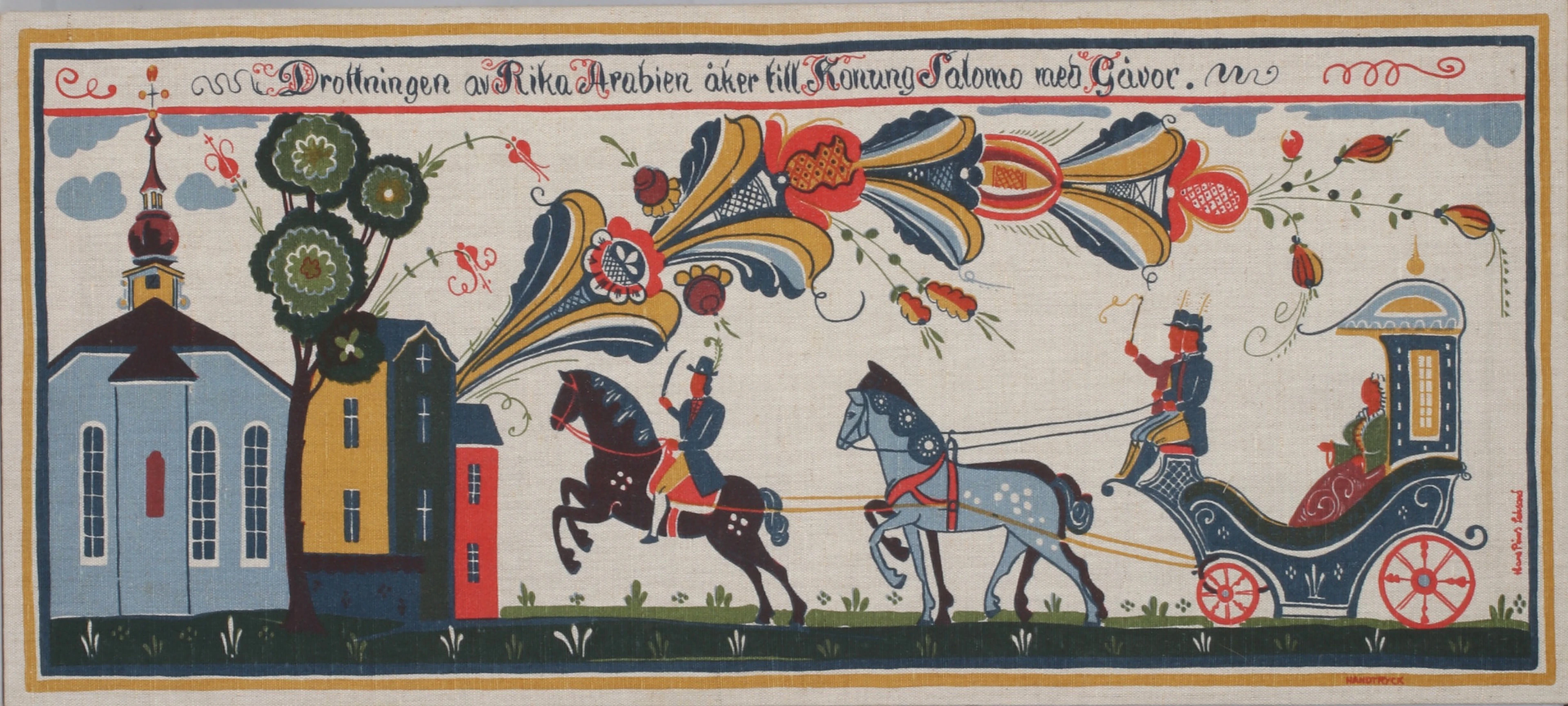
HANS PRINS. "Drottningen av Rika Arabien åker...", textiltryck, efter
10/12/2026
€53.74
Schätzw.: €53.55
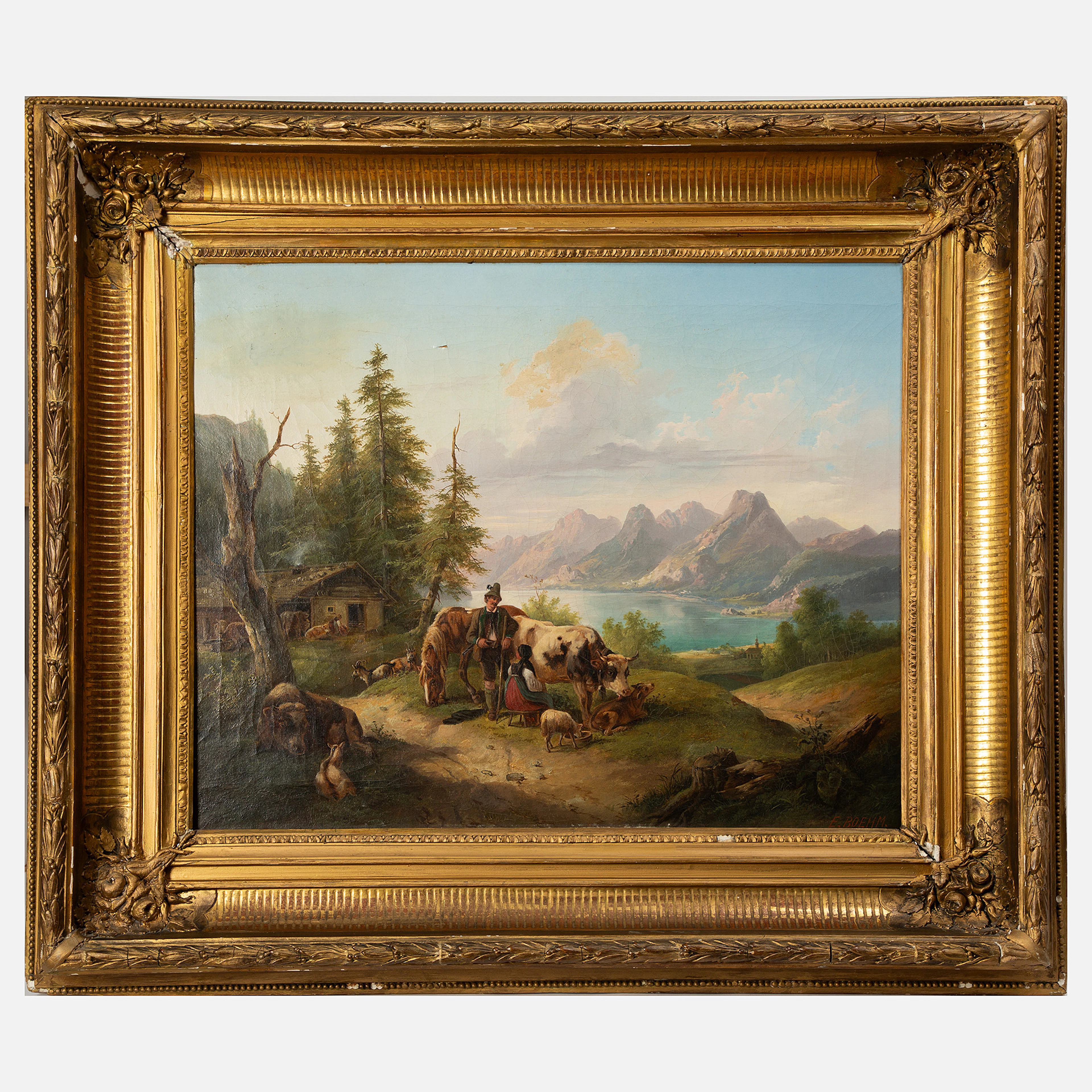
EDUARD BOEHM. Olja på duk, signerad, 1800-tal.
10/12/2026
€223.95
Schätzw.: €446.29
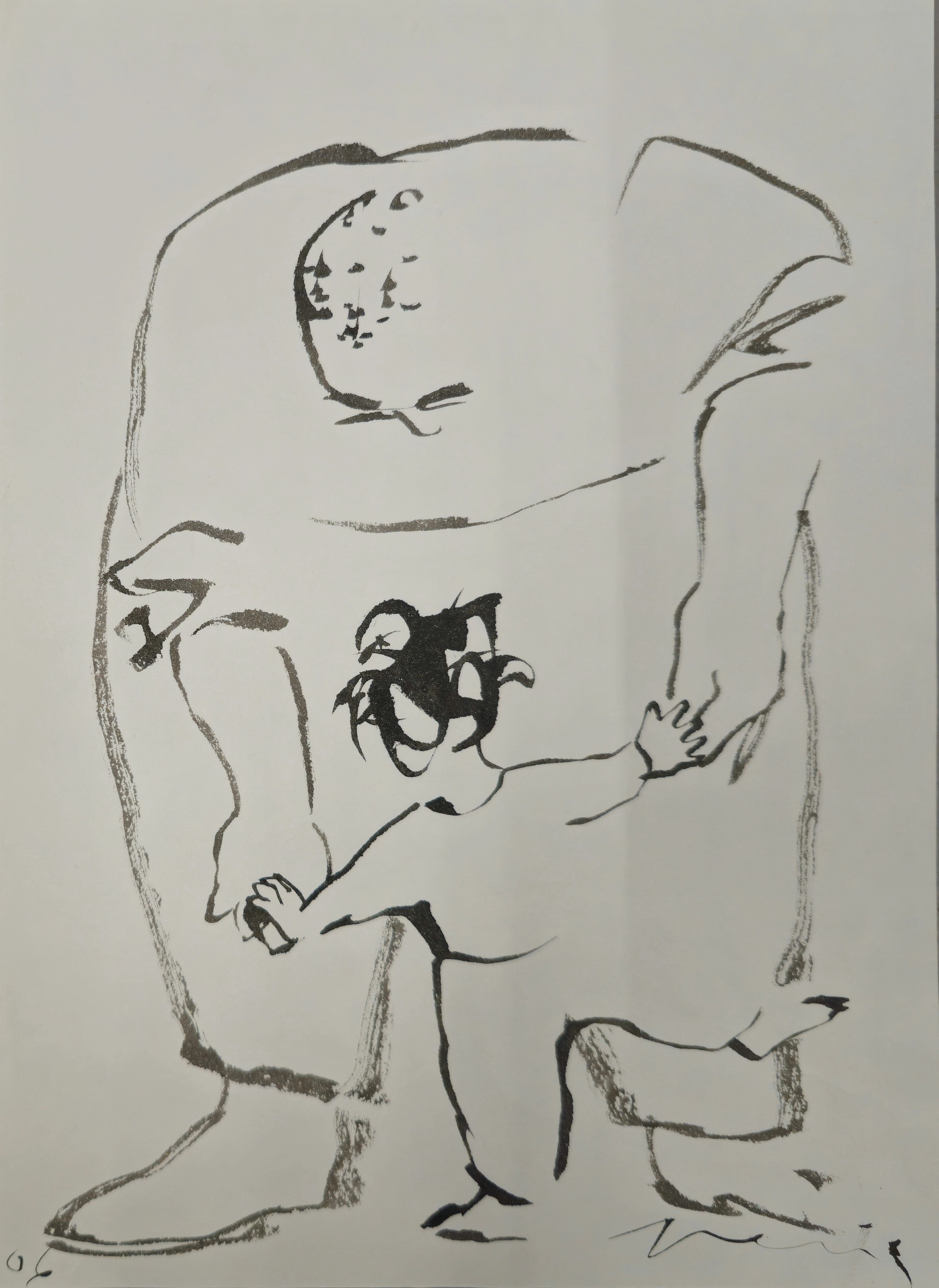
PERICO PASTOR. ABUELO CON NIÑO. TINTA SOBRE PAPEL.
10/12/2026
€75
Schätzw.: €80
OCT 27 | 4:00 PM




Bringen Sie Ihre Auktion zu Sammlern weltweit!
Jetzt eintragen lassenMit der Anmeldung stimmen Sie der Datenschutzrichtlinie zu. Jederzeit abmelden.
Barnebys HQ
Brahegatan 10
BOX 5038
114 37 Stockholm
