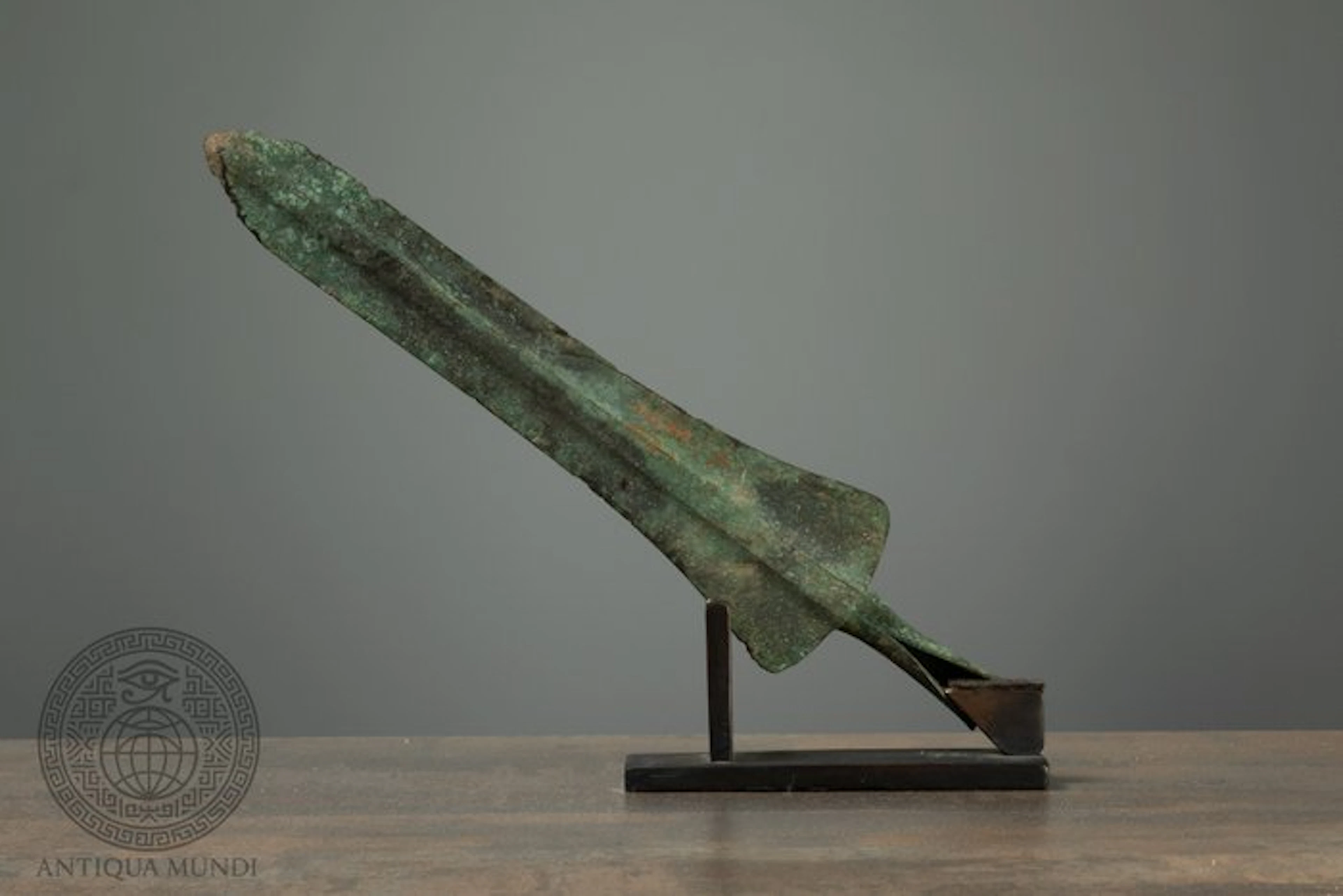
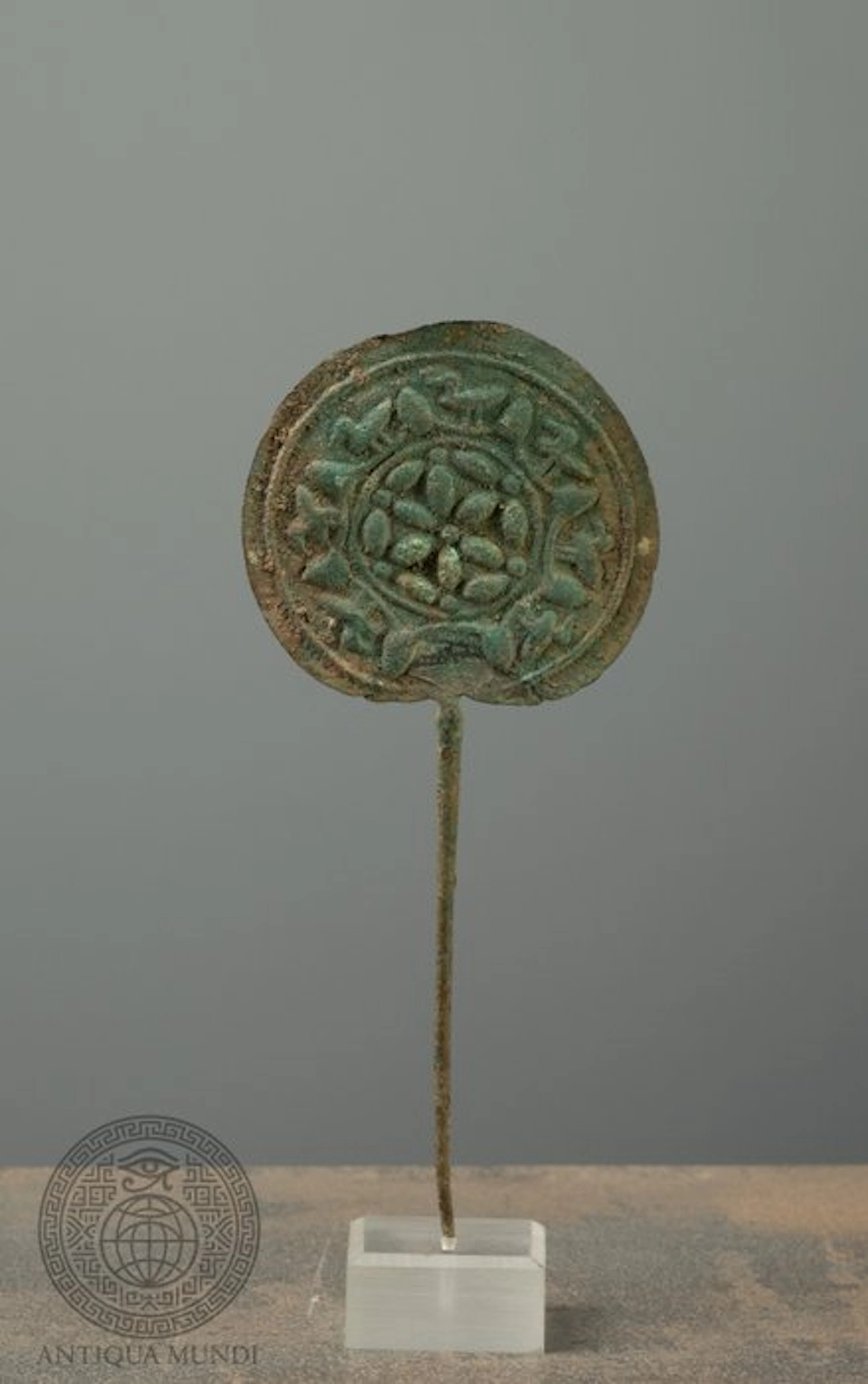
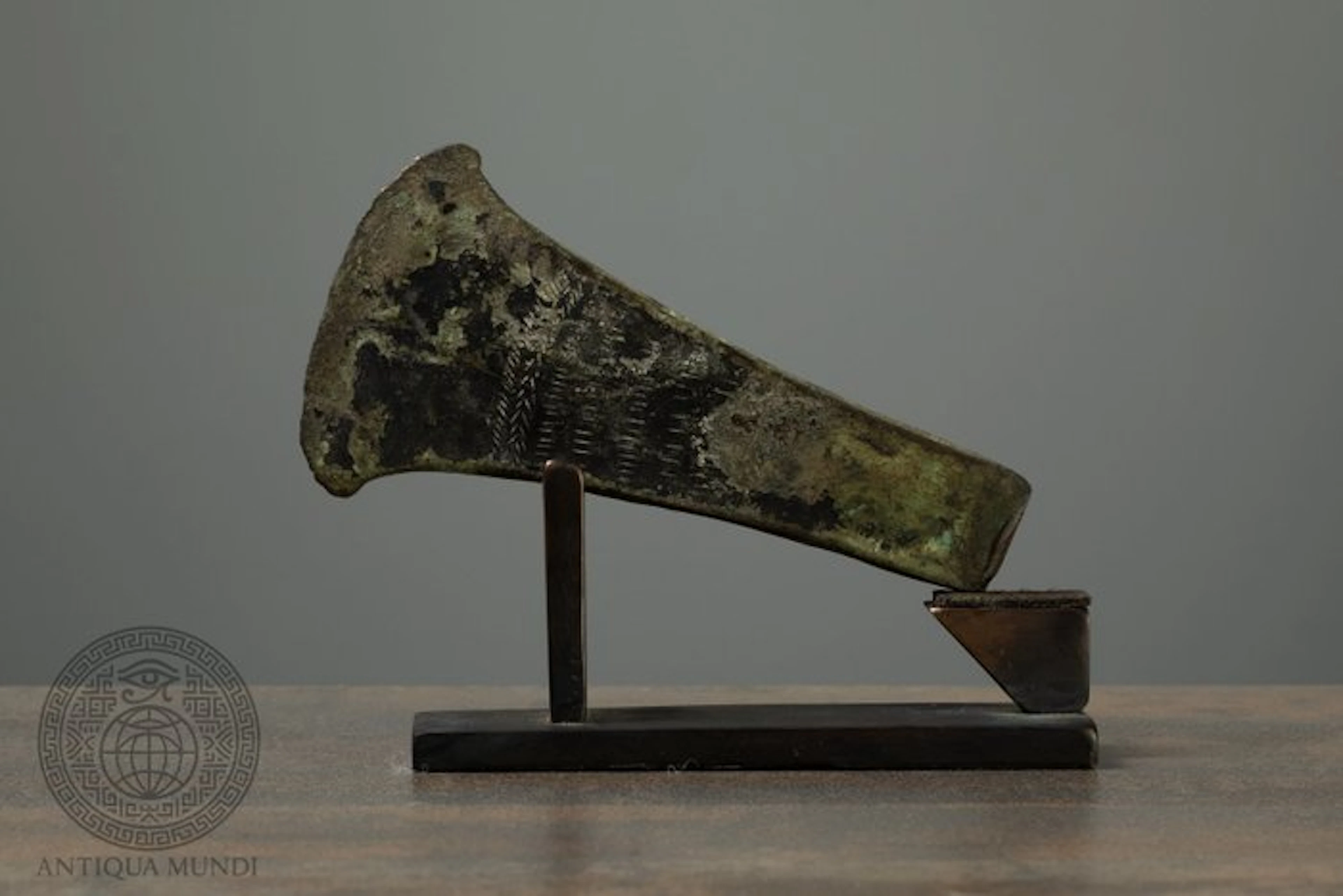



Alle Auktionen / Antike Kunst / Western Asiatic Bronze Axe with Openwork Shaft and Four-Pronged Finial - 21 cm

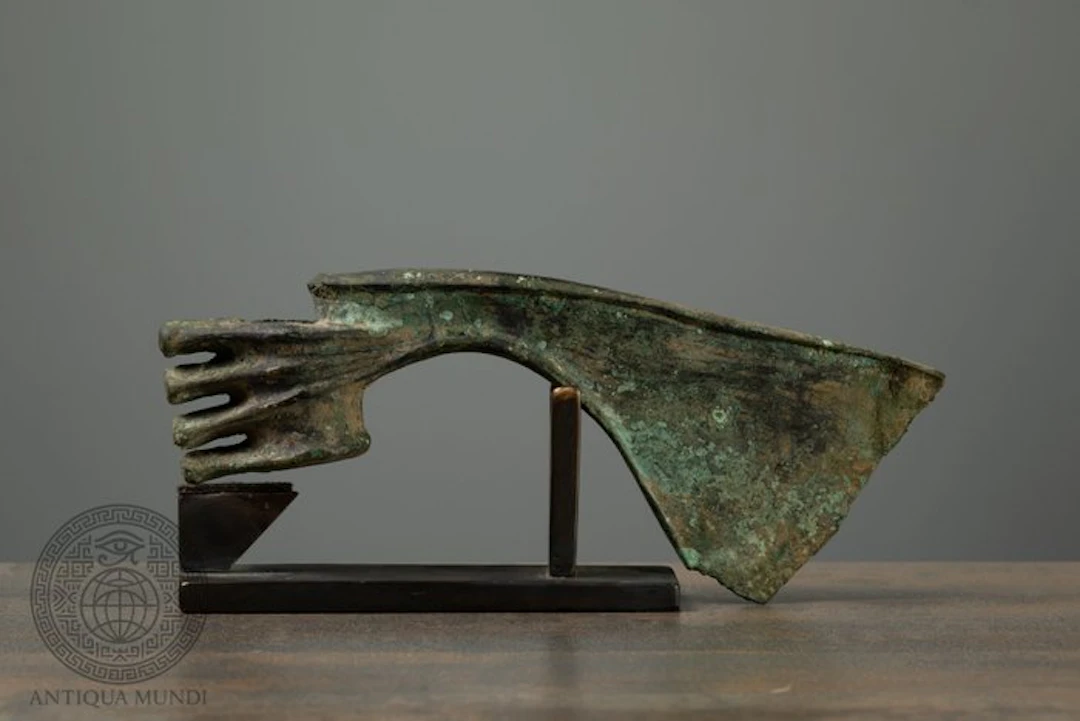
Exceptional and distinctively shaped bronze axe head from the Luristan cultural sphere of Western Iran, dating to the Early Iron Age. The axe is characterised by a broad, strongly flaring and slightly asymmetrical blade with a curved cutting edge. The upper edge is accentuated by a substantial raised ridge extending from the shaft area across almost the entire length of the blade, giving the object a pronounced sculptural profile. Particularly striking is the elaborate construction of the rear shaft section. Beneath the upper ridge, the body opens into a large arch-shaped openwork section, creating a visually lighter yet highly sculptural form. The rear end terminates in four vertically arranged finger- or prong-like projections. Each projection has a rounded end and is separated from the others by elongated open spaces. Pronounced longitudinal ribs extend from the main body of the axe into these four projections, reinforcing the dynamic and highly distinctive appearance of the object. Viewed from the side, the blade itself is comparatively flat, while the upper ridge and shaft section are considerably more substantial. The combination of the widely flaring blade, openwork shaft construction and four-pronged rear termination clearly distinguishes this piece from simpler utilitarian axe forms. Cultural Context and Function Bronze axes of this general type belong to the characteristic metalwork traditions associated with ancient Luristan in Western Iran. Luristan bronzes are particularly renowned for their sophisticated casting techniques and their often highly sculptural treatment of weapons, horse fittings, standards and other objects. Axes occur in a wide variety of forms, ranging from relatively simple functional implements to elaborately designed examples with openwork or strongly stylised elements. Although axes of this type were fundamentally suitable for use as weapons or tools, the particularly elaborate construction of the present example suggests a significance extending beyond purely utilitarian purposes. Elaborately formed weapons could also function as prestige objects or symbols of status, and related bronze objects are well known from funerary contexts in the Luristan region. The striking openwork construction and four-pronged rear section give the present example a particularly architectural and sculptural appearance. Dating On stylistic and typological grounds, the axe can be attributed to the Early Iron Age of Luristan, approximately the 10th–8th century BC. The combination of cast bronze construction, strongly flaring blade, pronounced upper ridge, openwork shaft section and elaborate rear projections is consistent with the sophisticated bronze-working traditions for which Luristan is particularly well known during the early first millennium BC. Condition Very attractive age-related condition with a strongly developed surface. The bronze displays a pronounced dark brown to green patina, with areas of more intense green copper corrosion products and mineral deposits. There is surface wear consistent with considerable age, together with minor irregularities, encrustations and small impacts or losses along the cutting edge and other exposed edges. The characteristic openwork shaft section and all four rear projections are well preserved, allowing the unusual construction and sculptural quality of the axe to remain clearly visible. Please examine all photographs carefully, as they form an integral part of the condition description. Included in the Sale The sale includes the ancient bronze axe head only. The modern display stand visible in the photographs is used solely for presentation and is not included in the sale. Provenance Formerly in the Madeleine & Erich Dammann Collection, Germany. Acquired during the collectors’ extensive travels between 1950 and 1970. The collection is documented in Germany by 1970 through historical photographs of the family residence and subsequently remained in continuous family ownership. The objects were acquired privately during the collectors’ travels. As was customary for private purchases made at local markets during the 1950s and 1960s, purchase receipts or invoices were generally neither issued nor requested. Historical photographs and biographical documentation relating to the Dammann Collection are available and support the long-standing provenance of the collection.
Schätzpreis:€1,100
Zur AuktionAlle Objekte ansehen vonCatawikioderAntike Kunst
Schätzpreis:
€1,100
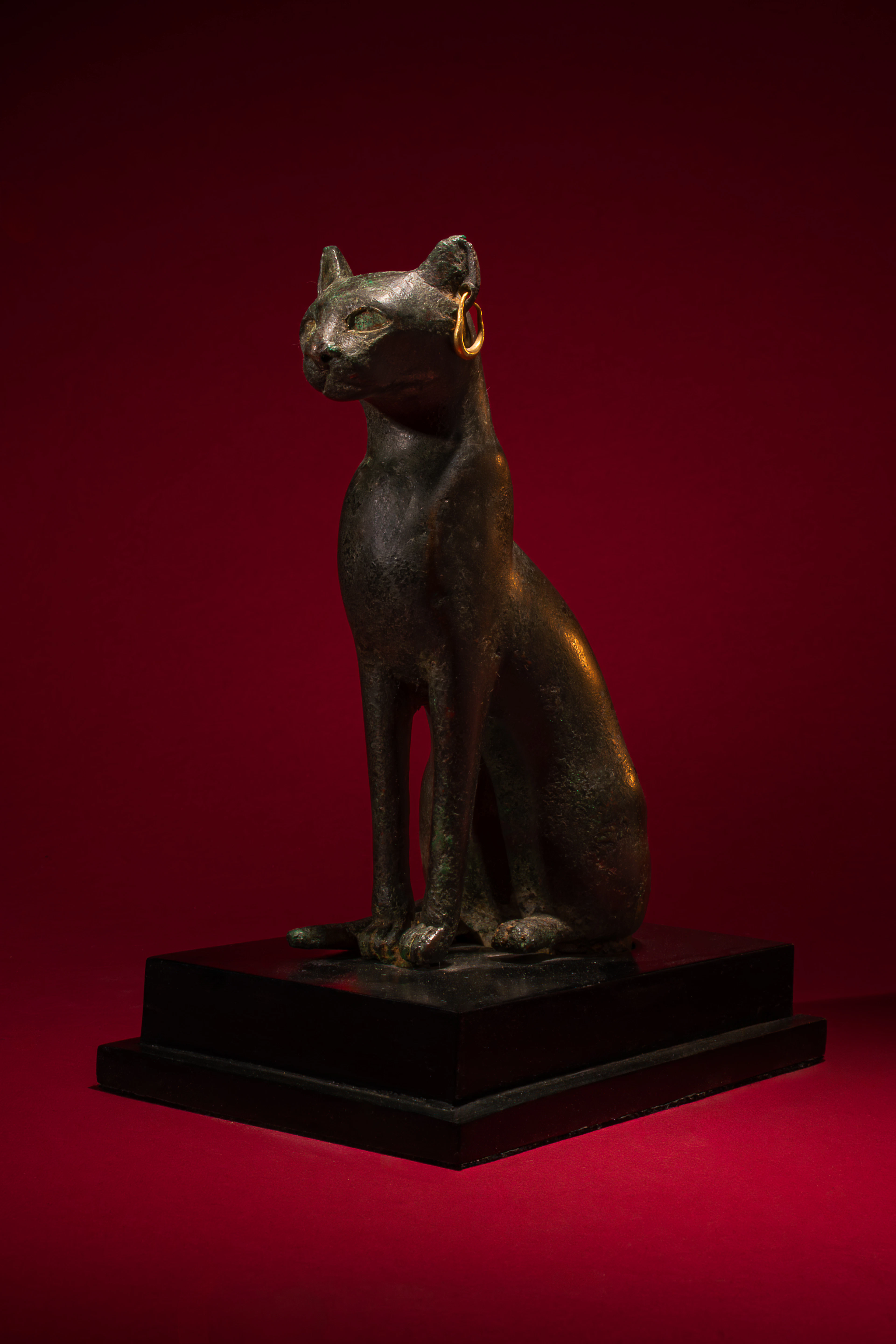
RARE EGYPTIAN BRONZE CAT STATUETTE WITH GOLD EARRINGS - LARGE SIZE
06/21/2026

€25,506.4
Schätzw.: €23,095.64
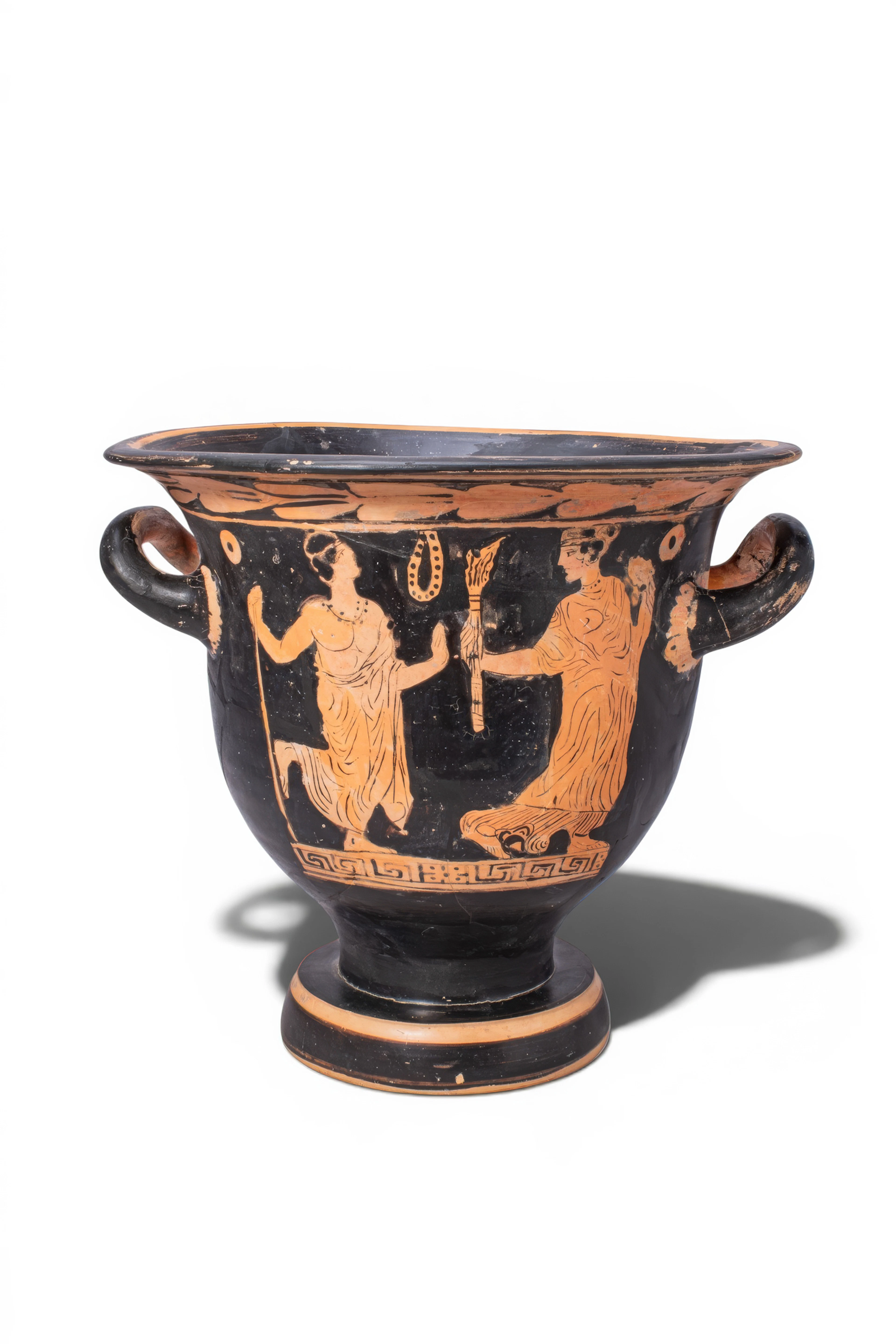
APULIAN RED-FIGURE BELL KRATER WITH KOMASTOS AND MAENAD - TL TESTED
06/21/2026
€3,014.39
Schätzw.: €2,304.2




Bringen Sie Ihre Auktion zu Sammlern weltweit!
Jetzt eintragen lassenMit der Anmeldung stimmen Sie der Datenschutzrichtlinie zu. Jederzeit abmelden.
Barnebys HQ
Brahegatan 10
BOX 5038
114 37 Stockholm
