



Bringen Sie Ihre Auktion zu Sammlern weltweit!
Jetzt eintragen lassenMit der Anmeldung stimmen Sie der Datenschutzrichtlinie zu. Jederzeit abmelden.
Barnebys HQ
Brahegatan 10
BOX 5038
114 37 Stockholm
Alle Auktionen / Kunst und Drucke / Willem Frederiksz Van Royen Watercolor, Three Lizards in a Landscape

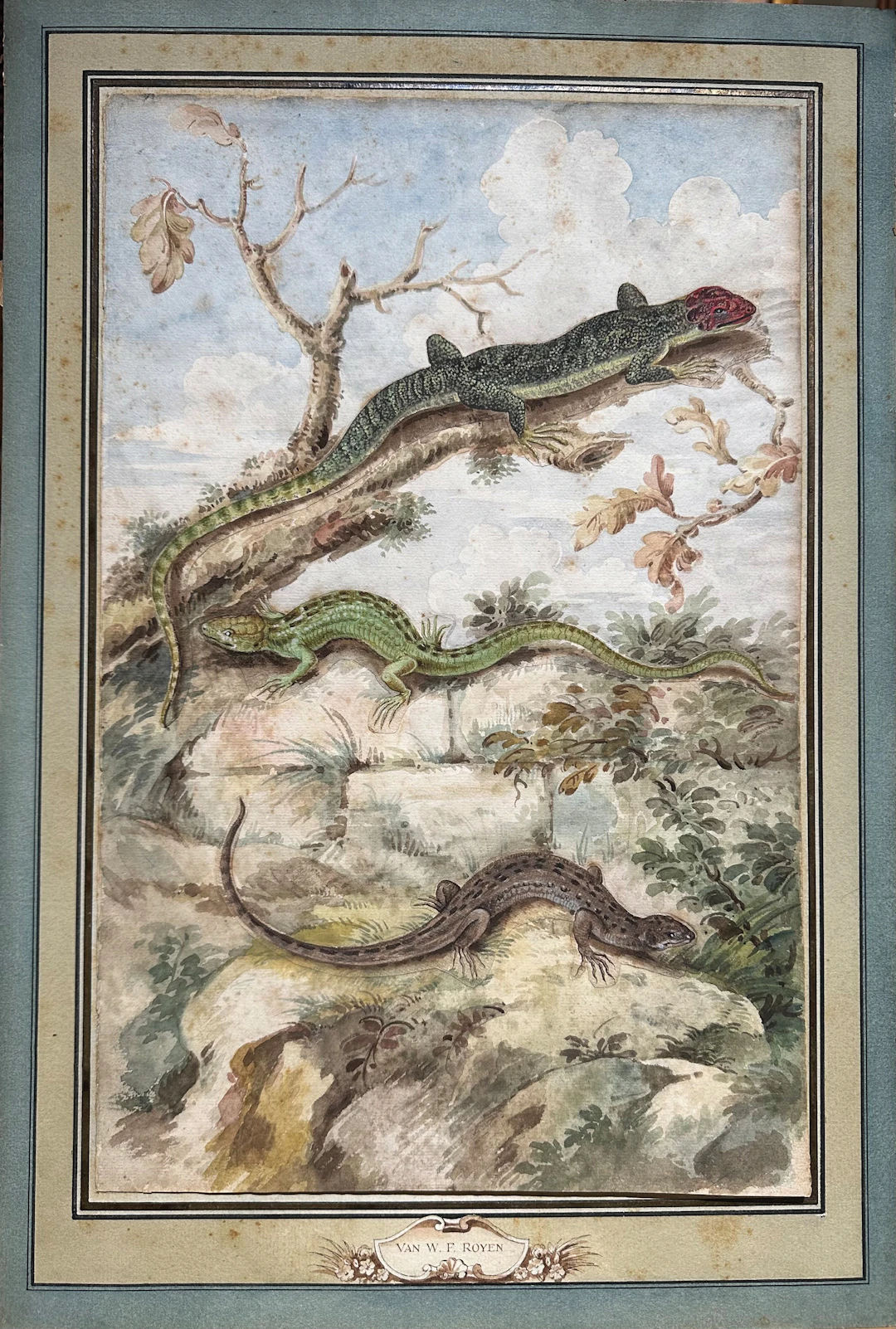
VAN ROYEN, Willem Frederiksz (Dutch 1645-1723). Three Lizards in a Landscape: a Red-headed Agama with a Pair of Sand Lizards. Watercolor and gouache over black chalk and graphite, with pen and brown and gray ink, on laid paper; the three lizards executed separately, cut out along their contours, and laid down onto the completed landscape sheet. Laid down on an eighteenth-century decorated collector’s mount of blue-gray paper with washed borders and black and gilt ruled fillets, inscribed in a shaped cartouche below the image: Van W. F. Royen. 16" x 10 3/8" sheet, Mount: 19 5/8" x 13 3/8" mount. Three lizards climb a sunlit bank. The uppermost animal, with a brick-red head, a dark, densely pale-speckled body, a pale ventrolateral stripe, and a long tail with alternating light and dark bands, appears to be the red-headed rock agama, Agama agama (Linnaeus, 1758). In this species, a territorial male in display carries an orange-to-scarlet head above a dark blue-black body flecked with pale spots, while females, juveniles, and subordinate males remain uniformly olive-brown. The body here reads as a dark olive rather than blue, but seventeenth-century blues are notoriously fugitive, and indigo or smalt laid over a dark ground will shift toward olive and gray over three centuries. We might also assume the artist drew from a skin that may have lost some of its color. Agama agama is native to sub-Saharan Africa, distributed from Mauritania and Senegal eastward across the Sahel to Chad and Kenya and south to Angola, with introduced populations elsewhere. It is a rock-dwelling, conspicuously diurnal animal, and one of the most frequently encountered lizards on the West African coast. In 1682 Elector Frederick William chartered the Brandenburgisch-Afrikanische Compagnie (Brandenburg African Company), and on January 1, 1683, the colony of Groß Friedrichsburg was founded on the Gold Coast, in present-day Ghana. For roughly four decades thereafter, Brandenburg vessels moved between the Gulf of Guinea and the Baltic. A court painter in Berlin in these years had access, at least in principle, to West African naturalia arriving through that traffic and entering the court Kunstkammer. It is the most reasonable explanation for the presence of a Gold Coast lizard in a Brandenburg studio. The middle animal is a sand lizard, Lacerta agilis Linnaeus, 1758, shown as an adult male in breeding condition. Identified by the characteristic vivid green flanks and sides of the head, a brown vertebral band carrying dark, pale-centered ocelli, a stocky body with a short and rather blunt head, and a tail well over half the total length. The green appears only in spring, when it serves as a badge of status in contests between males, making this a seasonally specific observation rather than a generic one. The species ranges across temperate Eurasia from the Pyrenees to Mongolia and northwestern China and is abundant in exactly the habitat of Brandenburg: dry sandy heath, open pine woodland, and grassy embankments. The brown-gray figure at the bottom shows paired rows of bold dark blotches flanking a lighter vertebral band and pale dorsolateral stripes; it may be the female of the same species, Lacerta agilis, whose cryptic brown coloring and crisper longitudinal striping distinguish her from the male above. Read together, the sheet becomes a study of sexual dimorphism with two lizards from the sandy heaths outside the artist’s own door beside one carried home from the Gulf of Guinea. That juxtaposition of the local and the imported is the Kunstkammer's organizing logic. Interestingly, the three lizards are on a separate piece of paper, drawn independently, cut out along their silhouettes, and pasted onto the finished landscape. At the agama’s forefoot, the pasted paper has lifted very slightly, casting its own small shadow. Telling us that the specimens were recorded first, each on its own scrap of paper, at whatever scale and in whatever positioning the living animal or the preserved skin allowed. The landscape was then painted as a complete and self-sufficient sheet, evident in the washes that run continuously beneath the cut-outs, and passages of grass, rock edge, and foliage can be seen to pass under the pasted contours and emerge on the far side, meaning the ground was finished before the animals arrived on it. Only at the final stage were the three figures cut free and moved about to the surface until the arrangement satisfied the artist. Faint chalk and graphite lines surviving in the landscape, slightly out of register with the present positions, mark where one or more of the animals sat before he settled them. Small touches of wash applied after mounting disguise the joins where the agama’s tail crosses in front of the branch. Van Royen’s court work included large animal and landscape pictures for various residences, including the Menagerie des Kurfürsten Friedrich III. von Brandenburg (Menagerie of Elector Frederick III of Brandenburg) and Zwergsäger auf der Havel bei Caputh (Smew on the Havel near Caputh) survive in situ at Schloss Caputh. A movable study of this kind would serve very naturally to place small creatures in the foreground of a wall panel or architectural element. A closely comparable sheet, Four Shore Birds in a Landscape (pen and ink, watercolor, and gouache on laid paper), is in the Herbert F. Johnson Museum of Art at Cornell University and uses the same formula: several specimens rendered with exacting precision and distributed across a washed landscape. A gouache of a king bird-of-paradise by van Royen is held by the Stiftung Preußische Schlösser und Gärten Berlin-Brandenburg and has been shown at Schloss Caputh and the Schlossmuseum Oranienburg. Willem Frederiksz. van Royen was probably born in Haarlem around 1645 and trained with Arnold van Ravesteyn, either there or in The Hague, between 1661 and 1668. He moved to Berlin in 1669 and succeeded the flower painter Adriaen van der Spelt as court painter to Frederick William, Elector of Brandenburg, when van der Spelt returned to the Netherlands. He was in Potsdam in 1689 and, in 1695, was among the founders of the Academy of Arts in Berlin, an institution with which he remained associated until his death there in 1723. He also worked in Amsterdam, contributing paintings to the celebrated cabinet house of Petronella de la Court, now in the Rijksmuseum, alongside Nicolaas Piemont and Johannes Voorhout.
Schätzpreis:€10,540.81
Zur AuktionAlle Objekte ansehen vonArader GalleriesoderKunst und Drucke
Schätzpreis:
€10,540.81
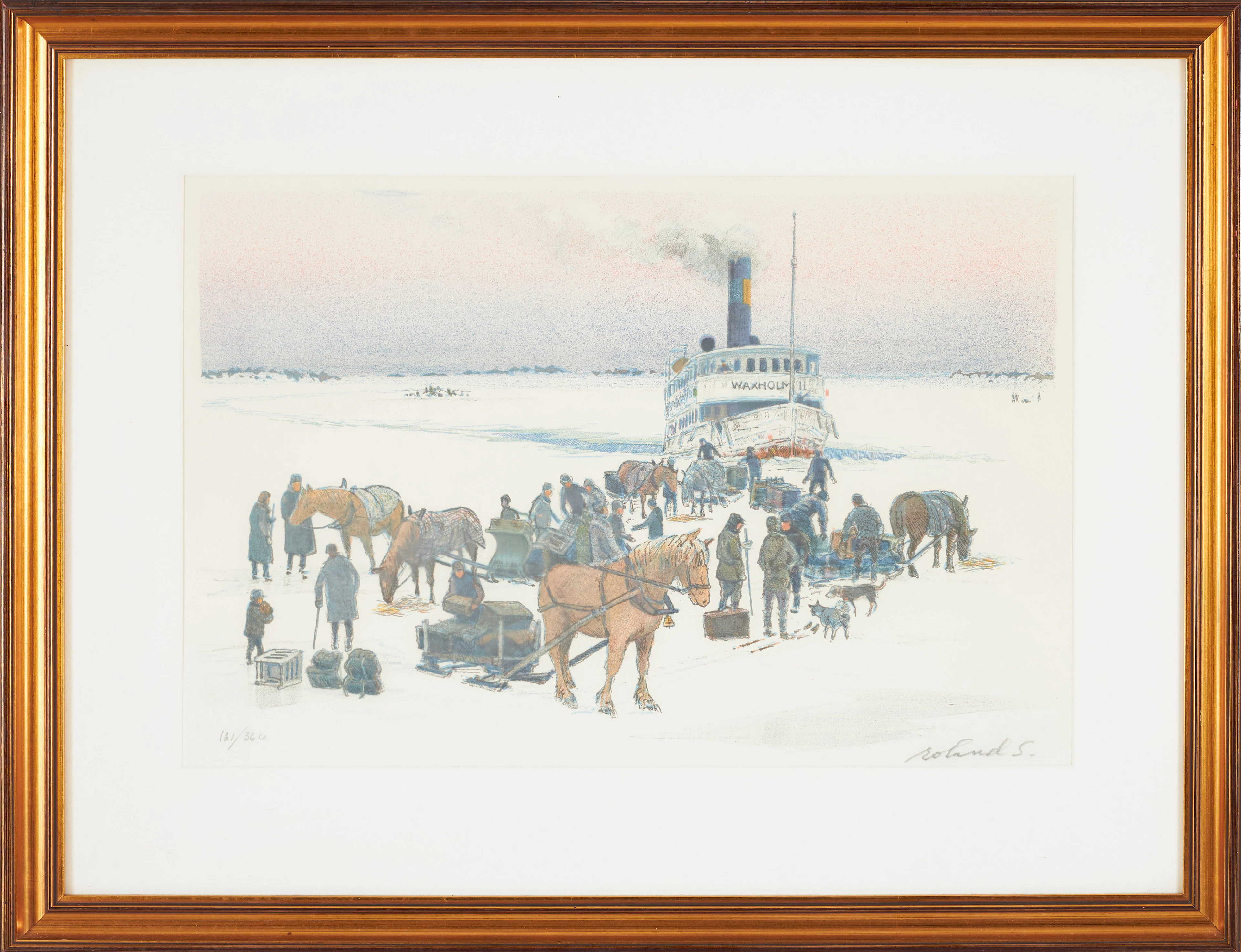
ROLAND SVENSSON. Waxholm, färglitografi, signerad, numrerad 121/360.
09/28/2026
€176.47
Schätzw.: €265.55



Bringen Sie Ihre Auktion zu Sammlern weltweit!
Jetzt eintragen lassen
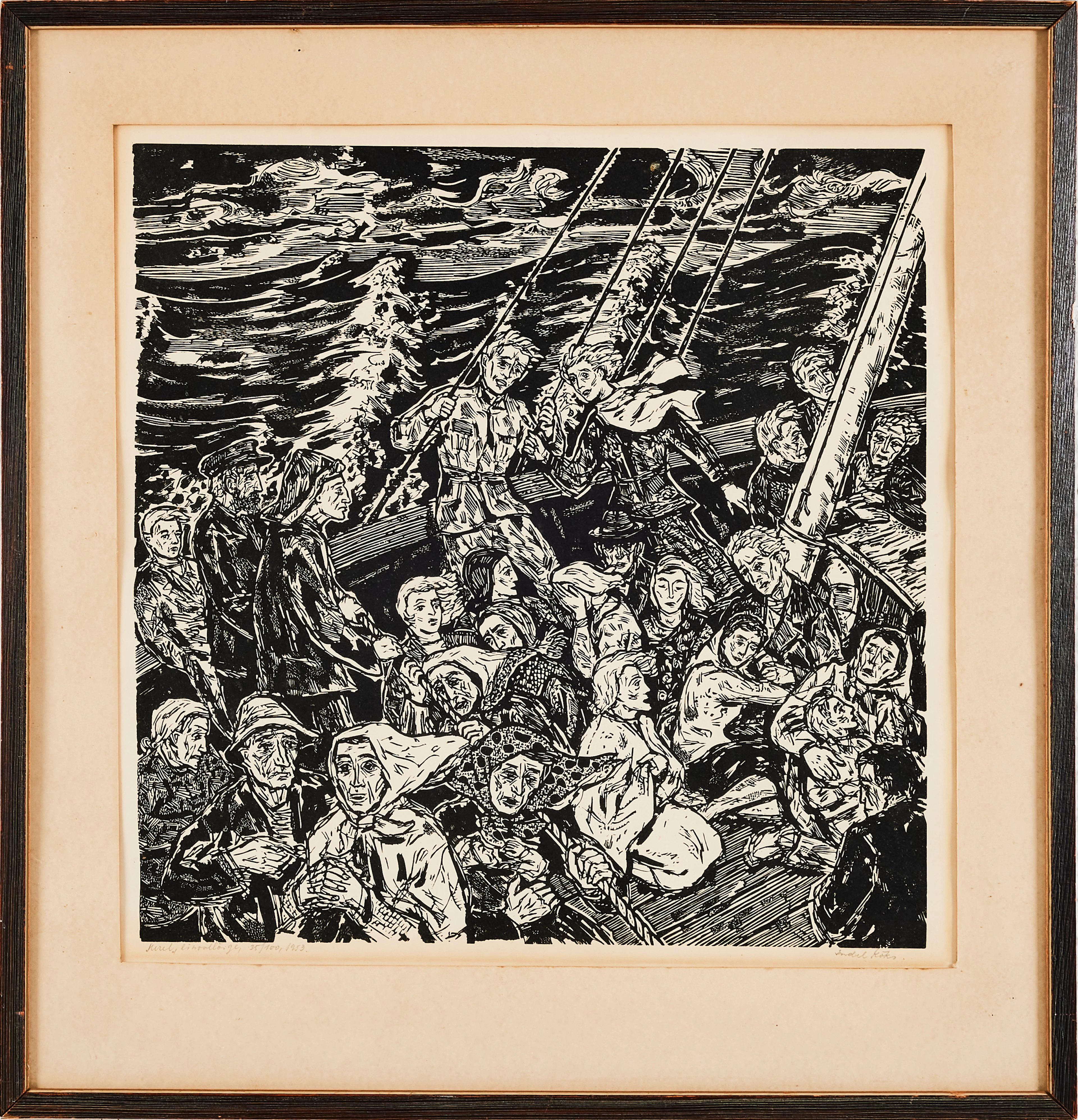
ENDEL KÖKS. "Meril" (Till sjöss) / Båtflyktingar, linoleumsnitt.
09/28/2026
€447.26
Schätzw.: €442.32
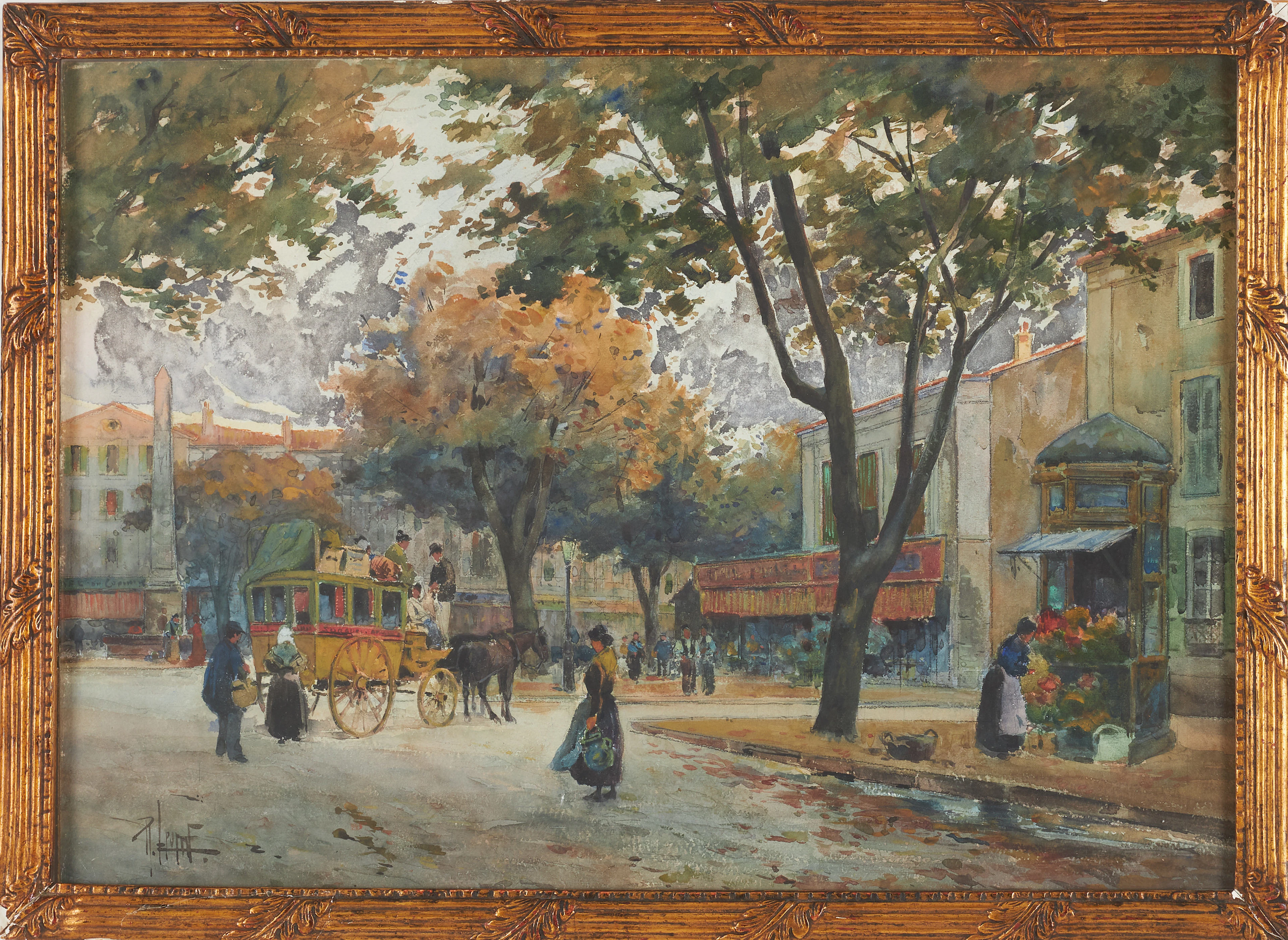
OIDENTIFIERAD KONSTNÄR. Stadsmotiv, Frankrike, akvarell, signerad
09/28/2026
€300.62
Schätzw.: €221.29
VILHELM NYROOS. "Taxi in Egypt", akryl på duk, applikation med doftgran
09/28/2026
€30.88
Schätzw.: €132.77