


Alle Auktionen / Antike Kunst / Medieval

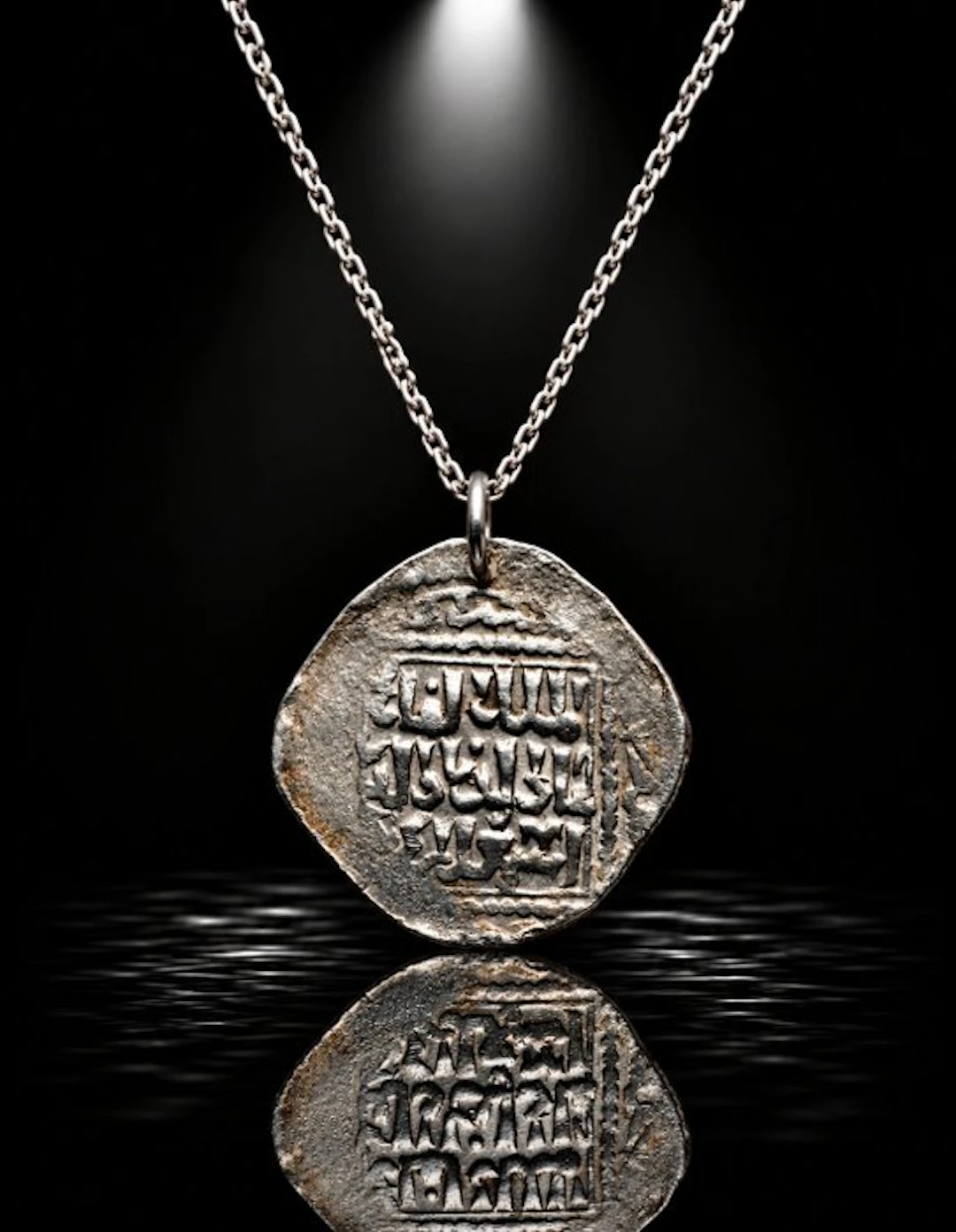
A fascinating and historically remarkable medieval silver coin pendant, tentatively attributed to the Crusader imitations of Ayyubid dirhams issued in the name of al-Salih Isma'il of Damascus during the 13th century. This extraordinary coin represents one of the most intriguing monetary traditions of the Crusader period: the production of Islamic-style silver coins by Christian authorities in the Latin East. Rather than displaying the familiar crosses, castles or portraits of European medieval coinage, these remarkable issues adopted Arabic inscriptions and Islamic monetary conventions, reflecting the complex cultural and commercial relationships between the Crusader states and their Muslim neighbours. The Silver Coin of Two Civilisations During the 13th century, the Crusader territories of the eastern Mediterranean occupied a unique position between the Christian West and the Islamic world. The great commercial centres of the Levant brought together merchants, pilgrims, soldiers and travellers from many different cultures. Silver dirhams were widely recognised and accepted throughout the region, making Islamic-style coinage particularly useful for trade. Crusader authorities consequently produced imitations of established Islamic silver coins, retaining familiar Arabic inscriptions and designs. These issues offer a remarkable testimony to the economic connections that existed even during periods of religious conflict and military confrontation. A coin produced within a Christian Crusader state could therefore carry the name and religious formulas of the Islamic world — an extraordinary meeting of two medieval civilisations. Al-Salih Isma'il — The Ayyubid Ruler of Damascus Al-Salih Isma'il was an Ayyubid ruler associated with Damascus during the turbulent decades of the 13th century. The Ayyubid dynasty, established by the family of the celebrated Saladin, played a central role in the political and military history of the medieval Near East. Coins issued in the name of al-Salih Isma'il became models for certain Crusader imitations, illustrating the close relationship between political authority, regional commerce and monetary circulation. The proposed Crusader imitation series is particularly associated with the middle of the 13th century, including issues conventionally dated to approximately 1253 AD and attributed to the Crusader Kingdom of Jerusalem, possibly the mint of Acre. Beautiful Arabic Calligraphy and Medieval Silverwork The pendant displays a striking arrangement of raised Arabic inscriptions enclosed within geometric borders. One side features several horizontal lines of Arabic calligraphy arranged within a rectangular frame, surrounded by the broad, irregular surface of the silver coin. The opposite side presents another carefully organised inscription panel, positioned at an angle relative to the pendant's modern suspension. The distinctive Arabic lettering, pronounced relief and irregular hammered flan give the piece a powerful medieval character. Its silver-coloured surface displays contrasting darker recesses and textured areas that beautifully emphasise the surviving calligraphic details. The irregular outline is particularly attractive, preserving the individuality associated with traditional hand-struck medieval coinage. A Symbol of Faith, Commerce and Cultural Encounter Beyond its monetary function, this remarkable coin offers a compelling historical narrative. Its Arabic inscriptions recall the religious and political traditions of the medieval Islamic world, while its proposed Crusader origin connects it to the Latin Christian states established following the First Crusade. The coin can therefore be appreciated as a symbol of: Cultural encounter — the meeting of Christian and Islamic civilisations. Commerce and prosperity — the importance of silver currency in medieval trade. Faith and tradition — the religious formulas preserved in Arabic calligraphy. History and diplomacy — the complex relationships between rival medieval powers. Continuity and connection — the shared monetary traditions that crossed political and religious boundaries. These historical associations make the coin particularly appealing to collectors interested in the Crusades, Islamic numismatics and the extraordinary cultural heritage of the medieval Levant. A Remarkable Medieval Coin Transformed into a Wearable Amulet Now suspended from a modern silver-coloured ring and chain, the coin has been transformed into an elegant and historically evocative pendant. Its broad, irregular silver flan and striking Arabic inscriptions create a beautiful contrast with the polished chain. With a diameter of 22.3 mm and a weight of 3.17 g, the coin is consistent in size and weight with medieval Islamic silver dirhams, including documented examples of the proposed Crusader imitation series. The combination of medieval Arabic calligraphy, Crusader history and wearable silver jewellery gives this piece a particularly distinctive appeal. “The Silver Dirham of Two Worlds” — an evocative historical talisman celebrating the extraordinary encounter between East and West, Christianity and Islam, commerce and faith during the age of the Crusades. Object details Proposed attribution: Crusader States, Kingdom of Jerusalem Coin type: Crusader imitation of an Ayyubid silver dirham Named ruler: Al-Salih Isma'il of Damascus Proposed date: Circa 1253 AD, 13th century Possible mint: Acre (Akka) Material: Silver, subject to verification Diameter: 22.3 mm Weight: 3.17 g Reference for comparison: Album 849.2, attribution to be confirmed Mounting: Modern silver-coloured suspension ring and chain Condition: Irregular flan with textured surfaces, contrasting silver tones and visible Arabic inscriptions Historical significance: A proposed Crusader imitation reflecting the monetary and cultural connections between the Christian Crusader states and the medieval Islamic world.
Schätzpreis:€200
Zur AuktionAlle Objekte ansehen vonCatawikioderAntike Kunst
Schätzpreis:
€200
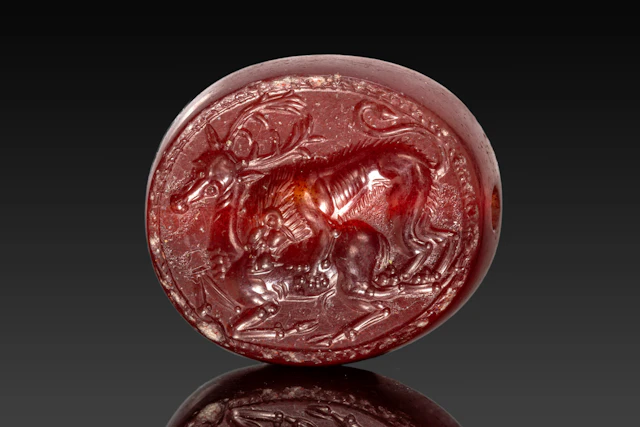
ETRUSCAN CARNELIAN STAMP SEAL WITH A LION ATTACKING A STAG
06/21/2026

€5,796.91
Schätzw.: €5,773.91
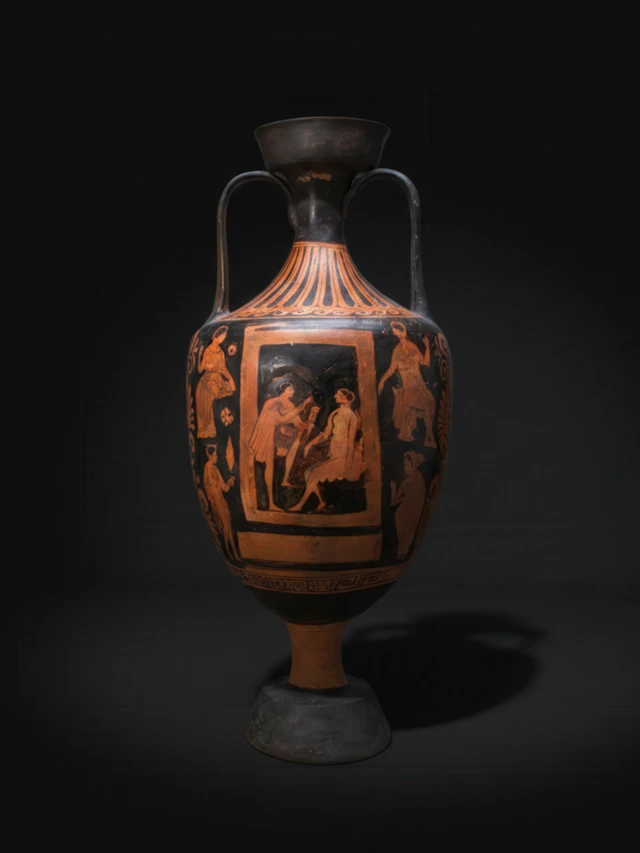
LARGE APULIAN RED-FIGURE AMPHORA WITH NAISKOS SCENE AND ALTAR
06/21/2026
€6,376.6
Schätzw.: €5,773.91




Bringen Sie Ihre Auktion zu Sammlern weltweit!
Jetzt eintragen lassenMit der Anmeldung stimmen Sie der Datenschutzrichtlinie zu. Jederzeit abmelden.
Barnebys HQ
Brahegatan 10
BOX 5038
114 37 Stockholm
