


Alle Auktionen / Antike Kunst / Yoshikazu • Musha-e • The Great Battle of Ishibashiyama •...

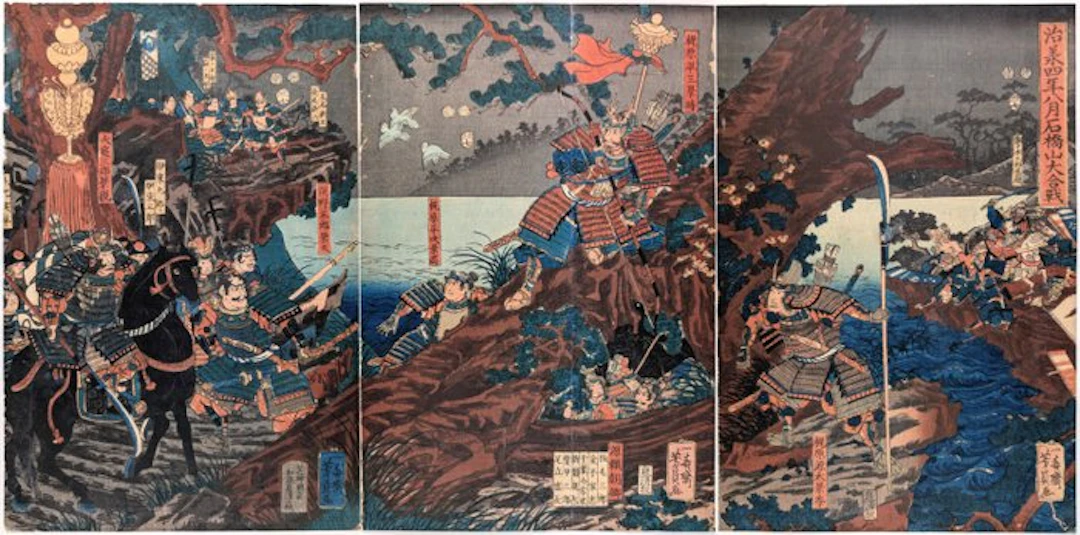
** A dramatic Ishibashiyama triptych by Utagawa Yoshikazu, a leading Kuniyoshi pupil. It shows the most famous escape in samurai legend: the young Minamoto no Yoritomo hiding in a hollow tree after his first defeat, and Kajiwara Kagetoki saving him. Every warrior is named in his own cartouche. Printed on heavy, high-quality washi. ** Artist: Utagawa Yoshikazu (歌川芳員), Ichijusai (一寿斎), active c. 1848–1870 Title: Jishō yonen hachigatsu Ishibashiyama ōkassen (治承四年八月石橋山大合戦), "The Great Battle of Ishibashiyama, Eighth Month of the Fourth Year of Jishō" [1180] Subject: The defeat of Minamoto no Yoritomo at Ishibashiyama and his concealment in a hollow tree Named figures (from the cartouches): Centre: Minamoto no Yoritomo-kyō (源頼朝卿); Kajiwara Heizō Kagetoki (梶原平三景時); Kajiwara Heiji Kagetaka (梶原平次景高). A list cartouche names Yoritomo's companions, including Chiba-no-suke Tsunetane (千葉介常胤), Kaneko Ietada (金子家忠), Aikō Saburō (愛甲三郎) and Adachi Morinaga (足立盛長). Left: Ōba Saburō Kagechika (大庭三郎景親), Matano Gorō Kagehisa (俣野五郎景久), Itō Kurō (伊東九郎), Itō Gorō (伊東五郎), Nagao Shingo (長尾新五), Nagao Shinroku (長尾新六) Right: Kajiwara Genta Kagesue (梶原源太景季), Sasaki Saburō Moritsuna (佐々木三郎盛綱) Date: 1853 (Kaei 6) Technique: Woodblock print (mokuhanga), nishiki-e (polychrome) Format: Ōban tate-e triptych (三枚続), three sheets, each approx. [37 × 25 cm] Signature: Ichijusai Yoshikazu ga (一寿斎芳員画) on each sheet Publisher: Izumiya Seishichi (和泉屋清七), Shiba Shinmei-mae; seal Izusei-han (泉清板) Seals: Date and censor seals CONDITION Impression & Colours: A strong impression with well-inked, well-saturated colours across all three sheets. There is some toning consistent with age. The composition as a whole is very well preserved.. Paper: Printed on a high-quality premium washi, the kind found in deluxe prints of the same period. This points to an expensive publication in its day. The central sheet was once folded and had a split at the top. This split has been supported with fine kozo fibres as you see on the verso. All three sheets are firm and supple. There is also some reinforcement to the sheets in the centre and two minor repairs on the left sheet. Overall good condition. The Scene: The Hollow Tree The title cartouche dates the scene to the eighth month of Jishō 4 (1180), the opening weeks of the Genpei War. Yoshikazu shows the hour after the battle, when Yoritomo and a handful of followers are hiding in an enormous hollow tree while the victorious enemy searches the mountainside. Kajiwara Kagetoki stands on the trunk above them. He is the one man among the pursuers who has found the hiding place and chosen to keep it secret. On the left sheet, the cartouches name the commanders hunting Yoritomo: Ōba Kagechika, the general who defeated him, with the Taira butterfly crest raised on a standard above him; Matano Kagehisa; the Itō and the Nagao brothers. On the right sheet are Kagetoki's son Genta Kagesue and Sasaki Moritsuna. The setting is a ridge of rocky cliffs above the sea, true to the real geography of Ishibashiyama on the Sagami coast. Pursuers and hidden fugitives appear in one continuous landscape across the three sheets. Because every warrior is named, a contemporary buyer could read the whole episode figure by figure. The Story: The Defeat That Founded the Kamakura Shogunate In the eighth month of 1180, the exiled Minamoto no Yoritomo raised his standard in Izu against the ruling Taira. He had only about three hundred men. On the 23rd day of the month, at Ishibashiyama near Odawara, he faced Ōba Kagechika at the head of a force roughly ten times larger. With Itō Sukechika's troops closing from behind, his army was destroyed in a night battle in heavy rain. One of the most celebrated deaths of the war happened here: the young Sanada Yoichi Yoshitada was killed after grappling with Matano Kagehisa, who is named on the left sheet of this print. Yoritomo fled into the Hakone hills and hid with a few companions in a hollow tree. According to the war chronicles, the searcher who discovered him was Kajiwara Kagetoki, a warrior then serving on the Taira side under Ōba. Kagetoki said nothing and led the others away. Later tellings add that when a bow was thrust into the hollow, doves flew out. Doves are the messengers of Hachiman, the Minamoto clan's god of war, so the searchers took this as proof the tree was empty. Yoritomo escaped by boat from Manazuru to Awa and gathered the eastern warrior houses around him, among them Chiba Tsunetane, who appears in the list cartouche. Within two months he had entered Kamakura. Twelve years later he was shogun. Kagetoki's single decision made his fortune. He became one of Yoritomo's most trusted retainers. In later legend he is remembered as the man whose slander turned Yoritomo against his brother Yoshitsune. The hollow-tree episode therefore carries a double charge for a Japanese audience: it is the moment the Minamoto cause was saved, and the beginning of one of the great ambiguous careers in samurai history.
Schätzpreis:€275
Zur AuktionAlle Objekte ansehen vonCatawikioderAntike Kunst
Schätzpreis:
€275
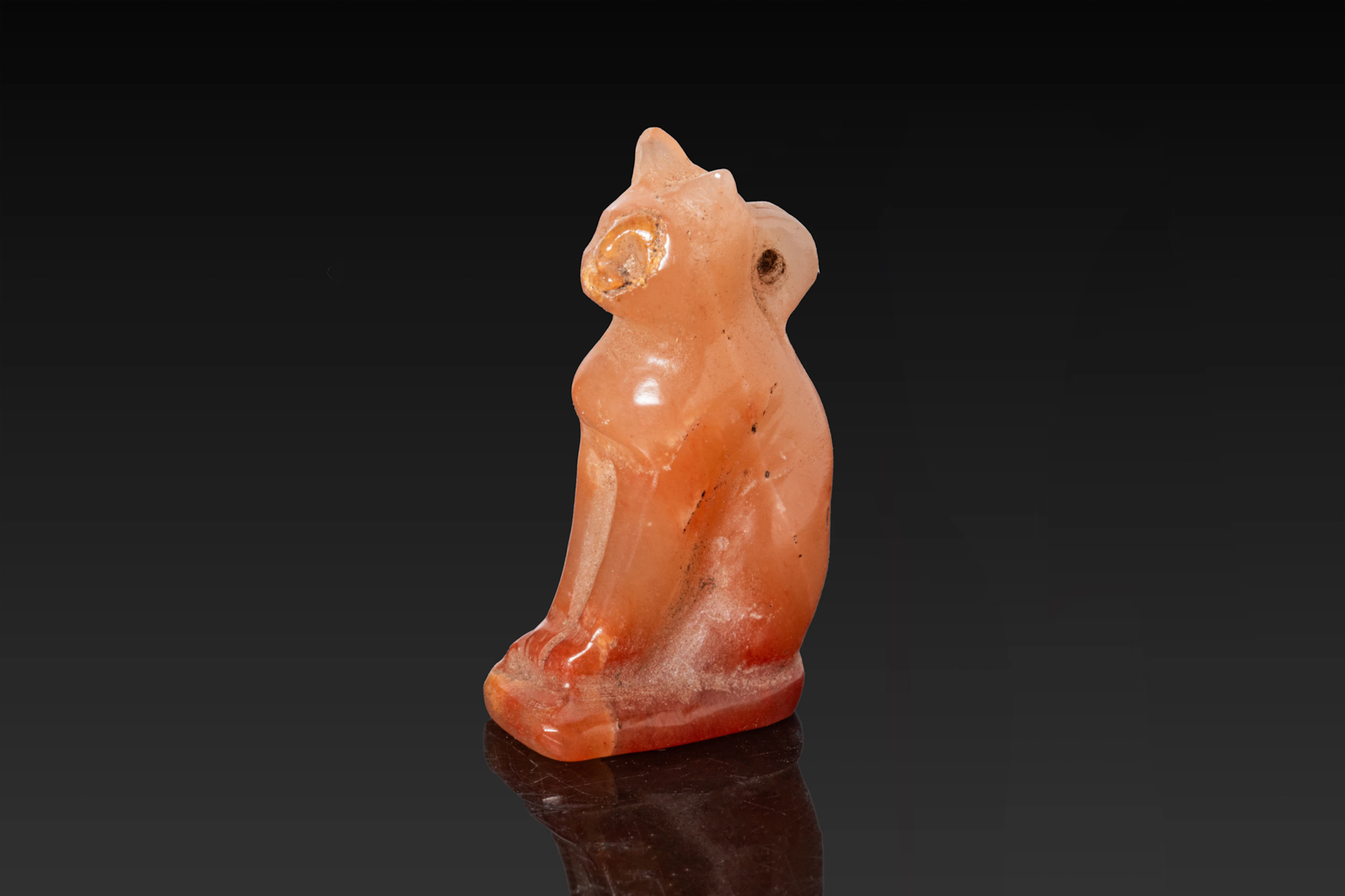
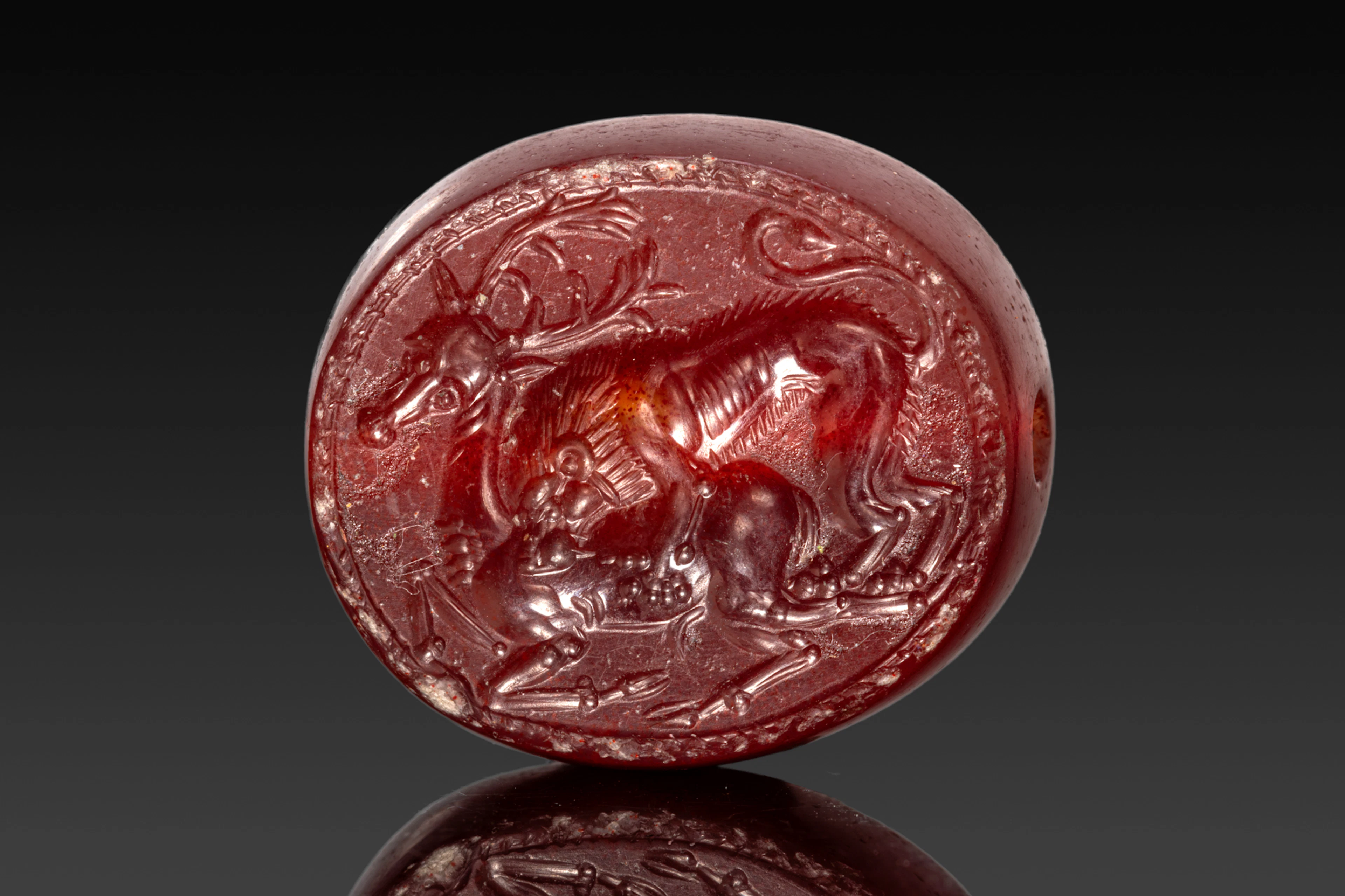
ETRUSCAN CARNELIAN STAMP SEAL WITH A LION ATTACKING A STAG
06/21/2026

€5,796.91
Schätzw.: €5,773.91
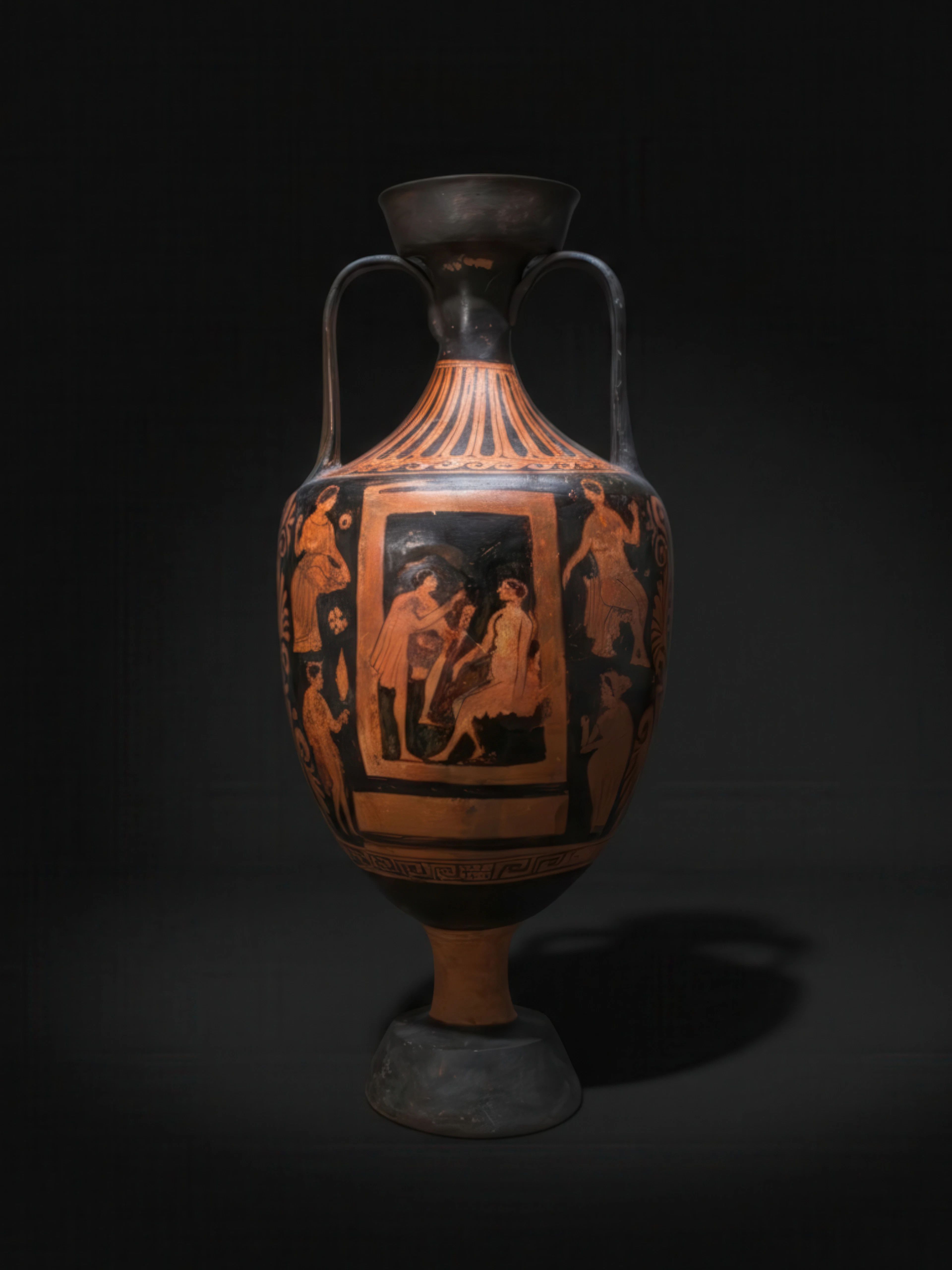
LARGE APULIAN RED-FIGURE AMPHORA WITH NAISKOS SCENE AND ALTAR
06/21/2026
€6,376.6
Schätzw.: €5,773.91





Bringen Sie Ihre Auktion zu Sammlern weltweit!
Jetzt eintragen lassenMit der Anmeldung stimmen Sie der Datenschutzrichtlinie zu. Jederzeit abmelden.
Barnebys HQ
Brahegatan 10
BOX 5038
114 37 Stockholm
